Dive Knife
A spearfisher tows lines by design - shooting line, float line, kelp and other people's lost gear are all entanglement risks. The knife is insurance you wear, not a weapon you use.
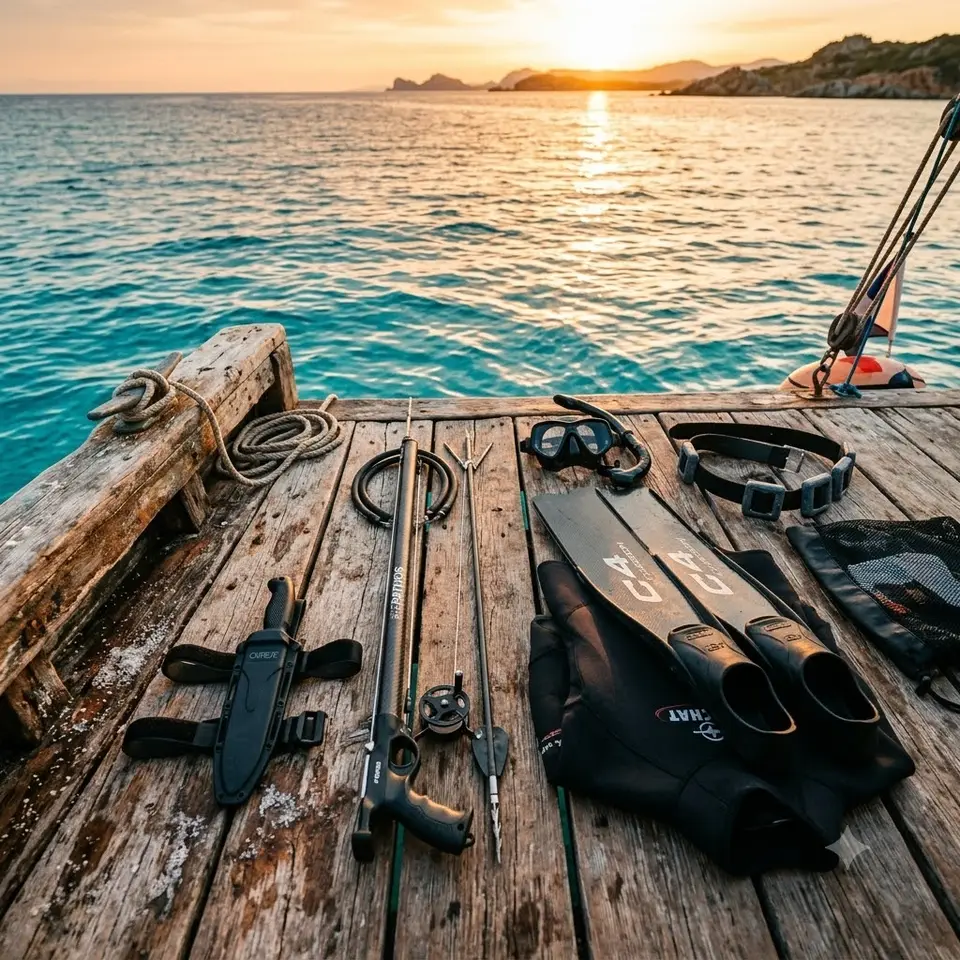
Spearfishing surrounds you with line on purpose: shooting line from gun to shaft, float line from you to the surface, and the sea adds kelp, lost mono and ghost netting for free. An entangled freediver has one breath to solve the problem, which is why the dive knife is bedrock safety gear - mounted where either hand can reach it (belt, arm or leg), sharp, and secure in its sheath. It also does the humane work of dispatching fish quickly (iki jime), which is both ethical and practical: a quiet fish doesn't call sharks.
Spearfishing is freediving - and freediving has real risks. Shallow-water blackout can strike experienced divers without warning: never dive alone (one diver up watching, one down - always), never hyperventilate before a dive, and get formal freediving training before pushing depth. Tow a float with a diver-down flag - it's legally required in many waters and it's what keeps boats off you. Load a speargun only in the water, never point it at anyone, and know your local rules: spearfishing is restricted or prohibited in many fresh waters and marine areas, and species, size and season limits apply. We describe gear and technique for education only - we don't give legal or medical advice; check your local regulations and train with qualified instructors.
What it is
A compact, corrosion-resistant fixed blade in a positive-locking sheath (often with a line-cutter notch and a blunt or drop tip) worn on the belt, forearm or inner calf.
Where it shines
Kelp forests, wreck and pot-buoy country, anywhere with current pushing you into your own lines - and at the end of every successful dive, dispatching the catch quickly and humanely.
How to use it
Mount it where BOTH hands can reach (an entangled right arm can't draw from the right calf); practice the draw with gloves on; cut away from yourself; dispatch fish with a swift brain spike (iki jime) and get them to the float.
Choosing & sizing
Small and reachable beats large and stowed. A serrated section and line-cutter notch handle rope and mono; a blunt-tip design won't puncture you or the float in a fumble. Rinse after every dive - a seized sheath is no knife at all.
Strengths & weaknesses
Cheap, light, potentially life-saving and always in reach - the only failures are corrosion from neglect and mounting it where trouble can't reach it.
Mistakes underwater
Wearing it once, rinsing it never (salt seizes the sheath), mounting it on one side only, using it to pry shells until the tip snaps, and 'testing' entanglement drills for the first time when they're real.
Freediving and safety gear
Check the local rules before you dive: where and what you may spear differs from one water to the next.
As an Amazon Associate we may earn from qualifying purchases - at no extra cost to you. We link gear types, not sponsors' picks: you choose the exact product.