Roller Speargun
Bands run over muzzle pulleys so they keep pulling along the whole barrel - more energy and less recoil from the same length, at the price of setup complexity. An enthusiast's gun.
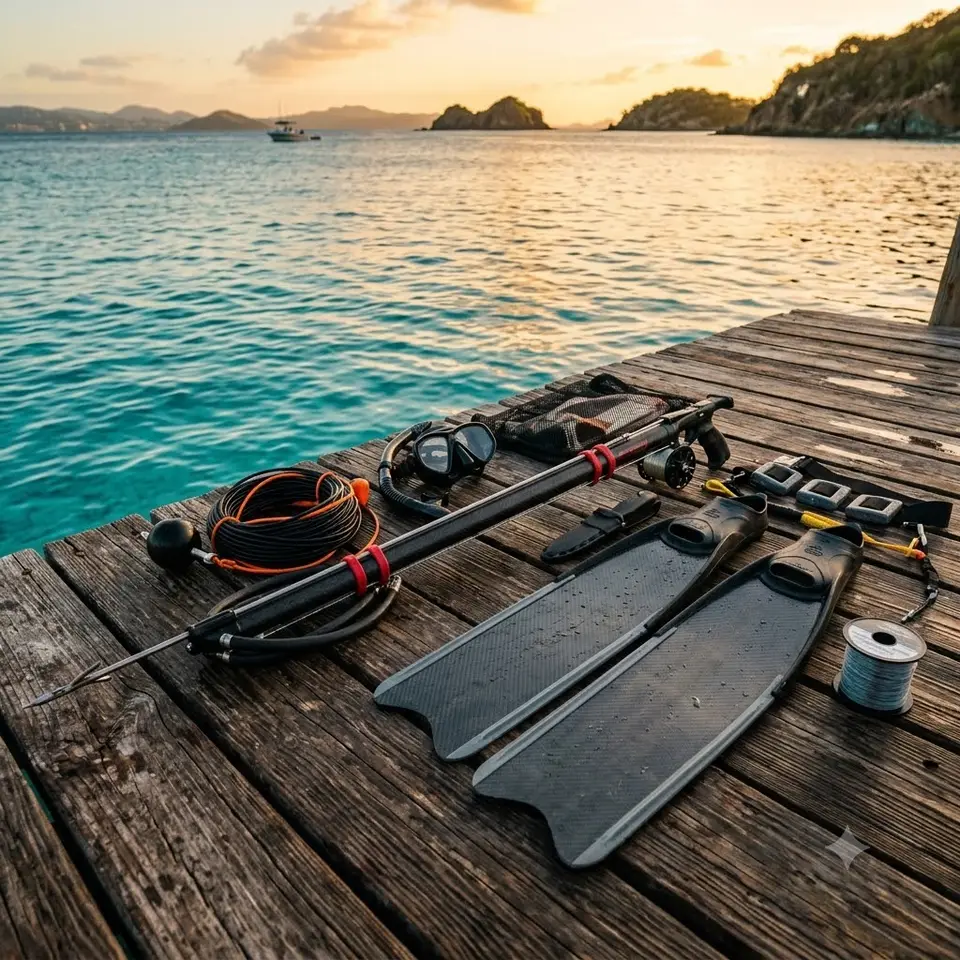
A conventional band gun wastes the last part of its stroke: by the time the shaft nears the muzzle, the bands are nearly slack. The roller gun fixes that with pulleys at the muzzle - the bands wrap over rollers and anchor back down the underside of the barrel, so they're still under useful tension when the shaft leaves. Result: more energy and noticeably less recoil and muzzle-flip from the same barrel length. The cost is rigging complexity (pretension to set, more parts to tune and inspect), which is why the roller is the enthusiast's gun rather than the beginner's.
Spearfishing is freediving - and freediving has real risks. Shallow-water blackout can strike experienced divers without warning: never dive alone (one diver up watching, one down - always), never hyperventilate before a dive, and get formal freediving training before pushing depth. Tow a float with a diver-down flag - it's legally required in many waters and it's what keeps boats off you. Load a speargun only in the water, never point it at anyone, and know your local rules: spearfishing is restricted or prohibited in many fresh waters and marine areas, and species, size and season limits apply. We describe gear and technique for education only - we don't give legal or medical advice; check your local regulations and train with qualified instructors.
What it is
A band speargun with muzzle pulleys: the bands wrap over rollers so they apply force through the full length of the shaft's travel instead of going slack early.
Where it shines
Clear-water hunting where range matters, recoil-sensitive accurate shooting, and divers who enjoy tuning gear - the roller rewards understanding it.
How to use it
Handling is band-gun standard (load only in water, muzzle discipline always), but loading is a two-stage affair on most setups (pretension plus main load) that needs practicing until smooth.
Choosing & sizing
Start from a quality complete roller rather than converting a cheap gun; a modest roller outshoots a longer conventional gun, so size down. Learn the pretension spec and keep spare band material.
Strengths & weaknesses
Flatter shooting, more range, less recoil per barrel length - but more rigging to inspect, slower reloads, and mistakes in pretension quietly rob the performance you paid for.
Mistakes underwater
Buying a roller as a first gun (learn on bands), wrong pretension, worn roller bearings unnoticed, and treating the extra range as licence for long, low-percentage shots.
Freediving and safety gear
Check the local rules before you dive: where and what you may spear differs from one water to the next.
As an Amazon Associate we may earn from qualifying purchases - at no extra cost to you. We link gear types, not sponsors' picks: you choose the exact product.