Pole Spear
A fibreglass or carbon pole with a rubber loop you stretch and release - the cheapest, simplest and quietest entry into spearfishing, hunting at arm's-length-plus range.
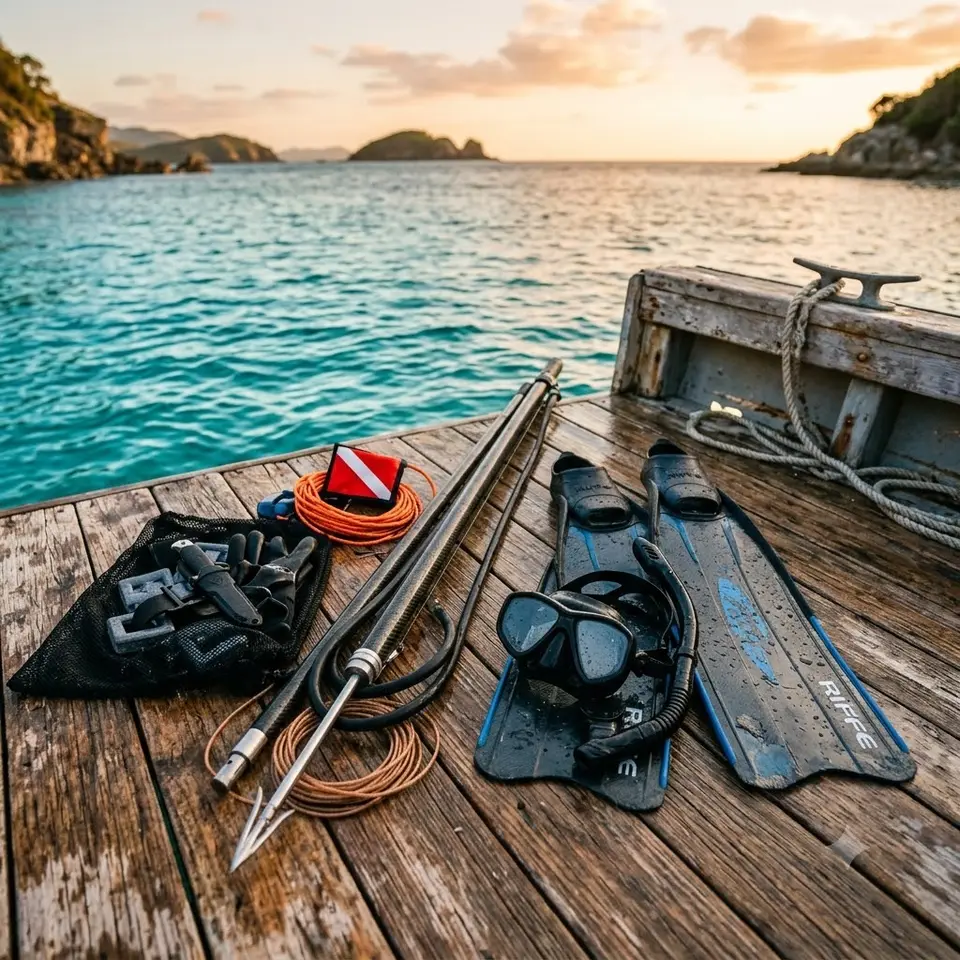
The pole spear is spearfishing at its most elemental: a 5-7 ft pole, a loop of rubber at the back end, a tip at the front. You stretch the band along the pole with one hand, glide close, and let the pole slide through your grip. Effective range is short (a body length or two), which is exactly why it makes such a good teacher: it forces the stalking, breath control and close approach that the whole sport is built on. Many experienced divers never move past it, by choice.
Spearfishing is freediving - and freediving has real risks. Shallow-water blackout can strike experienced divers without warning: never dive alone (one diver up watching, one down - always), never hyperventilate before a dive, and get formal freediving training before pushing depth. Tow a float with a diver-down flag - it's legally required in many waters and it's what keeps boats off you. Load a speargun only in the water, never point it at anyone, and know your local rules: spearfishing is restricted or prohibited in many fresh waters and marine areas, and species, size and season limits apply. We describe gear and technique for education only - we don't give legal or medical advice; check your local regulations and train with qualified instructors.
What it is
A one-piece or breakdown pole (fibreglass, aluminium or carbon) with a rubber power loop at the rear and a threaded tip (usually a three-prong 'paralyzer' or a single point) at the front.
Where it shines
Reef and rock in clear, shallow water; hole hunting; flounder and sheepshead around structure; and any situation where cost, simplicity and quiet matter more than range.
How to use it
Load the band by stretching it back along the pole and gripping both; approach slowly, extend toward the fish, and release your grip to let the pole drive forward. Range is roughly the pole's length plus your reach - get close, then closer.
Choosing & sizing
Longer poles (6-7 ft) give more power and reach for open water; shorter ones handle better in holes. A paralyzer tip is forgiving on smaller reef fish; single points with barbs hold bigger fish. Breakdown models travel well.
Strengths & weaknesses
Cheap, near-silent, nothing to fail, legal in some places that restrict spearguns - but short-ranged, limited on large fish, and demanding of your approach skills. That demand is the point.
Mistakes underwater
Shooting beyond its honest range (spooked fish, lost tips), gripping the pole loosely at release, using a paralyzer on fish too big for it, and skipping the float line in current.
Freediving and safety gear
Check the local rules before you dive: where and what you may spear differs from one water to the next.
As an Amazon Associate we may earn from qualifying purchases - at no extra cost to you. We link gear types, not sponsors' picks: you choose the exact product.