Mask, Snorkel & Freedive Fins
Spearfishing runs on freediving basics: a low-volume mask you can equalise cheaply, a plain snorkel, and long-blade fins that turn each precious breath into distance.
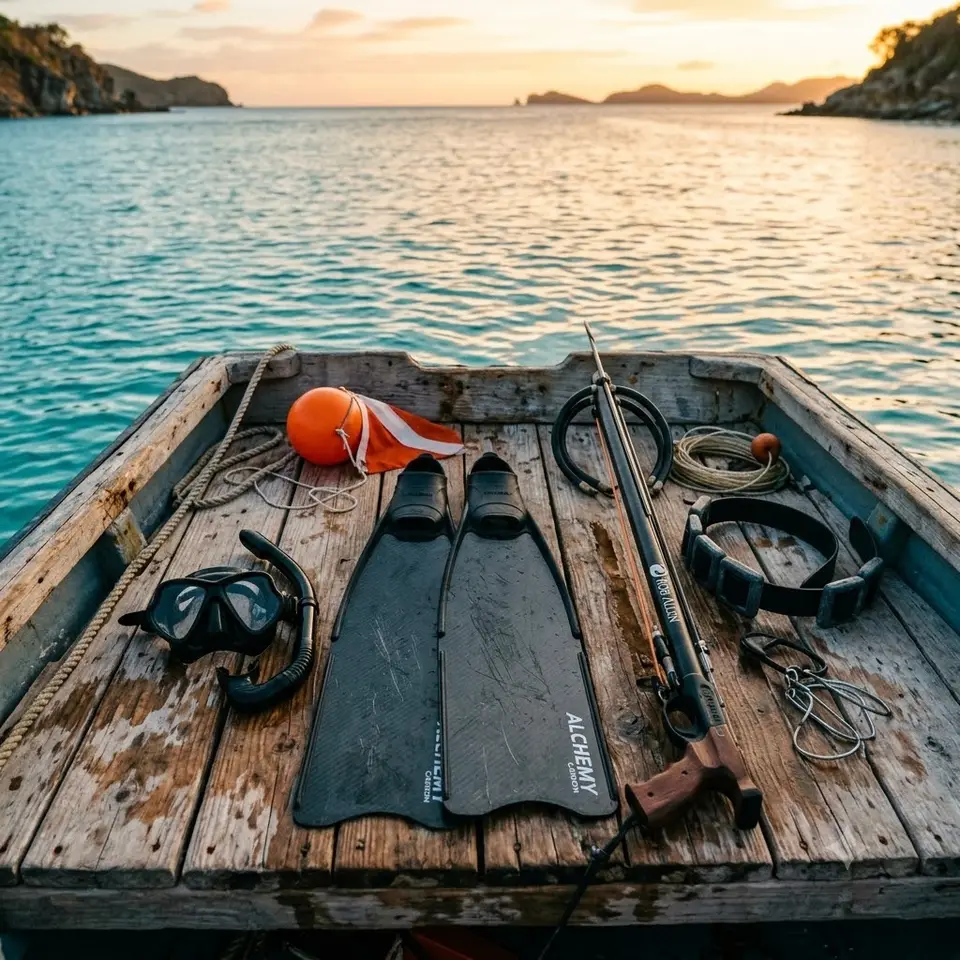
Before any spear enters the water, three pieces of freediving gear decide how the day goes. The mask must be LOW volume - every dive you must blow precious air into it to equalise the squeeze, and a big scuba mask taxes that budget. The snorkel should be a simple J-tube: purge valves and dry tops just add drag and failure points for a freediver. And the fins are long-bladed for a reason: they convert one breath into more metres of travel than any stubby fin can, with a relaxed, slow cadence. Comfort is not a luxury here; a leaking mask or cramping foot pocket ends dives early and erodes safety.
Spearfishing is freediving - and freediving has real risks. Shallow-water blackout can strike experienced divers without warning: never dive alone (one diver up watching, one down - always), never hyperventilate before a dive, and get formal freediving training before pushing depth. Tow a float with a diver-down flag - it's legally required in many waters and it's what keeps boats off you. Load a speargun only in the water, never point it at anyone, and know your local rules: spearfishing is restricted or prohibited in many fresh waters and marine areas, and species, size and season limits apply. We describe gear and technique for education only - we don't give legal or medical advice; check your local regulations and train with qualified instructors.
What it is
The freediving trio: a low-internal-volume dual-lens mask, a plain flexible snorkel, and long-blade fins (plastic, fibreglass or carbon) with snug closed-heel foot pockets.
Where it shines
Every dive - these are the constants of the sport regardless of what spear you carry or what water you hunt.
How to use it
Defog the mask, keep the strap loose-ish (pressure seals it), equalise mask and ears early and often on descent; drop the snorkel from your mouth at the surface before you dive (breath-hold with it out); finn with long, slow, straight-leg strokes from the hips.
Choosing & sizing
Fit-test the mask by inhaling gently through the nose - it should hold without the strap. Fins: plastic blades to learn (cheap, tough), fibreglass/carbon when your technique deserves the efficiency. Foot pockets snug but never cramping: wear the socks you'll dive in.
Strengths & weaknesses
Low-volume masks equalise cheaply but feel close at first; long fins are transformative in open water and clumsy in tight rocks - a shorter blade suits hole-hunting terrain.
Where divers go wrong
Diving a high-volume scuba mask (air budget wasted), over-tight straps that break the seal, snorkel kept in the mouth underwater, floppy fin cadence that burns oxygen, and buying carbon blades before technique can use them.
Freediving and safety gear
Check the local rules before you dive: where and what you may spear differs from one water to the next.
As an Amazon Associate we may earn from qualifying purchases - at no extra cost to you. We link gear types, not sponsors' picks: you choose the exact product.