Float Line vs Reel
After the shot, something must connect you to a running fish: a float line to the surface buoy, or a reel on the gun. Two schools, real trade-offs, and one absolute rule - never wrap line around your hand.
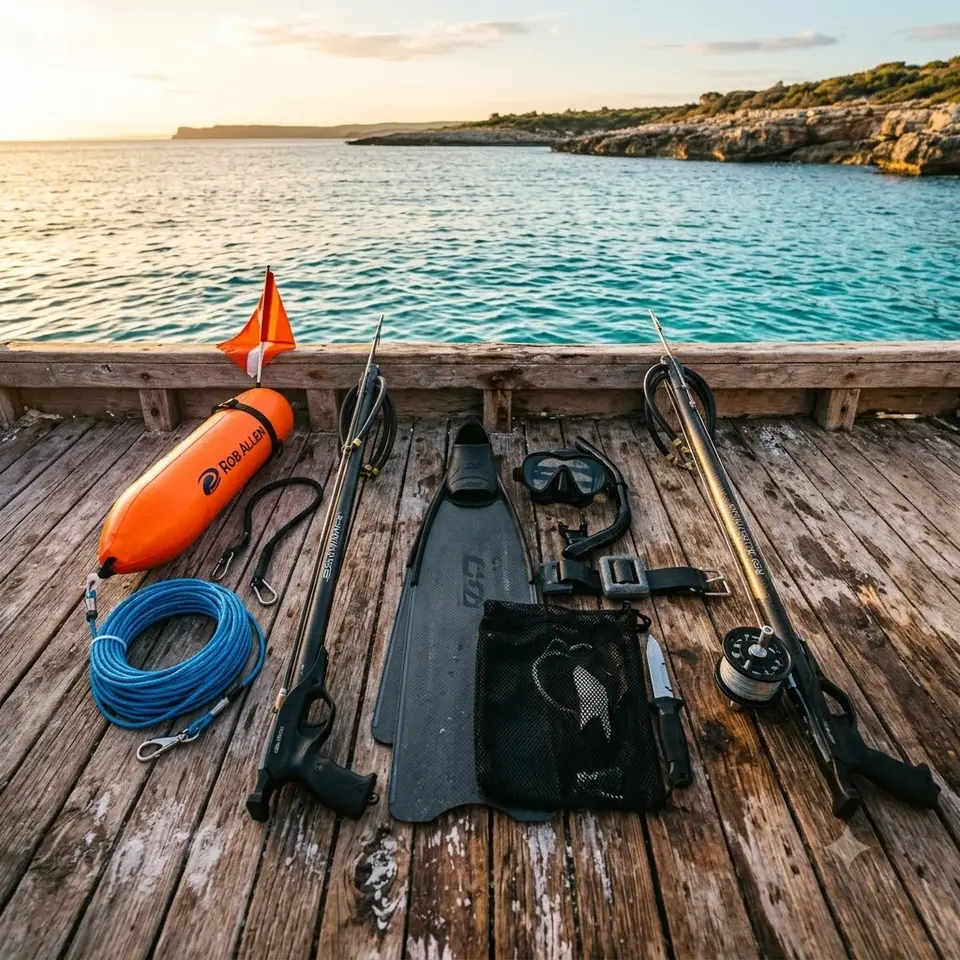
The moment a decent fish takes the shaft, the question becomes: what is it attached to? The traditional answer is the float line - gun tethered to your surface float, so a hard-running fish tows the buoy, not you, and you can let the gun go entirely. The modern alternative is the reel gun: line stored on a reel at the gun, no tether to tow, precious in kelp and tight terrain. The float system is simpler and safer for big fish; the reel is cleaner to swim but puts the fight (and the decisions) in your hands. Many experienced divers run both, by conditions. One rule overrides everything: line never, ever wraps around a hand or wrist.
Spearfishing is freediving - and freediving has real risks. Shallow-water blackout can strike experienced divers without warning: never dive alone (one diver up watching, one down - always), never hyperventilate before a dive, and get formal freediving training before pushing depth. Tow a float with a diver-down flag - it's legally required in many waters and it's what keeps boats off you. Load a speargun only in the water, never point it at anyone, and know your local rules: spearfishing is restricted or prohibited in many fresh waters and marine areas, and species, size and season limits apply. We describe gear and technique for education only - we don't give legal or medical advice; check your local regulations and train with qualified instructors.
What it is
Two connection systems: (1) a buoyant float line from the gun butt to your surface float, and (2) a gun-mounted reel spooled with line to the shaft's shooting line - each keeping you attached to shaft and fish after the shot.
Where it shines
Float line: open water, bigger fish, current, and any dive where letting go of the gun must be a safe option. Reel: kelp, caves, wrecks and tight rock where a towed line snags, and travel setups.
How to use it
Float line: manage the slack so it doesn't loop you, let the float fight big fish, hand-over-hand the line only with the fish tired. Reel: set the drag light, let the fish run, recover line smoothly - and if a big fish demands it, be ready to abandon the gun to the float you should still be towing.
Choosing & sizing
Float line length ~1.5-2× your working depth; tough sheathed lines resist reef abrasion. Reels: capacity over complexity, and practice re-spooling - a birds-nested reel mid-fight is chaos.
Strengths & weaknesses
Float line is simple, strong and lets you release everything - but it tows and snags. The reel swims clean and handles terrain, but adds failure points and keeps you personally attached to whatever you shot.
Where divers go wrong
Wrapping line around a hand (the cardinal sin - fingers have been lost to it), a float line too short for the depth, reel drag locked tight, ignoring line condition until a fish finds the weak spot, and reeling a green fish straight up into your face.
Freediving and safety gear
Check the local rules before you dive: where and what you may spear differs from one water to the next.
As an Amazon Associate we may earn from qualifying purchases - at no extra cost to you. We link gear types, not sponsors' picks: you choose the exact product.