Band (Sling) Speargun
The default speargun worldwide: rubber bands drive a shaft along a barrel, sized in centimetres from short reef guns to long blue-water guns. Simple, quiet enough, and endlessly configurable.
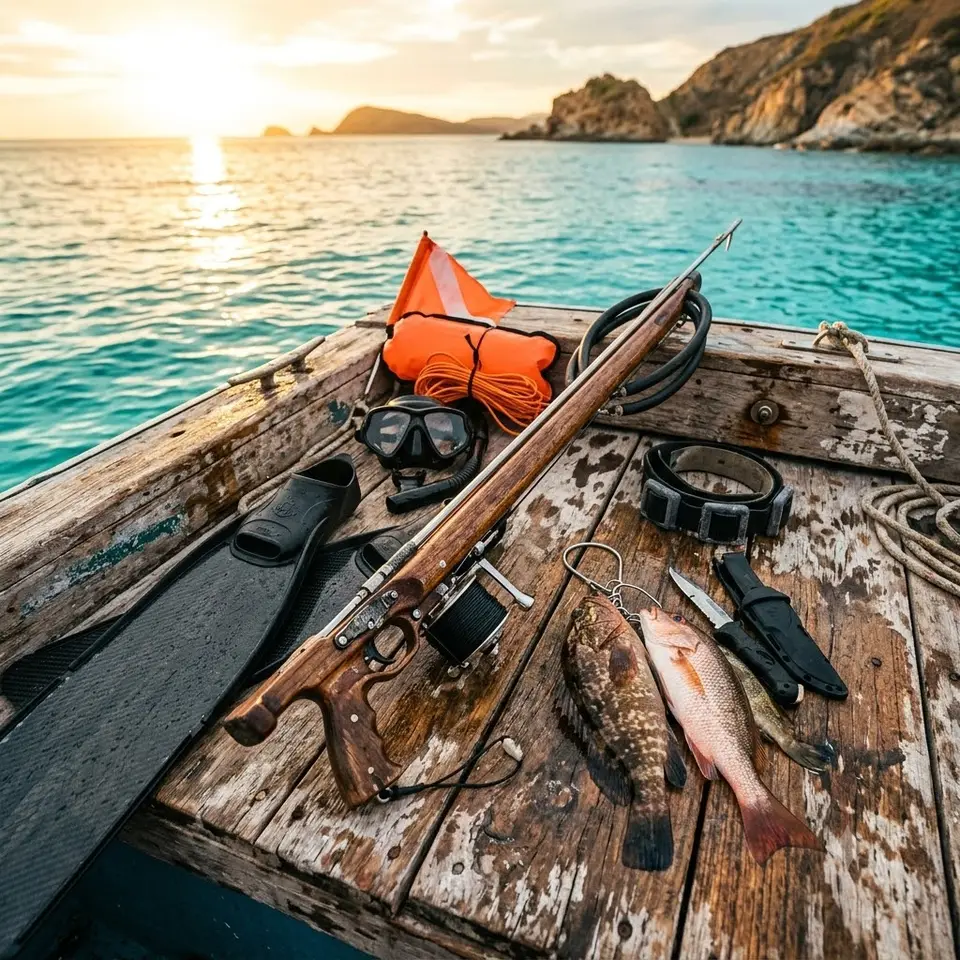
When someone says 'speargun' they almost always mean a band gun: one to three rubber bands stretched to notches on a steel shaft, a barrel to guide it, a trigger mechanism to hold and release. Sizing is in barrel centimetres - roughly, a 75-90 cm gun for reef work in average visibility, longer for clearer water and bigger fish, and the design scales from a kid's first 50 to a three-band blue-water cannon. It's quiet, reliable, field-serviceable, and the platform every technique guide assumes.
Spearfishing is freediving - and freediving has real risks. Shallow-water blackout can strike experienced divers without warning: never dive alone (one diver up watching, one down - always), never hyperventilate before a dive, and get formal freediving training before pushing depth. Tow a float with a diver-down flag - it's legally required in many waters and it's what keeps boats off you. Load a speargun only in the water, never point it at anyone, and know your local rules: spearfishing is restricted or prohibited in many fresh waters and marine areas, and species, size and season limits apply. We describe gear and technique for education only - we don't give legal or medical advice; check your local regulations and train with qualified instructors.
What it is
A speargun powered by stretched latex bands driving a notched steel shaft along a rail or barrel, held and released by a trigger mechanism, with the shaft tethered by a shooting line.
Where it shines
Almost everywhere spearguns are legal (reef, rocks, wrecks, kelp and open water) with barrel length matched to visibility and quarry. The all-round choice and the right first gun.
How to use it
Load bands only in the water, muzzle pointed away; stalk or ambush, extend the gun, aim down the barrel and squeeze. Fight the fish on the shooting line, subdue it quickly, and re-load only when clear of your buddy.
Choosing & sizing
Visibility decides length: shorter (75-90) for murky or tight terrain, longer (100-130+) for clear water and range. One well-matched band beats badly-matched two; check shaft diameter and band power are the maker's pairing.
Strengths & weaknesses
Quiet, dependable, cheap to maintain (bands are consumables), hugely configurable - but loading takes strength and technique, and long guns swing slowly in tight terrain.
What costs you the shot
Loading on the boat or beach (never - only in the water), over-gunning band power beyond what you can load safely, neglecting perished bands, and choosing a blue-water length for weekend reef visibility.
Freediving and safety gear
Check the local rules before you dive: where and what you may spear differs from one water to the next.
As an Amazon Associate we may earn from qualifying purchases - at no extra cost to you. We link gear types, not sponsors' picks: you choose the exact product.