Zig Rig
A buoyant hook bait on a long link rising from the lead presents to carp cruising in mid-water or near the surface - the rig for fish that aren't feeding on the bottom.
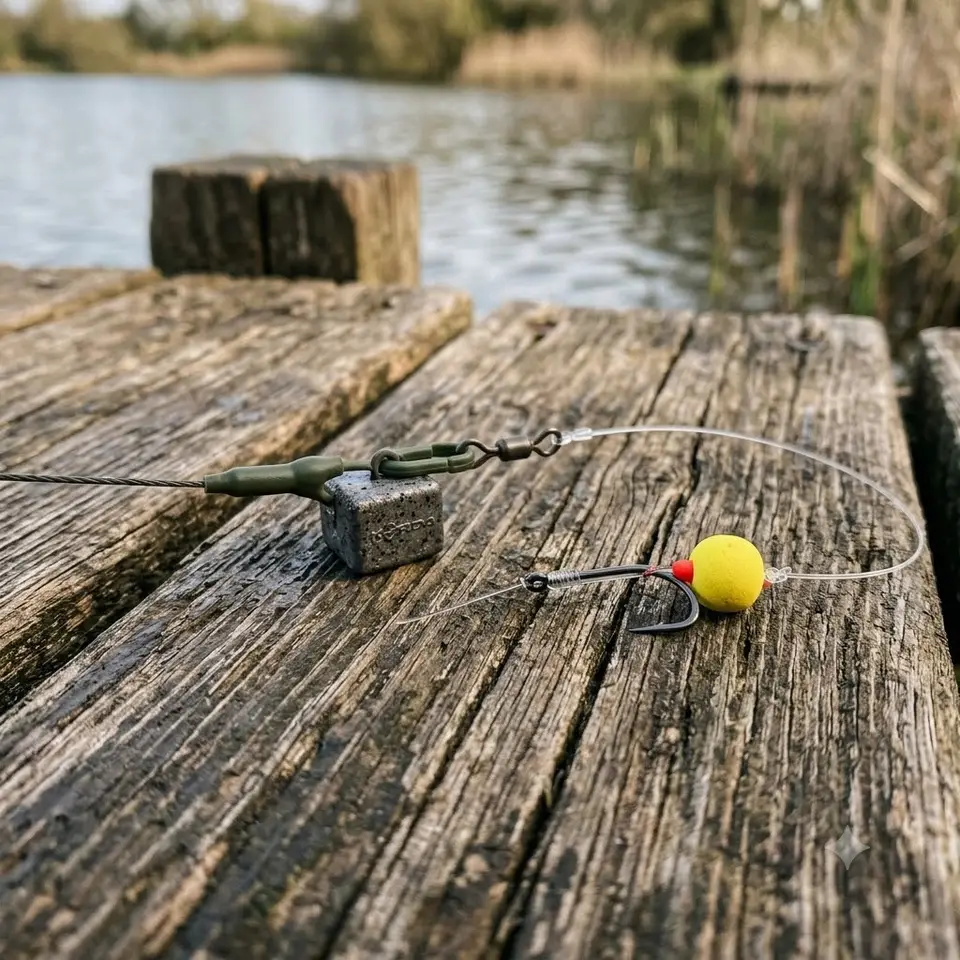
Carp don't always feed on the bottom. On warm, bright days they cruise and bask in the upper layers, ignoring every bait sitting in the silt below them. The zig rig targets exactly those fish: a small buoyant hook bait on a very long hook link floats up from the lead to a chosen depth, presenting right in the mid-water or sub-surface zone where the fish are actually holding. It is the answer to the frustrating sight of carp cruising over an untouched bottom spread.
What it is & why it works
A long hook link (from a couple of feet to nearly the full depth) tied to a lead on the bottom, ending in a small buoyant hook bait - foam, cork or a piece of pop-up - that rises to a set level. By adjusting link length you place the bait at whatever depth the fish are cruising. It works because it stops fishing the empty bottom and puts the bait in the fish's actual travel layer.
When to use it
Warm, sunny days when carp are high in the water and basking, clear waters where fish suspend or cruise mid-depth, and any time bottom baits are being ignored while fish are visibly up in the layers. It shines on hard-fished waters where carp have grown wary of bottom rigs but will take a small, odd, floating morsel up in open water.
How to set it up
Tie a long hook link to a lead or run it through a safe lead arrangement, and finish with a small buoyant bait sized so it just floats the hook. Set link length to the target depth - counting down or using known depth to place the bait where fish cruise. Fine, low-visibility hook link and a small, sharp hook suit the finesse presentation. Keep the lead safe so a lost fish can shed it.
Fishing it
Cast out and let the lead settle while the buoyant bait rises to its depth on the long link. Fish it tight or with a controlled bow depending on range. Zig bites are often savage as a cruising fish intercepts the floating bait, so set the drag for a fast run and watch for sudden line movement. Experiment with depth if you see fish but get no takes - the layer they're using can shift through the day.
Variations & sizing
Foam and cork "zigs" in various colors (black and bright shades are staples), adjustable "zig floats" that let you set depth without re-tying, and link lengths from short mid-water to near-surface. Match bait size to buoyancy so the hook rides just under the bait. Longer links for surface-basking fish, shorter for mid-water.
Common mistakes
Link length set to the wrong layer so the bait sits above or below the fish, a bait too heavy to float the hook up, ignoring how the feeding depth shifts through the day, and unsafe lead setups that leave a lost fish towing the weight on a very long link.
🎣 Rig-building bits
As an Amazon Associate we may earn from qualifying purchases - at no extra cost to you. We link gear types, not sponsors' picks: you choose the exact product.