Stinger Rig
A trailing second hook set back near the tail of a bait catches short-striking fish that hit behind the head - the answer to king mackerel and other tail-slashers.
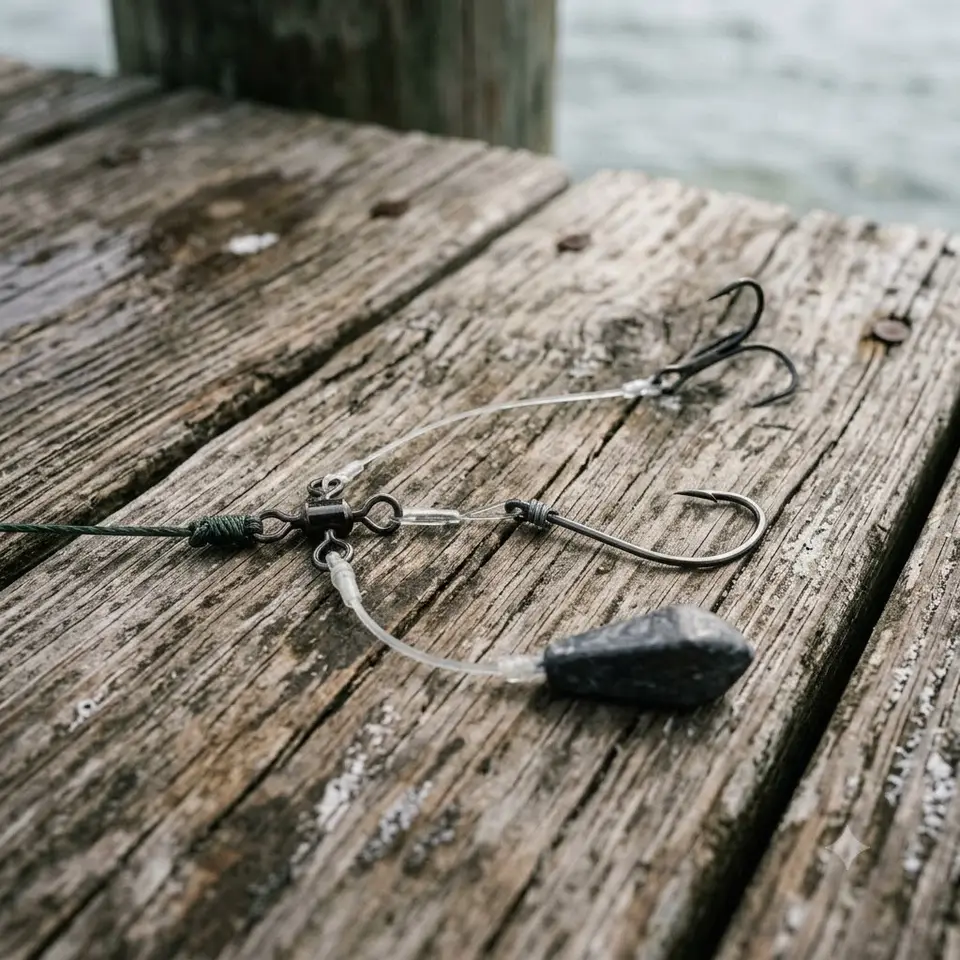
Some fish don't eat a baitfish head-first - they slash it in half from behind. King mackerel are the classic example, cutting a bait across the body with razor teeth and often missing a single nose hook entirely. The stinger rig fixes that with a second, trailing hook (the "stinger") set back near the tail, wired so a fish that chops the rear of the bait still finds a point. It turns frustrating short strikes into hookups.
What it is & why it works
A lead hook in the bait's nose or head connected by a short length of wire to a free-swinging trailing treble or single hook positioned near the bait's tail. Because toothy predators frequently strike the back half of a baitfish, the stinger covers the exact spot a single hook misses. Wire between the hooks resists the cut-off from sharp teeth.
When to use it
Slow-trolling or live-lining baits for king mackerel, and for other toothy, tail-slashing predators like wahoo, big Spanish mackerel and barracuda that habitually short-strike. It shines with larger live or dead baitfish (menhaden, cigar minnows, ribbonfish) where a single hook leaves most of the bait unprotected from a rear attack.
How to set it up
Set the lead hook through the bait's nose or shoulders, then run a short wire leader back to the stinger hook positioned at or just behind the bait's tail, either lightly pinned in or swinging free. Keep the wire length matched to the bait so the stinger sits where a king would cut. Use wire leader throughout to survive the teeth, and keep hooks needle-sharp.
Fishing it
Slow-troll or free-line the bait so it swims naturally with both hooks riding cleanly. When a fish strikes - often a sudden slash and weight - resist a huge hookset with light king tackle; let the fish load the rod and turn, then come tight. A smooth drag matters because kings run hard. Check the bait and stinger position after every strike or missed hit.
Variations & sizing
Trailing hook can be a treble for maximum coverage or a single for cleaner release and less bait damage; some run two stingers on long baits like ribbonfish. Match hook and wire size to the bait and the fish. Lighter, longer wire lets the bait swim more freely; heavier resists bigger teeth.
Common mistakes
Stinger set too far forward or back so it misses the strike zone, mono leader that a toothy fish cuts instantly, a stinger pinned so tight it kills the bait's action, and a heavy hookset that pulls hooks on a fast-running king before it has turned on the bait.
🎣 Rig-building bits
As an Amazon Associate we may earn from qualifying purchases - at no extra cost to you. We link gear types, not sponsors' picks: you choose the exact product.