Running Ledger Rig
The running ledger lets line slide freely through the lead - a shy fish moves off with the bait feeling nothing, the oldest and fairest bottom presentation in coarse fishing.
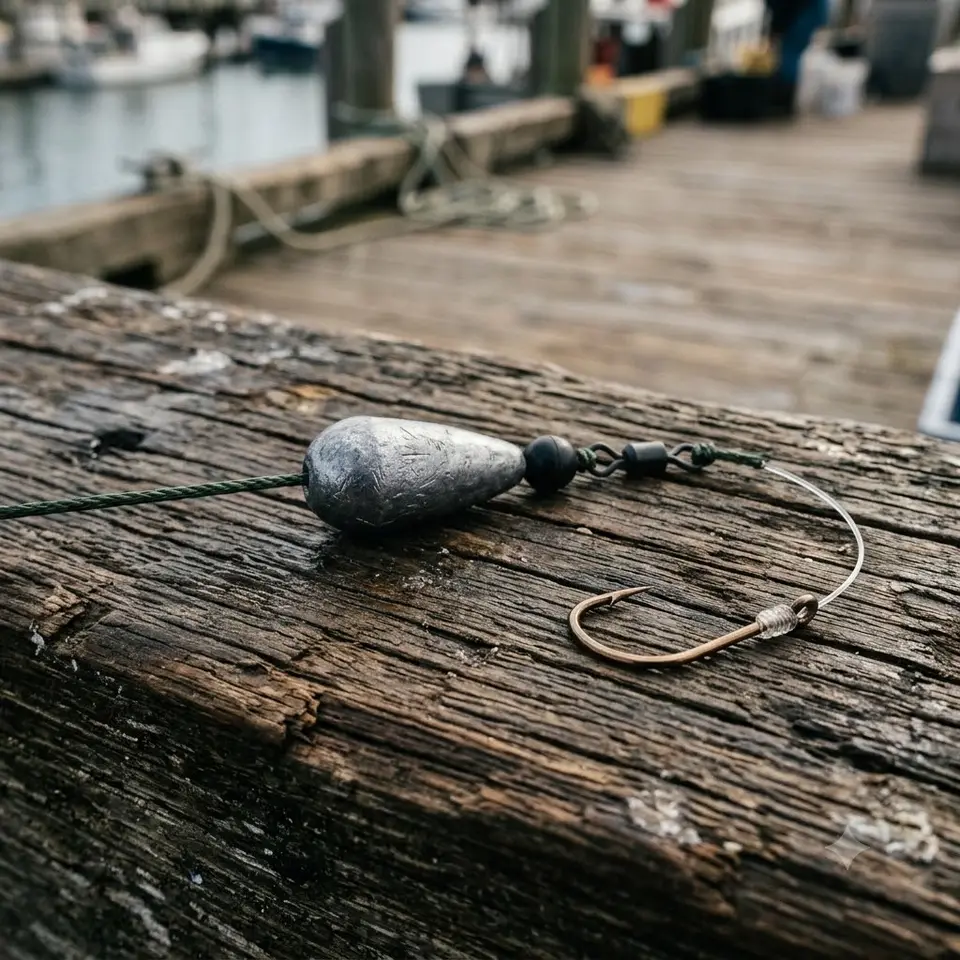
Before bolt rigs and self-hooking feeders, coarse fishing's bottom standard was the running ledger - and for shy-biting fish it still is: the lead sits on a free-running swivel or link, so a barbel, chub or cautious carp can take the bait and move away with ZERO resistance while your quivertip or bobbin registers everything. Simple, sensitive, honest.
What it is & why it works
A lead on a run-ring/link sliding freely on the main line above a bead and swivel, then a hooklink. The fish tows line through the lead rather than dragging weight - no alarm bells at the fish's end, every twitch at yours.
When to use it
Rivers for barbel and chub (with meat, pellets, worms), cautious stillwater carp and tench, laying-on for perch with lobworms - wherever bite registration beats self-hooking.
How to set it up
Slide a run-ring+link (or straight through a drilled bomb) onto the main, bead, tie a swivel, then 30-60 cm hooklink to a wide-gape hook. Lead size = just holds bottom in the flow.
Fishing it
Quivertip or open-bail bobbin; watch for pulls, drop-backs and trembles - strike the developing take. In rivers, let the lead 'trundle' round the swim for a moving search.
Variations & sizing
Link-ledger with swan shot for micro-adjustment; free-lined-to-ledger transitions as flow demands; heavier gripper leads in push.
Common mistakes
Fixing the lead accidentally (defeats the entire free-running point), tight clutch + no bobbin slack so fish feel the rod, and lazily heavy leads that anchor the swim dead.
🎣 Rig-building bits
As an Amazon Associate we may earn from qualifying purchases - at no extra cost to you. We link gear types, not sponsors' picks: you choose the exact product.