Popping Cork Rig
A concave cork on a wire that chugs and clacks when you jerk it, calling inshore fish to a bait suspended below - the Gulf Coast's go-to for redfish and speckled trout.
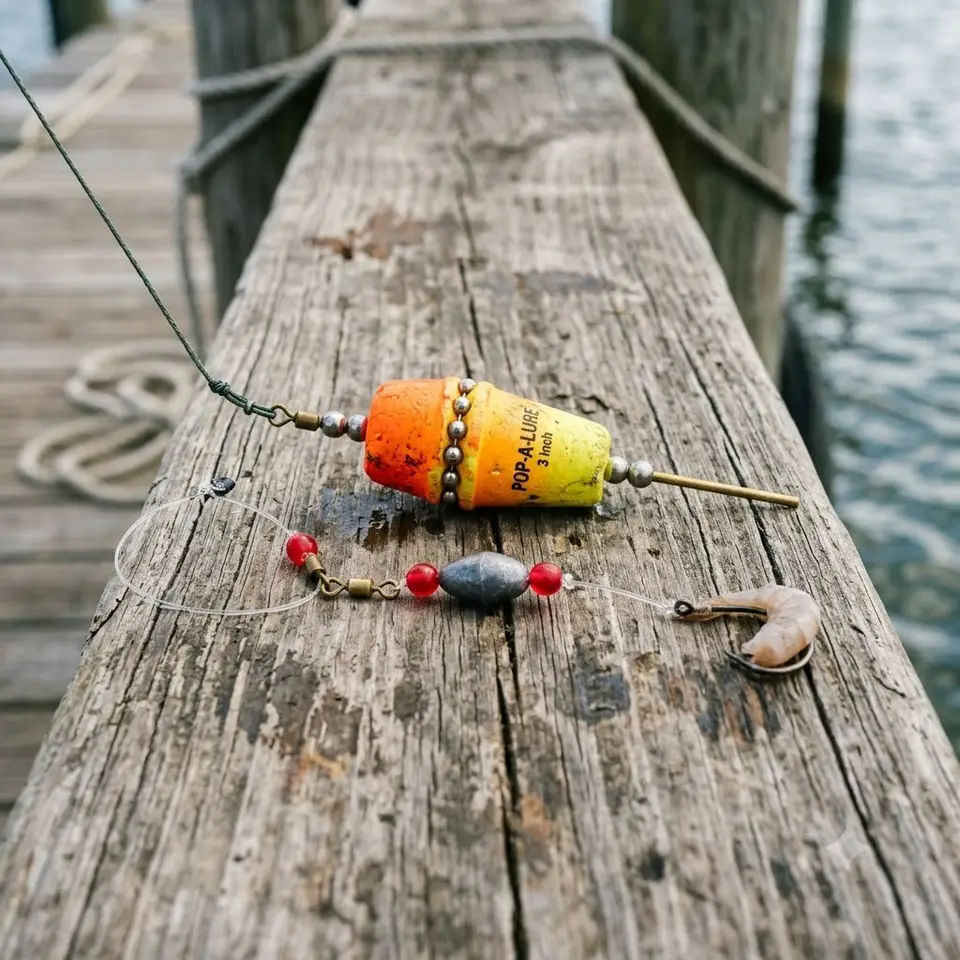
The popping cork is inshore fishing's dinner bell. A cupped or concave float strung on a wire with clacking beads suspends a shrimp or soft plastic a fixed distance below, and when you jerk the rod, the cork pops and rattles like feeding fish smashing bait on the surface. Redfish and speckled trout hear that commotion, come to investigate, and find an easy meal hanging right there. Over grass flats and marsh, few rigs are more effective or more fun.
What it is & why it works
A concave-topped float on a wire shaft strung with beads, tied into the line with a leader below carrying a shrimp (live or imitation) or a soft plastic on a jig head. The pop imitates the sound of trout and reds feeding, drawing fish to the noise; the suspended bait then hangs at a set depth in the strike zone. Sound plus a stationary target is the whole trick.
When to use it
Grass flats, marsh edges, oyster bars and shallow bays for speckled trout and redfish, and inshore fish holding over bottom you'd otherwise snag. It shines in stained water where the noise calls fish that can't see far, and over grass where a suspended bait stays above the salad. Flounder and other inshore species come too.
How to set it up
Set the leader below the cork so the bait rides just above the grass or at the fish's depth, commonly one to three feet. Tie the main line to the top of the cork and a fluorocarbon leader below to a live shrimp, a shrimp imitation, or a soft plastic on a light jig head. Match cork size to the bait and the chop so it pops well but still telegraphs a bite.
Fishing it
Cast past the target, let the bait settle, then give the rod a sharp downward jerk to make the cork chug and clack, and pause. The pause is when fish eat the falling or suspended bait, so watch the cork - it will dart under, lay over or vanish. Work it back with a pop-pause rhythm, covering the flat until you find fish, then slow down and pick the area apart.
Variations & sizing
Cupped-face "chug" corks are loud; oval clacker styles rattle more than pop. Wire (titanium) shafts last; some use a snap for quick leader changes. Longer leaders for deeper fish, shorter over shallow grass. Pair with live shrimp when available, or shrimp and paddle-tail imitations when it isn't - both fish the same way under the cork.
Common mistakes
Leader set too long so the bait drags in the grass, popping too hard or too constantly instead of pop-and-pause, missing the bite because you weren't watching the cork on the pause, and an oversized cork that a fish struggles to pull under on a light take.
🎣 Rig-building bits
As an Amazon Associate we may earn from qualifying purchases - at no extra cost to you. We link gear types, not sponsors' picks: you choose the exact product.