Helicopter Rig
A carp rig whose hook link rotates on the mainline above the lead, spinning like a rotor as it settles - it casts far and lands clean over silt and light weed.
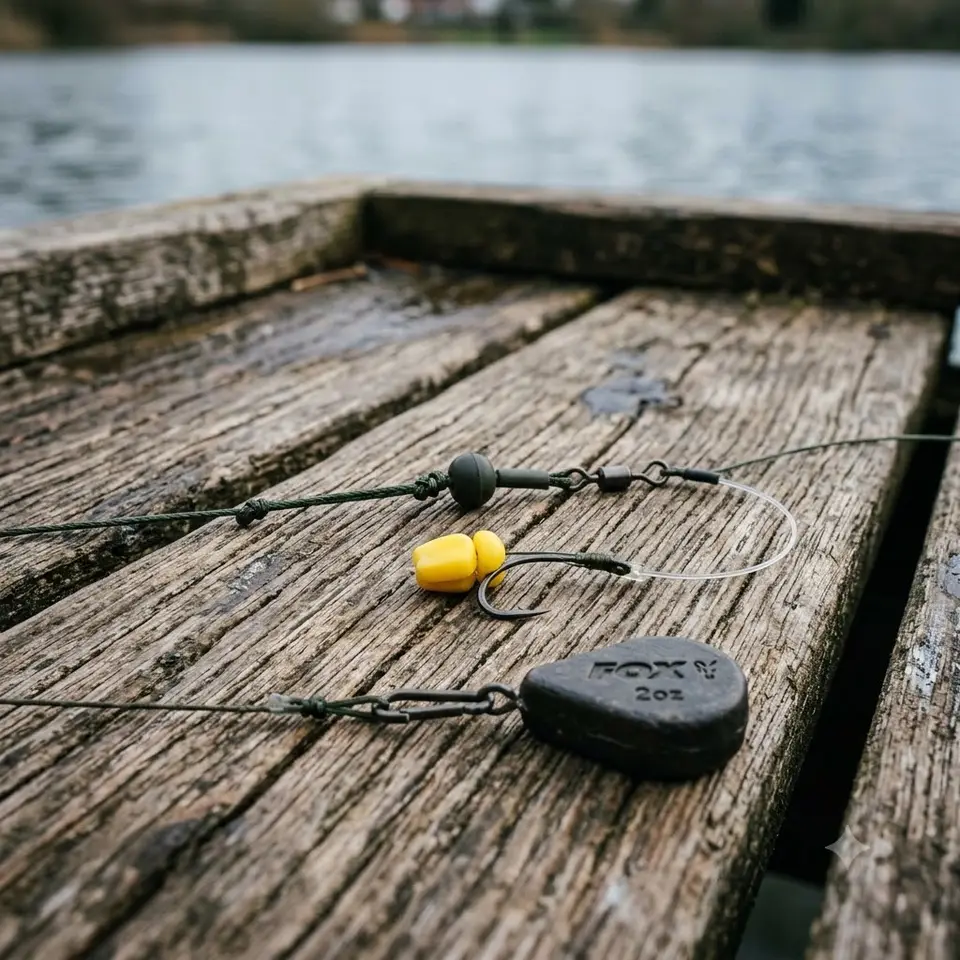
The helicopter rig (or "chod"-adjacent "heli" setup) is a distance-and-clean-landing tool for carp anglers. Instead of the hook link joining the lead directly, it rotates freely on the mainline above the weight, held between two stops. As the rig flies and then falls through the water, the hook link spins around the line like a helicopter rotor, which keeps it from tangling on the cast and lets the baited hook settle neatly on top of silt or low weed rather than plunging into it.
What it is & why it works
A setup where the hook link sits on the mainline (or a leader) above the lead, free to rotate between two beads or stops, with the weight fixed at the end. The spinning action resists tangles on long casts, and because the hook link can slide and present above the lead, the bait lands cleanly on soft or weedy bottom where an inline or bottom-tied rig would bury or foul.
When to use it
Long-range carp fishing, and any bottom that is silty, choddy or lightly weeded where you need the hook bait to sit on top rather than sink out of sight. It shines when distance and a tangle-free, clean-landing presentation matter most - big open waters, gravel pits and lakes where fish patrol well out from the bank.
How to set it up
Thread a stop bead, the rotating hook-link swivel, and a second bead onto the mainline or leader, then attach the lead at the end. Set the beads to control how far the hook link can travel, matching the drop to the depth of silt or weed. Use a short, stiff hook link for chod-style presentation over debris, or a supple one on cleaner bottom. Always rig so the lead can discharge safely if a fish is lost.
Fishing it
Cast to the spot and let the rig helicopter down; feather the line so it settles straight. The bait presents just above bottom on the sliding link. Keep the line pinned to the bottom or fished tight depending on range and features. Bites on a carp rig are typically self-hooking as the fish moves off against the lead, so watch the indicators and be ready for a fast run.
Variations & sizing
Chod-style rigs use a stiff, short hook link over deep silt; standard heli setups use longer links on firmer bottom. Bead position tunes how high the bait sits. Leader material and lead weight scale to casting distance and lakebed. Always use safe-rig components so a snapped mainline releases the lead rather than tethering a fish.
Common mistakes
Beads set so the hook link buries in silt anyway, a hook link too long or too supple to present over debris, ignoring rig safety so a lost fish trails the lead, and casting without feathering so the rig crashes down and tangles despite the spinning design.
🎣 Rig-building bits
As an Amazon Associate we may earn from qualifying purchases - at no extra cost to you. We link gear types, not sponsors' picks: you choose the exact product.