Free-Lining
Free-lining is the rig that isn't - hook, bait, nothing else - letting a live or natural bait swim and drift exactly as the fish expect food to behave.
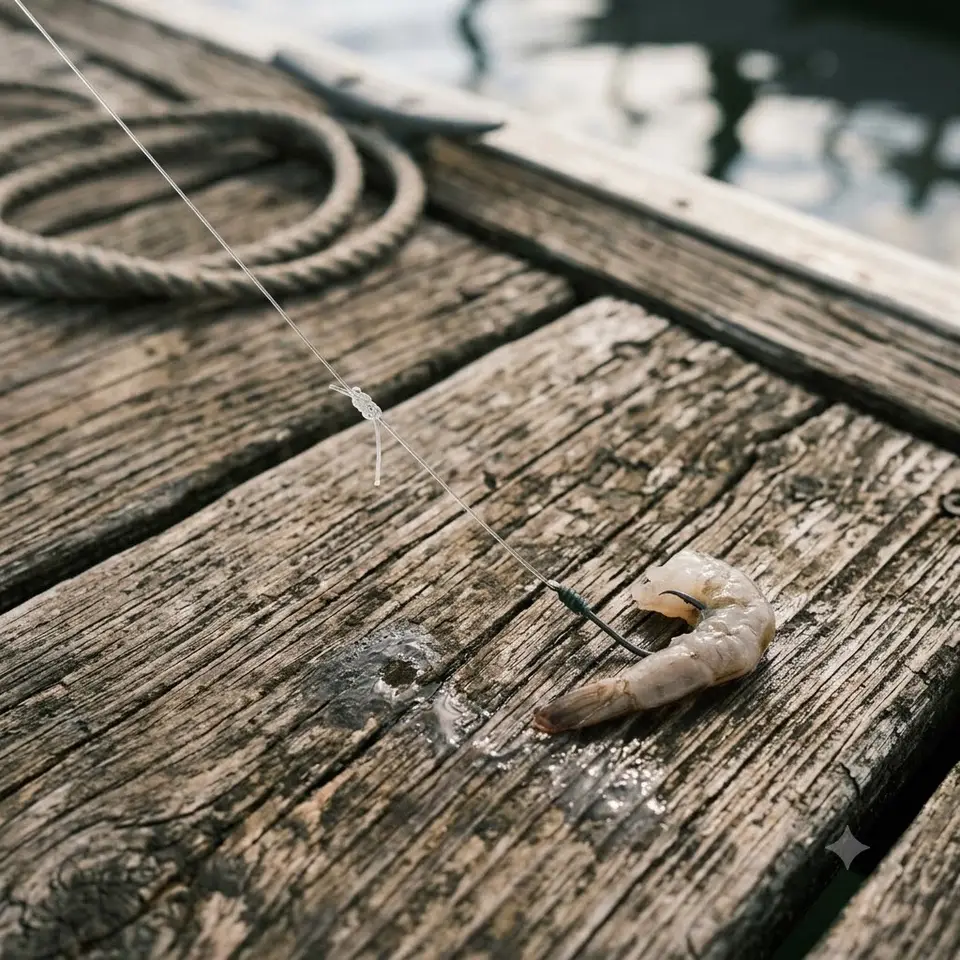
Sometimes the best terminal tackle is none: a hook tied direct, a lively bait, and slack enough line to let it go where gravity, current or its own panic takes it. Free-lining a shiner along a grass edge or drifting a chunk in a chum slick beats every weighted rig on the days fish are watching closely - because there is literally nothing to see.
What it is & why it works
Bait + hook + line, zero added weight. The bait moves at natural speed and angle - no plummet, no drag - which is precisely how everything a fish has ever eaten arrived.
When to use it
Live shiners for bass and pike at cover edges, drifting baits back in chum slicks (salt), floating a grasshopper down a summer stream, calm shallow water where any splash or sink-rate reads wrong.
How to set it up
Tie a right-sized hook direct (light fluoro leader in clear water), hook the bait to swim naturally (lips/nostrils for casting minnows, back for under-float-less struggle), and manage a controlled belly of slack.
Fishing it
Feed line as the bait works; when a predator takes, let it turn with the bait a beat (circle hooks: just tighten), then set according to hook type. Line-watching is the whole skill.
Variations & sizing
A single micro-shot when wind bellies the line; balloon or bobber ADDED later converts it to a float rig; salt free-lining runs baits down-current to fish you can't cast to.
Common mistakes
Too-heavy line ruining the drift, losing track of slack (missed strikes, gut-hooks), and free-lining in current too strong for it - that's split-shot territory.
🎣 Rig-building bits
As an Amazon Associate we may earn from qualifying purchases - at no extra cost to you. We link gear types, not sponsors' picks: you choose the exact product.