Float and Fly Rig
A long leader below a float suspends a tiny hair jig at the exact depth of cold-water smallmouth - a finesse rig for the toughest, coldest days on rocky lakes.
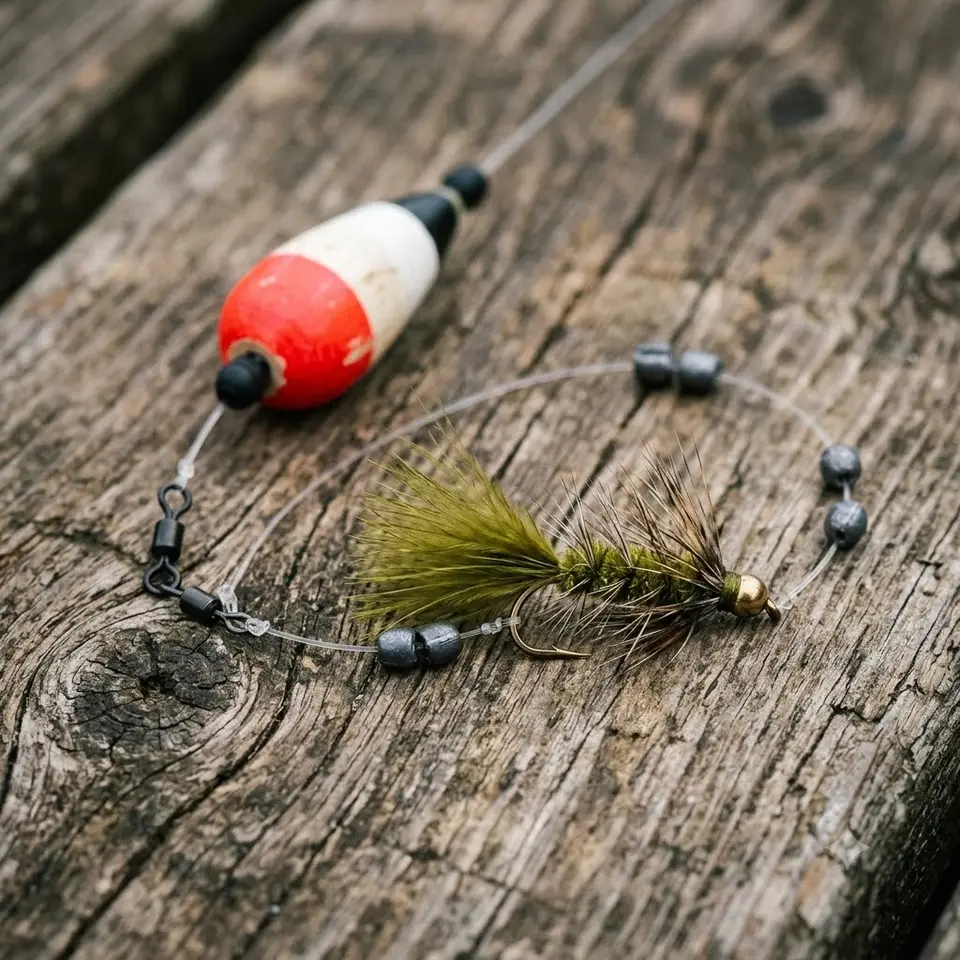
The float and fly is a specialist's answer to cold, clear water and lethargic smallmouth. A float rides on top, a long leader drops beneath it, and at the end hangs a small, sparse hair jig - the "fly." The float holds that jig motionless at the depth suspended bass are holding, and the barely-there quiver of the hair does the rest. When the water drops into the forties and fish won't chase, this rig catches them by doing almost nothing, perfectly.
What it is & why it works
A float set several feet up the line above a long leader ending in a light hair or feather jig. The float suspends the tiny fly at a precise, deep-but-fixed level and lets it hover in cold-water smallmouth's faces without falling past them. Cold fish won't move far or fast; the near-static, subtly breathing hair jig is exactly the low-energy meal they will ease over and sip.
When to use it
Late fall through early spring on clear, rocky highland lakes when water temperatures fall into the 40s and below, over bluff ends, points and rock where smallmouth suspend. It shines precisely when fish are too cold and slow for moving baits, holding at a set depth and refusing anything that demands a chase.
How to set it up
Set a float so the leader beneath it lands the fly at the fish's suspended depth - often 6 to 12 feet, sometimes more - which usually means a long leader and a special float or a spinning setup with a long, soft rod to cast the whole thing. Tie on a light hair jig, keep line light and low-visibility, and balance the float so the small jig cocks it upright.
Fishing it
Cast out and let the fly settle under the float, then do as little as possible: tiny twitches and long pauses that make the hair pulse and flare while the jig barely moves. The wind's ripple often supplies enough action on its own. Watch the float like a hawk - cold-water bites are subtle lifts, slides or slow sinks, and you set on any change.
Variations & sizing
Fixed or slip floats depending on depth, hair jigs in shad and translucent tones, and jig weight matched so the float sits right. Deeper suspends call for a slip-float version. A long, soft spinning rod makes casting the long leader and protecting the light line far easier than a short stick.
Common mistakes
Setting the leader to the wrong depth so the fly rides above or below the fish, imparting too much action for cold, sluggish bass, using line too heavy for the finesse presentation, and a rod too short and stiff to cast a long leader or cushion light line on the hookset.
🎣 Rig-building bits
As an Amazon Associate we may earn from qualifying purchases - at no extra cost to you. We link gear types, not sponsors' picks: you choose the exact product.