Wakebait
A shallow-running crankbait or minnow that throws a visible wake just under the surface on a steady retrieve - a subtle waking topwater for calm water and wary bass.
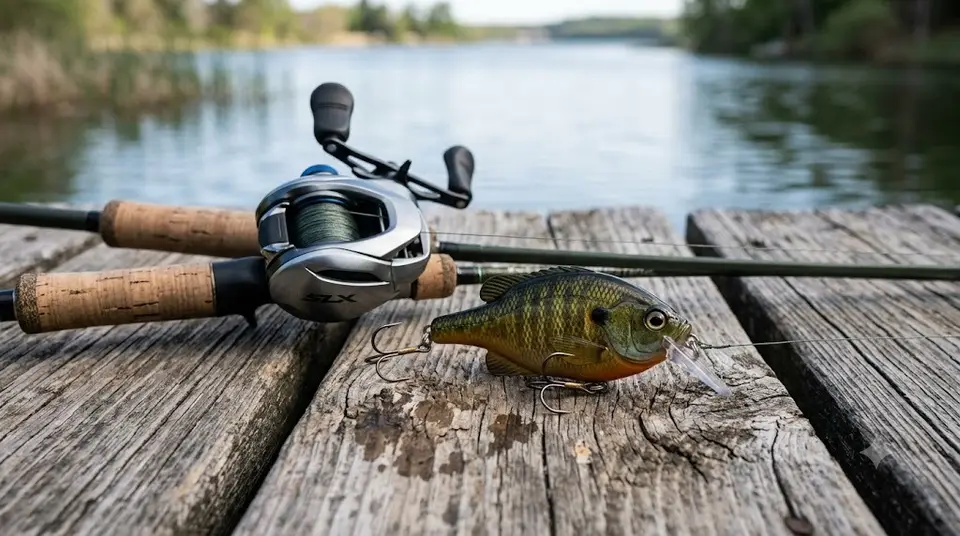
A wakebait is the quiet cousin of the topwater. Reeled steadily, it runs an inch or two under the surface and pushes a visible V-wake behind it, imitating a baitfish, duckling or rodent easing across the top. There's no splash, no popping - just a hypnotic wake that draws fish up without alarming them. On calm evenings and pressured water, that understated disturbance often out-fishes louder surface lures, and the strikes are heart-stopping surface swirls.
What it is & how it works
A buoyant crankbait, minnow or dedicated wakebait with a lip or body shape that keeps it running right at the surface film on a steady retrieve, throwing a wake rather than diving. The gentle, continuous surface push mimics prey moving across the top calmly, which pulls fish up to investigate and eat without the caution a splashy topwater can trigger.
When & where it shines
Calm, slick water at dawn, dusk and overcast days, over shallow flats, grass edges, points and around cover, and on pressured lakes where bass shy from aggressive topwaters. It shines when fish are shallow and willing to look up but want a natural, non-threatening target - late spring through fall in warm water especially.
How to fish it
The core retrieve is a slow, steady reel just fast enough to keep the wake going and the bait tracking straight under the surface. Keep the rod tip low. Add occasional pauses or a twitch near cover to trigger a following fish. Watch the wake for the bulge of an approaching bass, and wait to feel weight before setting on the swirl.
Tackle & rigging
Medium to medium-heavy rod with a slightly softer tip so you don't pull the bait from surface strikes, and monofilament (which floats and stretches) or a mono leader to keep the bait waking high. A loop knot helps the action. Keep the trebles sharp for the often-glancing surface eats.
Colors & sizes
Natural baitfish, bluegill and dark silhouettes for low-light waking. Match the size to the forage; larger wakebaits for big fish, smaller for numbers. In stained water a darker or more visible profile helps fish track the wake.
How it gets fished wrong
Reeling too fast so it dives instead of waking, or too slow so it stops tracking, setting the hook on the surface swirl before feeling the fish, running straight fluorocarbon, which sinks and drags the bait's nose under, and fishing it on choppy water where the wake disappears.
Stock the lure box
As an Amazon Associate we may earn from qualifying purchases - at no extra cost to you. We link gear types, not sponsors' picks: you choose the exact product.