Wacky Worm
A stick worm hooked through the middle so both ends quiver and shimmy as it sinks - the deadly-simple finesse fall that pressured bass can rarely resist.
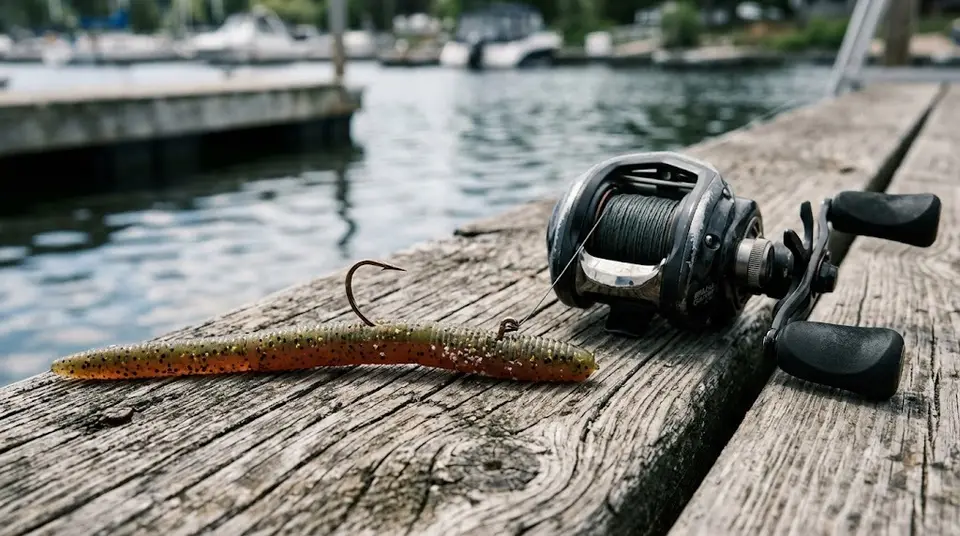
The wacky worm is proof that simple beats fancy. Take a soft, salt-heavy stick worm, hook it once through the middle, and cast it out with no weight. As it sinks, both ends droop and quiver, shimmying and undulating with a subtle, helpless action that pressured bass find nearly impossible to ignore. There's no retrieve to master and no rig to fuss over - the magic is all in the slow, twitching fall. For shallow, clear-water bass around cover, few presentations are as easy or as effective.
What it is & how it works
A soft-plastic stick worm hooked through its middle (wacky-rigged), usually weightless, so both ends hang and quiver. The dense, salt-laden body sinks slowly and horizontally, and the free ends shimmy and pulse on the fall and on the slightest twitch. That symmetrical, subtle, quivering drop imitates nothing in particular and everything at once - an easy, defenseless meal that triggers finesse-minded bass.
When & where it shines
Shallow, clear water around docks, laydowns, grass edges, spawning flats and any visible cover, especially with pressured bass. It shines in spring and fall, on calm days, and any time fish are shallow and can be tempted by a slow, natural fall. It's a top choice for beginners and a quiet confidence bait for tournament anglers alike.
How to fish it
Cast near cover and let it sink on a slack or semi-slack line, watching the line for the tick or jump of a bite on the fall - most strikes come as it drops. Twitch it to make the ends shimmy, let it fall again, and repeat. Skip it under docks and overhangs. When the line moves or jumps, reel down and set. Add a nail weight for a faster fall or to reach deeper fish.
Tackle & rigging
Spinning tackle with a medium or medium-light rod and fluorocarbon or braid-to-fluoro. Hook the worm through the middle on a wacky hook (an O-ring around the worm saves plastics and improves hookups), weightless for a slow fall or with a nail weight for depth. Keep the hook exposed for finesse or weedless for cover.
Colors & sizes
Green pumpkin, watermelon and natural tones for clear water, darker for stained; bright tips can add a trigger. Match size to the fish - standard stick worms for bass, smaller for pressured or numbers. Natural, translucent colors shine in the clear water it's built for.
Mistakes on the retrieve
Watching the rod instead of the line and missing the fall bite, retrieving it instead of letting it sink, skipping the O-ring so worms tear off constantly, and adding too much weight and killing the slow, quivering fall that makes the rig work.
Stock the lure box
As an Amazon Associate we may earn from qualifying purchases - at no extra cost to you. We link gear types, not sponsors' picks: you choose the exact product.