Umbrella Rig
A multi-wire harness carrying several swimbaits at once to imitate a small school of baitfish - the 'Alabama rig' that triggers schooling bass, where legal.
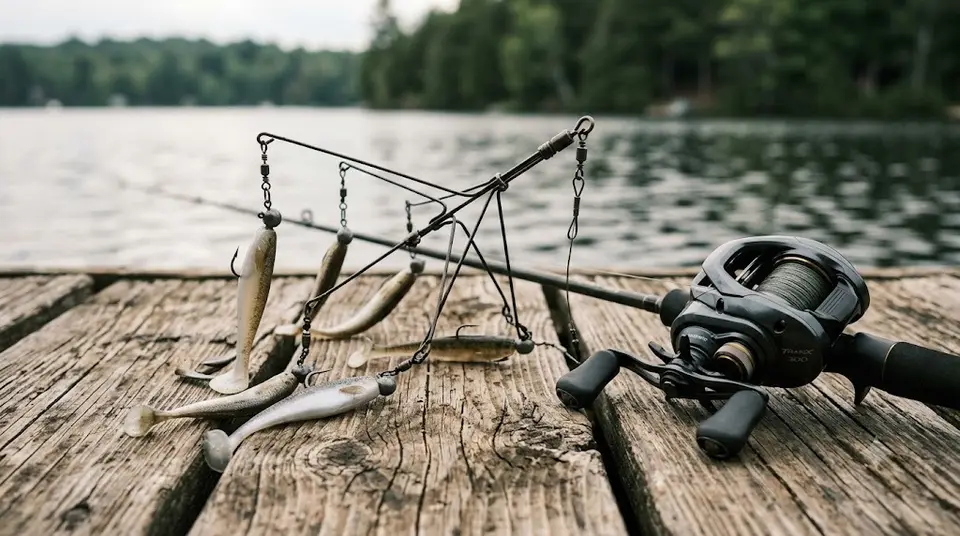
The umbrella rig, famous as the "Alabama rig," fishes a whole bait school on one cast. A central head splits into several wire arms, each carrying a small swimbait, so the retrieve drags a tight cluster of fleeing baitfish through the water. Predators that key on schools see not one target but many and commit hard. It's heavy, specialized gear with real power on schooling fish - and it comes with rules, since states set their own limits on how many of the baits may carry hooks.
What it is & how it works
A wire spreader with multiple arms (often five) ending in snaps for swimbaits on jig heads, with blades sometimes added for flash. Reeled through the water, it presents a compact, moving school of baitfish. That schooling illusion overwhelms a predator's instinct to single out prey and triggers reaction strikes, sometimes hooking more than one fish at a time.
When & where it shines
Cold-water and open-water schooling bass, especially fall through early spring when fish gang up on shad in reservoirs, over points, flats, ledges and around bait schools. It shines when bass are chasing schools in the water column and a single lure just doesn't sell the same illusion. Check local regulations first, because legal hook counts vary from state to state.
How to fish it
Cast the heavy rig, count it down to the fish's depth, and reel steadily so all the baits swim together. Slow-roll it deep or bring it faster over schooling fish. Vary depth with your count-down and speed. On the hookset and fight, expect real weight; play multiple fish carefully. Because it's tiring to cast, pick your spots where schools are located rather than blind-casting all day.
Tackle & rigging
A heavy, purpose-built rig rod, strong reel, and heavy braid or fluorocarbon to cast and control the weight. Use quality swimbait heads and hooks sized to the baits. Confirm your state's rules on the number of hooks or baits allowed - some require dummy (hookless) baits on some of the arms.
Colors & sizes
Shad and baitfish tones to match the forage, with the whole rig sized to the local bait. Smaller swimbaits for finesse schooling, larger for big fish. Add blades for flash in stained water; keep it natural in clear water.
How it gets fished wrong
Ignoring local regulations on hook counts and legality, using tackle too light to cast the heavy rig, reeling at a depth where the fish aren't, and blind-casting it all day instead of targeting located schools where the rig's illusion pays off.
Stock the lure box
As an Amazon Associate we may earn from qualifying purchases - at no extra cost to you. We link gear types, not sponsors' picks: you choose the exact product.