Tail Spinner
A compact, heavy metal body with a spinner blade on the tail - a fast-sinking flash-and-vibration bait for deep schooling bass and vertical or long-cast fishing.
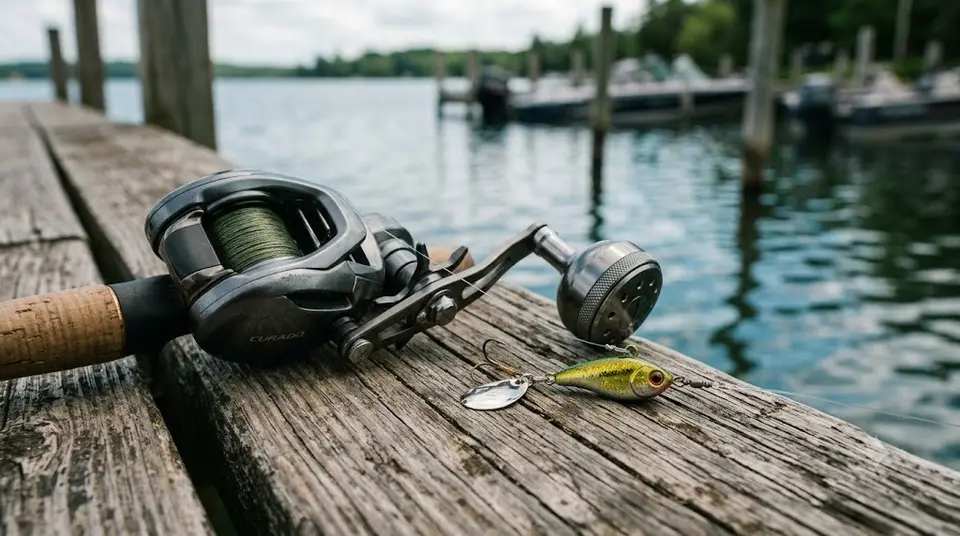
A tail spinner is a small, dense chunk of metal or lead with a spinner blade swinging off its tail. That combination - heavy body, tail blade - makes it a specialist at getting deep fast and covering the water column with flash and vibration. Cast it a mile, count it down, and burn it back through a school of bass, or drop it vertically on fish stacked deep. When bass are schooling on shad in open water, especially in the cold months, the tail spinner shines where lighter lures can't reach.
What it is & how it works
A compact, heavy body (metal or lead) with a treble hook underneath and a spinner blade attached at the tail on a swivel. Its density sinks it fast to any depth; on the retrieve or the drop, the tail blade spins for flash and vibration behind a small, baitfish-sized profile. The result is a long-casting, deep-reaching reaction lure that imitates a fleeing or dying shad.
When & where it shines
Deep schooling bass (largemouth, spotted and white bass) chasing shad, cold-water winter fishing, and open-water situations needing long casts or vertical presentations to fish stacked on electronics. It shines over points, ledges, humps and creek channels when fish hold deep and want a fast, flashy, small target.
How to fish it
Cast and count it down to the fish, then retrieve steadily or with a lift-drop "yo-yo" that spins the blade on the pull and flutters it on the fall - many strikes come as it drops. For vertical fishing, drop it to marked fish and lift-drop it in place. Keep contact so you feel the subtle deep bites, and set on any tick or added weight.
Tackle & rigging
Medium spinning or casting tackle with fluorocarbon for depth and feel, matched to the lure weight. The bait comes rigged with a treble; keep it sharp for the deep, light bites. Match the weight to the depth and how fast you want it to fall - heavier for deep schools, lighter for shallower work.
Colors & sizes
Shad, chrome and translucent tones to match cold-water baitfish, sized to the shad the bass are eating. Nickel or gold blade to match light and water clarity. Smaller for pressured, tightly-keyed fish; larger for aggressive schools.
Mistakes on the retrieve
Not counting it down to the fish's depth, missing the fall bites by keeping slack, fishing it too fast so it rises out of the zone, and dull trebles that fail to stick the subtle deep-water strikes.
Stock the lure box
As an Amazon Associate we may earn from qualifying purchases - at no extra cost to you. We link gear types, not sponsors' picks: you choose the exact product.