Soft Plastic Worm
The soft plastic worm - Texas rigged, wacky rigged or shaky headed - is the most versatile and forgiving bass lure ever made: slow, snagless and eaten everywhere fish swim.
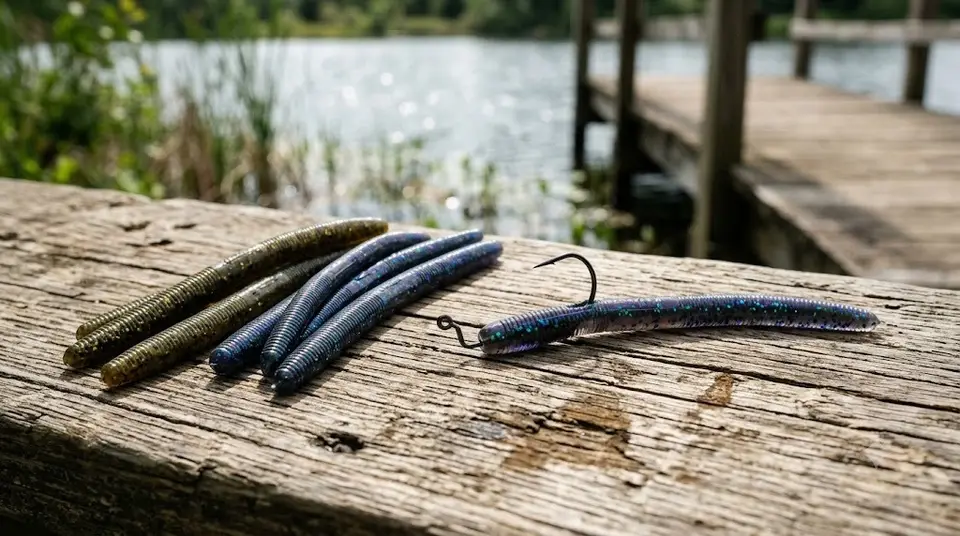
If bass fishing allowed one lure only, most honest anglers would take a bag of soft plastic worms. Rigged Texas-style it is nearly snagless in the thickest cover; wacky rigged it shimmies on the fall like nothing a bass can refuse; on a shaky head it catches fish when nothing else gets a bite. It is slow fishing that rewards feel - and it teaches the bottom of a lake better than any electronics.
What it is & how it works
A soft, supple plastic worm from 4 to 10+ inches, rigged on a single hook a dozen different ways. Its value is subtlety: quiet entry, natural undulation, slow falls and the ability to be fished dead slow in the strike zone.
When & where it shines
Everywhere, all season - but especially clear water, pressured fish, hot summer days and any time the bite is tough. Texas rig for cover, wacky for docks and spawn flats, shaky head for deep clean bottom, big 10-inch worms for summer ledges at night.
How to fish it
Texas: cast to cover, let it fall on semi-slack, lift-drop back. Wacky: skip to the target and let it shimmy down - most bites come on that first fall. Watch the line: a tick, a jump or a sideways crawl is a fish. Reel down, sweep-set.
Tackle & rigging
Medium-heavy casting for Texas (12-17 lb fluoro, offset EWG hook, bullet weight); medium spinning for wacky and shaky (8-10 lb fluoro or braid-to-leader). Peg the weight in heavy cover.
Colors & sizes
Green pumpkin everywhere, junebug and black-blue in stain, watermelon in clear. 5-inch stick worms and 6-7-inch curly tails carry most days.
What makes this lure fail
Working it too fast and too much (fish eat it standing still), missing line-watch bites, and setting the hook straight up on braid instead of a sweeping set.
Stock the lure box
As an Amazon Associate we may earn from qualifying purchases - at no extra cost to you. We link gear types, not sponsors' picks: you choose the exact product.