Skirted Jig
The skirted jig crawled along bottom cover imitates a crawfish and consistently catches the biggest bass in the lake - the slowest lure in the box and the one trophies eat.
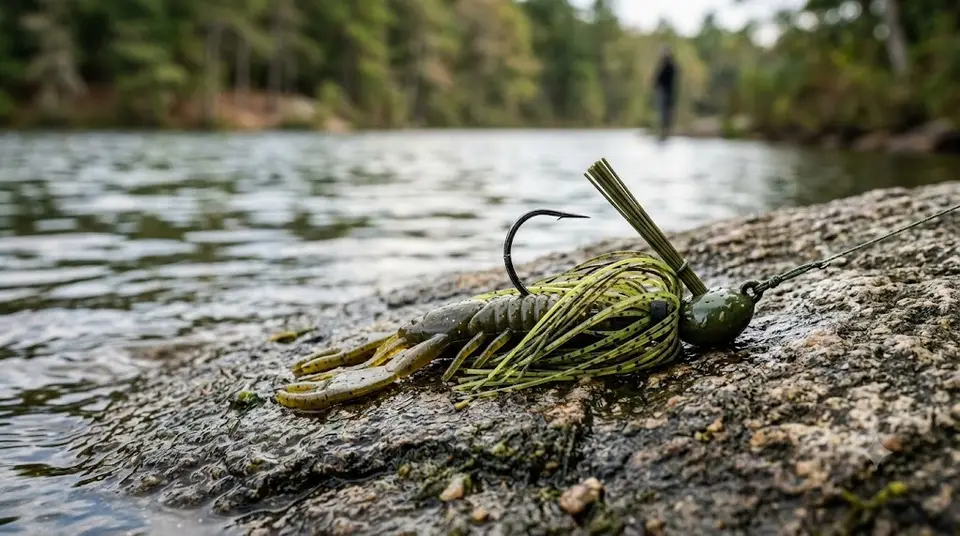
Ask around the tournament world which single lure catches the biggest bass, and the skirted jig is the usual answer. A lead head, silicone skirt, weed guard and craw trailer, crawled and hopped through the cover other lures can't survive - it looks like a crawfish backing away with claws up, and big, old, cover-hugging bass simply cannot leave it alone. It is slow, deliberate, feel-everything fishing, and it is worth learning.
What it is & how it works
A weighted hook head molded with a fiber weed guard, dressed with a silicone skirt and a soft-plastic craw or chunk trailer. On bottom it stands claws-up like a defensive crawfish; the weed guard lets it crawl through wood and rock.
When & where it shines
Year-round, anywhere bass relate to bottom cover: laydowns, stumps, rock, docks (skipping!), grass edges and deep structure. Cold water and heavily pressured big fish especially - when they won't chase, they still eat a jig.
How to fish it
Drag, hop and shake it along bottom, pausing after every contact with cover. Watch the line and feel for the tick, mush or sudden weight of a bite, then reel down and set hard. Skipped under docks it reaches fish nothing else touches.
Tackle & rigging
7'-7'6" heavy casting rod, 15-20 lb fluorocarbon (or 50 lb braid in grass), high-speed reel to pick up line on the set. Trailer always: craw for hopping, chunk for crawling.
Colors & sizes
Green pumpkin and brown-craw on most bottoms, black-blue in stain and shade. 3/8 oz all-around, 1/2 oz+ for depth and flipping mats; finesse 3/16 oz when it's tough.
What makes this lure fail
Fishing it too fast (it's a bottom-crawler, not a swim bait), missing bites by waiting for a yank (a jig bite is often just weight), and skipping the trailer or letting it foul.
Stock the lure box
As an Amazon Associate we may earn from qualifying purchases - at no extra cost to you. We link gear types, not sponsors' picks: you choose the exact product.