Pencil Popper
A long, tail-heavy topwater you whip into a frantic spitting, splashing walk - a long-casting surface lure that calls up stripers, bluefish and big bass from a distance.
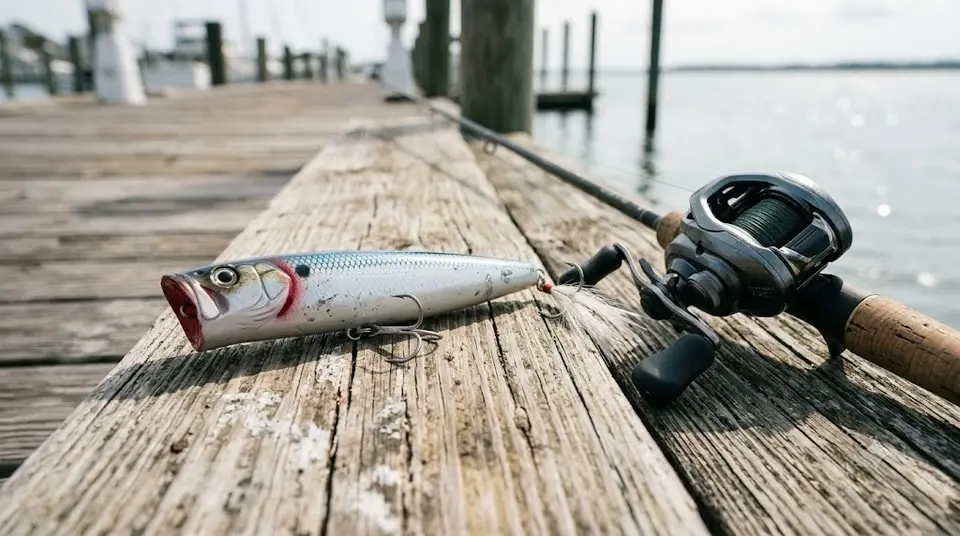
The pencil popper is a topwater built for distance and commotion. Long and cigar-shaped with a weighted tail, it casts like a bullet and, when worked with a rhythmic pumping of the rod tip, dances upright and spits water in a frantic, wounded-baitfish display. On the striper coast it calls fish up from deep water and across current; on freshwater it draws explosive strikes from big bass. It's a lure that demands active rod work and rewards it with violent surface eats.
What it is & how it works
A slender, tail-weighted topwater plug with a cupped or pointed nose. The tail weight makes it cast far and stand up when twitched. A steady cadence of sharp downward rod pumps makes the nose splash and the body sputter side to side across the surface, mimicking a panicked baitfish skittering to escape. That distress display pulls predators up from below.
When & where it shines
Striper and bluefish surf, jetties and open coast where long casts reach breaking or deep fish, and freshwater for big bass over points, humps and around schooling activity. It shines in low light, moving water and any time gamefish are chasing bait near the surface, especially when you need to reach fish beyond normal casting range.
How to fish it
Cast out and establish a rhythm: sharp downward twitches of the rod tip while taking up slack, making the lure spit and dance in place or walk erratically. Vary the tempo - a frantic burst can trigger a following fish. Keep some slack so the nose works freely. When a fish blows up, resist setting until you feel weight, since surface strikes often miss.
Tackle & rigging
A longer rod helps cast the weight and work the lure; medium-heavy to heavy power for stripers, matched to braid or mono. Upgrade to strong saltwater trebles or swap to single hooks where required. Freshwater versions run lighter tackle. A loop knot or split ring keeps the nose action free.
Colors & sizes
Bunker, herring and bright chartreuse or white for stripers; shad and natural tones for bass. Bigger sizes for surf and big fish, smaller for freshwater. Match the profile to the local baitfish, and lean toward visible colors in rough or stained water.
How it gets fished wrong
Working it with no rhythm so it never spits or stands up, keeping the line too tight to let the nose splash, setting the hook on the blowup before feeling the fish, and using weak factory trebles that straighten on a big striper or bull bluefish.
Stock the lure box
As an Amazon Associate we may earn from qualifying purchases - at no extra cost to you. We link gear types, not sponsors' picks: you choose the exact product.