Inline Spinner
The inline spinner's blade spins around a straight wire on a plain retrieve, catching trout, panfish, bass and pike alike - the simplest, most universal lure ever made.
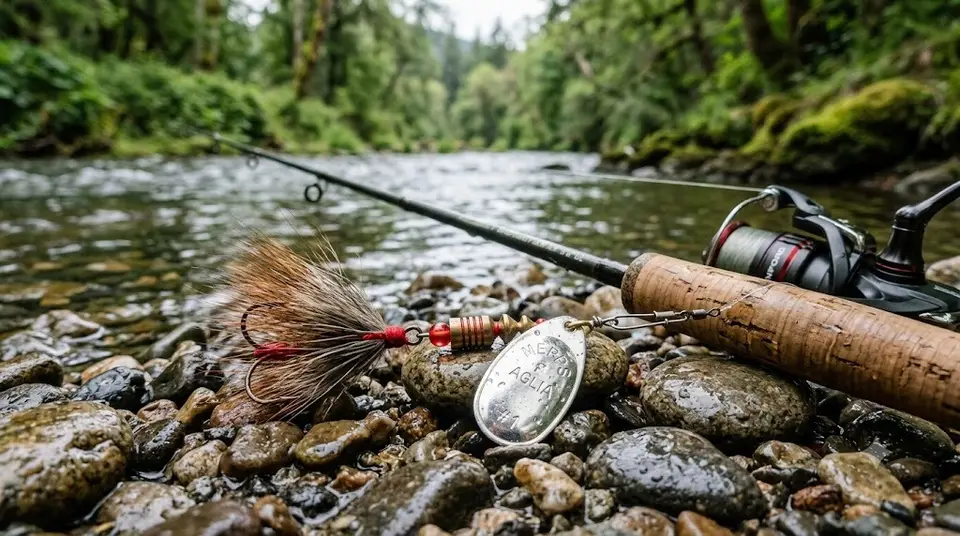
The inline spinner may be the most universal fish catcher ever built. A blade rotating around a straight wire shaft over a weighted body, it needs nothing from you but a cast and a retrieve, and everything with fins eats it: stream trout, pond bass, panfish, pike. For beginners it is the perfect first lure; for veterans it remains the quiet stream-and-pond assassin.
What it is & how it works
A straight-wire lure with a blade spinning around the shaft, a weighted body, and a treble often dressed with squirrel tail or feathers. The rotation gives flash and a steady pulse at slow speeds any fish can find.
When & where it shines
Streams and rivers for trout (cast up-and-across, retrieve just faster than the current), ponds and lake edges for bass and panfish, weed edges for pike. Anywhere something is small enough to eat a #1-#3 blade - so everywhere.
How to fish it
Cast, let it sink to your depth, and retrieve just fast enough to feel the blade thump. In current, swing it across the flow. Vary speed until the blade barely turns - slower usually wins.
Tackle & rigging
Light or ultralight spinning gear, 4-8 lb line. Use a small swivel or a quality snap-swivel - inline spinners twist line badly without one.
Colors & sizes
Silver blades in sun and clear water, gold in stain and low light; #0-#2 for trout and panfish, #3-#4 for bass and pike. Dressed trebles add wobble and slower fall.
What makes this lure fail
Skipping the swivel and ruining a spool with line twist, retrieving too fast to keep the blade just-turning, and hesitating in trees - lost spinners are the tuition of stream fishing.
Stock the lure box
As an Amazon Associate we may earn from qualifying purchases - at no extra cost to you. We link gear types, not sponsors' picks: you choose the exact product.