Ice Jig
A small, dense jig dropped vertically through the ice and worked with tiny lifts and quivers - the core hardwater lure for panfish, perch, walleye and trout below the ice.
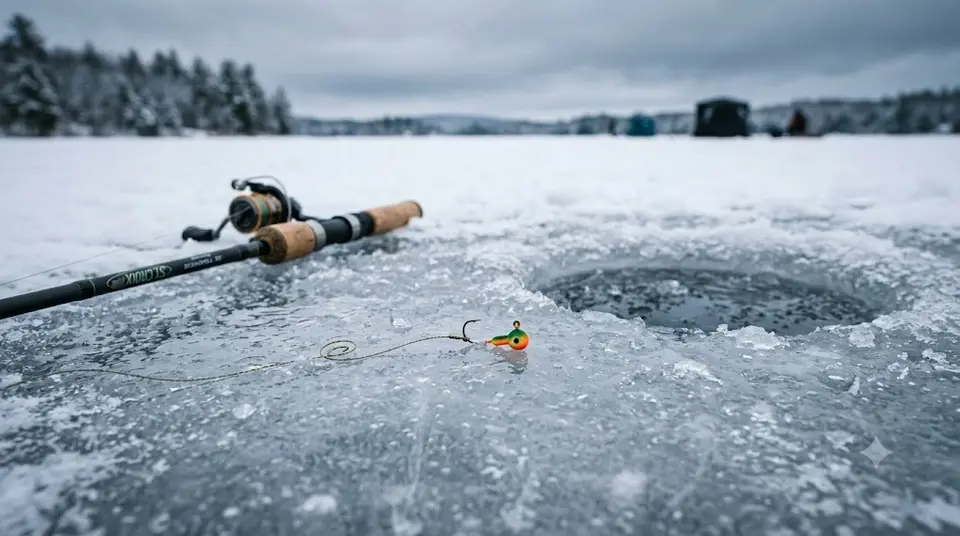
The ice jig is winter fishing distilled to its essence. Dropped straight down through a hole in the ice, this small, dense lure is worked in place with tiny lifts, quivers and long pauses to tempt cold, sluggish fish holding below. Tipped with a grub or plastic and fished over electronics, it accounts for the bulk of the hardwater catch - panfish, perch, crappie, walleye and trout. Success on the ice is a game of subtlety and depth control, and the ice jig, worked right, is how it's won.
What it is & how it works
A small, heavy jig - often a teardrop, tungsten ball, or horizontal-balance style - designed to sink fast down an ice hole and be jigged vertically in place. Tipped with live bait (waxworms, spikes, minnows) or a small plastic, it's worked with subtle lifts, shakes and pauses. Its compact profile and the angler's tiny movements imitate the small, slow forage that cold-water fish sip below the ice.
When & where it shines
Hardwater season on frozen lakes for panfish (bluegill, crappie, perch), walleye and trout, fished vertically over located fish. Tungsten styles shine in deep water for their fast sink and small profile; horizontal jigs excel for aggressive panfish and perch. It's the primary tool any time you're fishing straight down through the ice, from first ice to last.
How to fish it
Drop it to the fish's depth (found with a flasher, sonar or a count), then work it in place: gentle lifts, tiny quivers, and long pauses, since most bites come on the pause or as fish rise to the falling jig. Watch your electronics and the fish's reaction, and slow down or hold still when a fish comes in. Bites are often just a slight lift or tick on the line, so use a sensitive spring bobber or watch the line closely and set gently.
Tackle & rigging
A short ice rod matched to the jig weight, a small reel or inline reel, and light line, often with a spring bobber for detecting subtle bites. Tip the jig with live bait or a small plastic. Tungsten jigs sink faster and fish smaller for their weight - useful in deep water and for finicky fish. Match jig size to the species and depth.
Colors & sizes
Bright chartreuse, orange, pink and glow colors for visibility in dim under-ice light, natural tones for clear water and pressured fish. Tiny jigs for panfish, larger for walleye and trout. Glow finishes charged with a light can help in deep or stained water.
How it gets fished wrong
Jigging too aggressively for cold, lethargic fish, missing the subtle pause bites by not watching the line or spring bobber, fishing at the wrong depth instead of using electronics to find the fish, and line so heavy it kills the tiny jig's action and your bite detection. Always follow local ice-safety guidance before heading out - no fish is worth going through the ice.
Stock the lure box
As an Amazon Associate we may earn from qualifying purchases - at no extra cost to you. We link gear types, not sponsors' picks: you choose the exact product.