Chatterbait (Bladed Jig)
The bladed jig snaps side to side behind a hex blade, hunting and kicking through grass with a vibration bass feel from a distance - the modern staple for stained, grassy water.
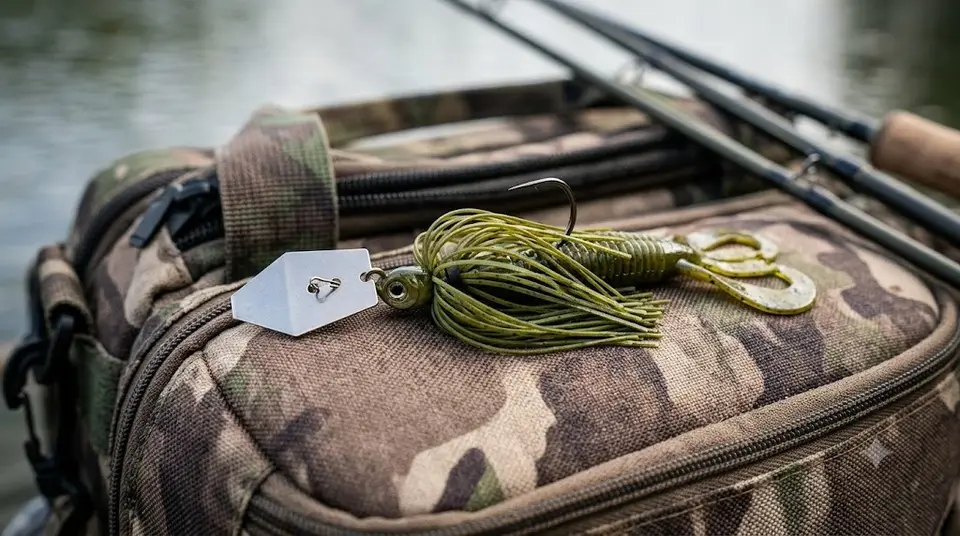
The chatterbait - properly a bladed swim jig - added a hexagonal blade to the nose of a skirted jig and created the most violent action in bass fishing: a hard, hunting, side-to-side chatter you can feel through the rod and fish can feel across a flat. It fishes like a spinnerbait but runs through grass better and gives off a completely different signal - which is why it has taken over springtime grass lakes.
What it is & how it works
A jig head with a hex blade pinned to the nose and a skirt plus soft-plastic trailer behind. Water pressure makes the blade snap left-right, driving a hard vibration and an erratic hunting action - occasionally darting off line like a fleeing baitfish.
When & where it shines
Submerged grass in 1-8 feet - pre-spawn through post-spawn is its championship season - plus stained water, shell flats and windy banks any time. Where bass eat bluegill and shad around vegetation, it excels.
How to fish it
Steady retrieve ticking the grass tops, ripping it free when it loads. Vary with kills and speed bursts; the moment it snags-and-snaps out of grass is the strike trigger. Around hard cover, slow-roll and deflect.
Tackle & rigging
7'-7'3" medium-heavy casting rod (moderate tip helps keep fish pinned), 15-17 lb fluorocarbon, 6.3-7:1 reel. Always add a trailer - a swimbait or craw body.
Colors & sizes
Green pumpkin and bluegill patterns around grass, white/shad on wind-blown flats, black-blue in muddy water. 3/8 oz is the do-everything size; 1/2 oz for deeper grass lines.
What makes this lure fail
Fishing it without a trailer (loses action and profile), steady-reeling above the grass instead of into it, and using a fast stiff rod that pulls the single hook on jumping fish.
Stock the lure box
As an Amazon Associate we may earn from qualifying purchases - at no extra cost to you. We link gear types, not sponsors' picks: you choose the exact product.