Bucktail Jig
A lead head dressed with deer-hair fibers - the most versatile saltwater and freshwater jig ever made, catching everything from fluke to stripers to bass on a simple lift-drop.
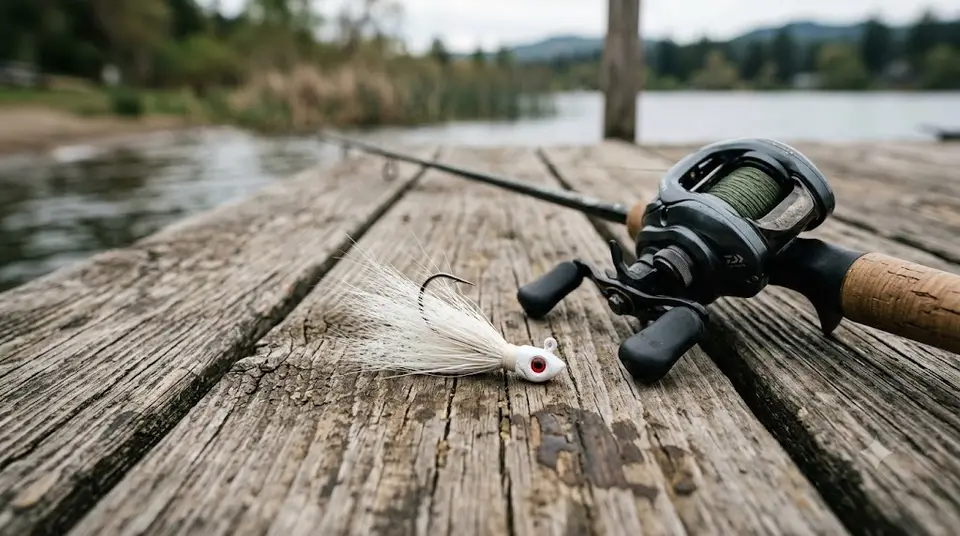
The bucktail jig is fishing's ultimate do-everything lure. A simple lead head tied with deer-tail hair, it has probably caught more species than any other artificial: fluke, striped bass, redfish, weakfish, snook, bass, walleye and on and on. The bucktail hair pulses and breathes, the head gets it down and gives it action, and a basic lift-drop retrieve makes it swim and flutter like a wounded baitfish. Cheap, tough and endlessly adaptable, the bucktail belongs in every tackle box, salt and fresh.
What it is & how it works
A lead jig head tied with bucktail (deer-tail) hair, often trailed with a soft-plastic strip, grub or natural bait. The hair breathes and undulates while the head provides casting weight and a darting, falling action. On the lift it swims and pulses; on the drop it flutters and the hair flares. That baitfish imitation, controllable in depth and speed, is what makes it work across so many species and conditions.
When & where it shines
Saltwater for fluke, stripers, redfish, weakfish, snook and blues over sand, structure and in current; freshwater for bass, walleye and river fish. It shines drifting for fluke, bouncing bottom in current, casting to structure, and anywhere a versatile, controllable jig can be worked - from surf and inlets to lakes and rivers.
How to fish it
The core retrieve is a lift-drop: sweep or hop the rod to swim the jig up, then let it fall on a controlled line, since most strikes come on the flutter down. Drift it along the bottom in current for fluke, snap it through structure for stripers, or swim it steadily. Add a soft-plastic or bait trailer for bulk and scent. Keep contact and set on any tick or weight on the fall.
Tackle & rigging
Spinning or conventional tackle sized to the species and jig weight, with braid for feel and a fluoro leader. Tip with a scented soft strip, plastic grub or natural bait to add action and scent. Match head weight to depth and current - heavy enough to hold bottom, light enough to flutter naturally. One note for fresh water: some states restrict small lead jigs to protect loons. Maine's wildlife agency, for one, reports that it became illegal on September 1, 2026 to use painted lead jigs weighing one ounce or less or measuring 2½ inches or less on inland waters - check your state's tackle rules or pick a non-lead head.
Colors & sizes
White is the universal starting color; chartreuse, pink and natural baitfish tones cover most situations. Match trailer color to the head. Size the whole jig to the depth, current and forage - light for shallow calm water, heavy for deep water and strong current.
How it gets fished wrong
Falling on a slack or overly tight line so you miss the drop bites, wrong head weight for the current so you can't hold bottom or it drops like a rock, skipping a trailer when scent and bulk would help, and working it with no lift-drop rhythm so the hair never breathes.
Stock the lure box
As an Amazon Associate we may earn from qualifying purchases - at no extra cost to you. We link gear types, not sponsors' picks: you choose the exact product.