Treble Hook
Three hooks fused at one eye - the standard terminal hardware on crankbaits, spoons and topwaters, catching fish that swipe from any angle.
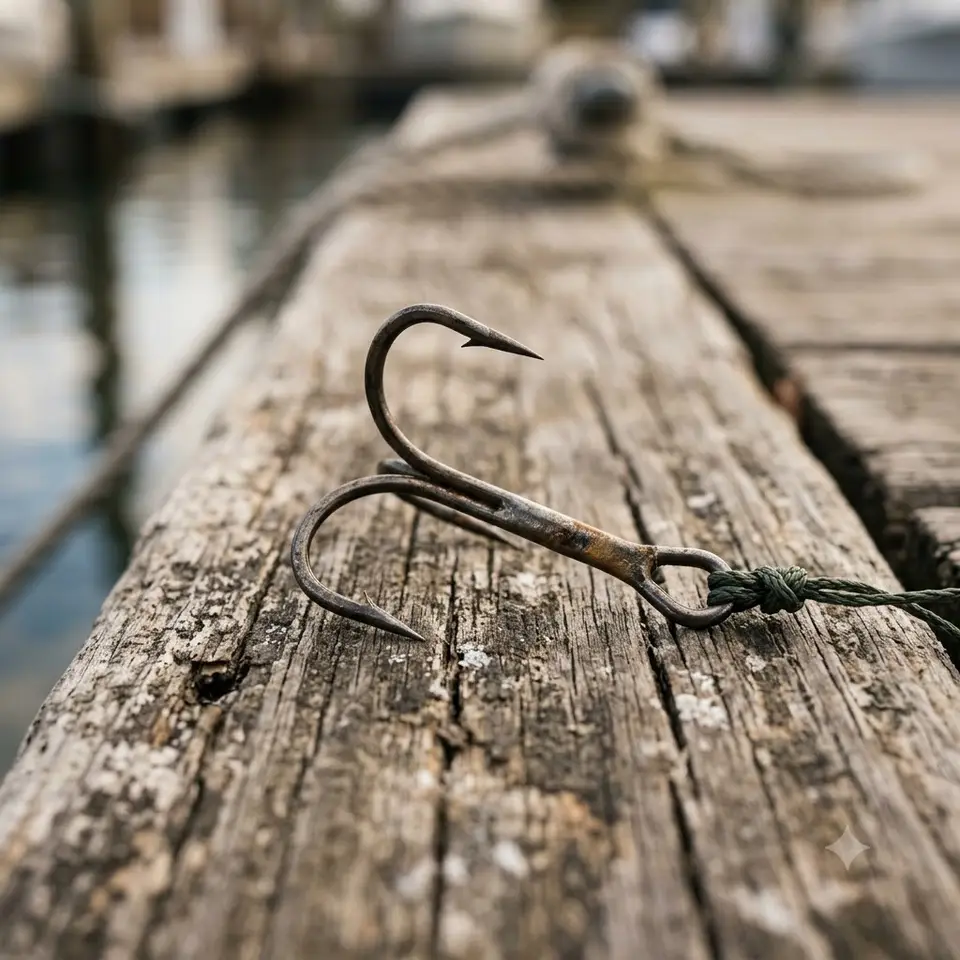
A treble is three hooks sharing a single shank and eye, points radiating at 120 degrees. Bolt them under a crankbait, a spoon or a topwater and a fish slashing from any direction meets a point. That multi-angle bite is why nearly every hard lure wears trebles - and also why they're the hook most tangled in landing nets, fingers and released fish, prompting the barbless and single-hook conversions many anglers now run.
What it is
Three hooks brazed to one shank and eye, hung from a lure via a split ring; the default treble is a round-bend, but short-shank and wide-gap versions exist.
When to use it
Hard baits and moving lures: crankbaits, jerkbaits, topwaters, spoons and inline spinners - anywhere fish strike a fast, hard body and you need coverage from every angle.
How to rig & set it
They come mounted; upgrade to sharp, correctly-sized replacements via split rings. With treble-armed lures, do NOT hammer the hookset - a steady sweep or just reeling into the fish pins them; slamming pulls trebles free.
Sizing
J-numbering; match the size the lure was designed for - too big fouls the action and hangs bottom, too small loses hooking power.
Strengths & weaknesses
Outstanding hook-up on fast strikes and short swipes. Weaknesses are real: hard on fish (deep multi-point wounds), a menace in nets and hands, and prone to snagging - hence single-hook and barbless conversions in many fisheries.
Where hook choice goes wrong
Fishing dull factory trebles (upgrade them), over-setting and pulling them out, wrong sizing that kills lure action, and ignoring local rules that restrict treble/hook counts.
Hooks to keep on hand
As an Amazon Associate we may earn from qualifying purchases - at no extra cost to you. We link gear types, not sponsors' picks: you choose the exact product.