Octopus Hook
A short-shank, round-bent hook with an up-turned eye - compact enough to hide in live or natural bait so it swims freely. The salmon-and-steelhead favourite.
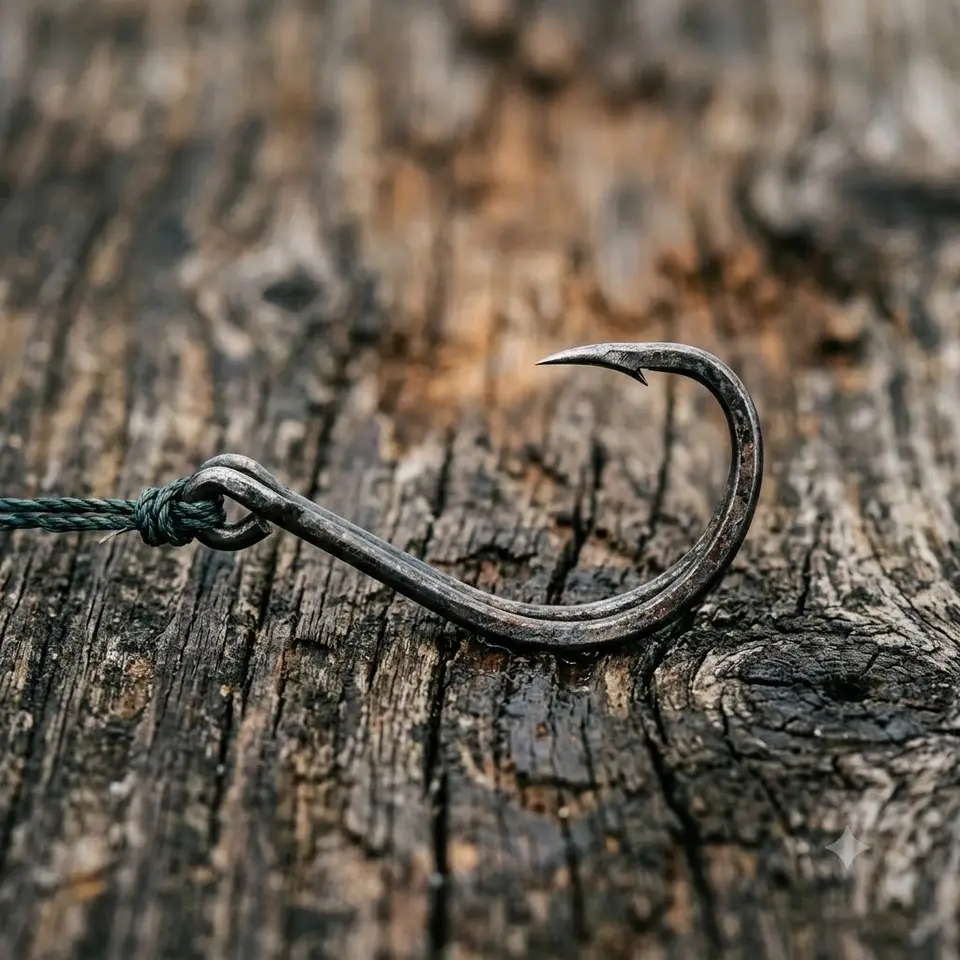
The octopus hook is the short, curvy compromise between a J-hook and a circle: a rounded bend, a short shank and (usually) an up-turned eye that suits a snelled knot. Its whole point is minimal footprint - a small strong hook that vanishes inside a live minnow, a salmon egg cluster or a piece of shrimp so the bait behaves like it isn't hooked at all.
What it is
A short-shank, round-bent hook, typically with an up-eye for snelling, prized for hiding in small live and natural baits.
When to use it
Live-bait finesse and natural-bait drift fishing: salmon and steelhead with roe or beads, walleye with leeches and minnows, inshore live-lining, and any time bait presentation and stealth matter more than a long hookset lever.
How to rig & set it
Snelling suits the up-eye and gives straight-line pull; hook live bait through the lips or back so it swims, roe in a loose cluster. Set with a firm sweep - short shank means a decisive lift.
Sizing
J-hook numbering; run small (size 4-1/0 covers most freshwater live-bait work) so the hook disappears in the bait.
Strengths & weaknesses
Compact, strong, superb for natural presentation and light-line finesse. Weakness: the short shank gives less leverage and less bite protection than a long-shank hook against toothy or shell-crushing fish.
Where hook choice goes wrong
Going too big and killing the bait's action, burying the point, and using it where a long-shank hook's reach (for deep-mouth species) or a circle's self-set (for dead-sticking) would serve better.
Hooks to keep on hand
As an Amazon Associate we may earn from qualifying purchases - at no extra cost to you. We link gear types, not sponsors' picks: you choose the exact product.