Jig Hook
A hook with a bend near the eye (usually 60 or 90 degrees) so lead can be moulded around it into a jig head - the foundation of every jig you fish.
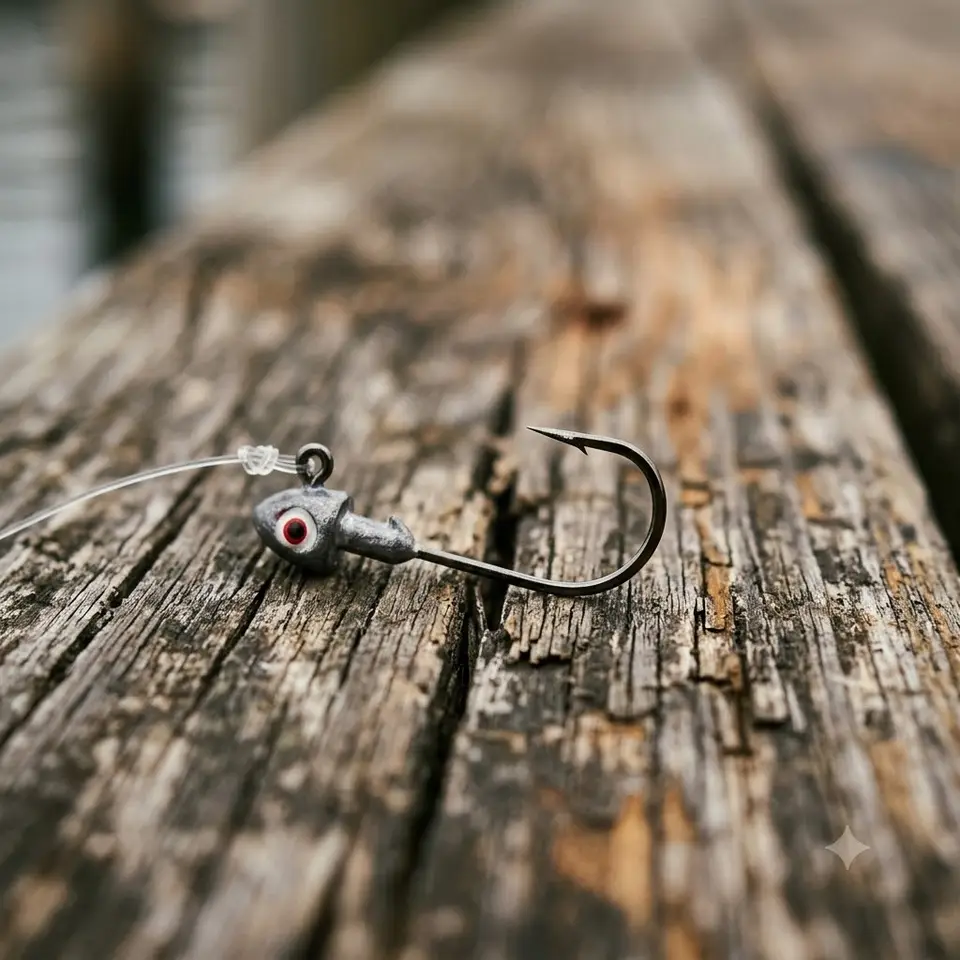
Every jig starts with a jig hook: a strong hook bent near the eye so a weight can be moulded onto it, positioning the eye to ride line-up while the point rides up. It's less a hook you buy loose than the skeleton inside every ballhead, football, swim and finesse jig - and understanding its bend angle, wire gauge and point tells you why one jig hooks fish and another loses them.
What it is
A hook with a defined bend near the eye (commonly 60° or 90°) built to be cast into a lead head, orienting the eye for the line and the point upward.
When to use it
Anywhere a jig fishes - ballhead finesse, football jigs on rock, swim jigs, flipping jigs - and when pouring or buying jig heads, the hook inside is the spec that matters.
How to rig & set it
Comes moulded in the head; thread a soft plastic or tie a skirt so the point stays clear and up. Set firmly - jigs are bottom-contact lures and the point must drive up into the roof of the mouth.
Sizing
J-numbering matched to head weight and target; heavier flipping jigs run 4/0-5/0 heavy wire, finesse heads 1-2/0 light wire.
Strengths & weaknesses
Point-up orientation and weight integration give jigs their bottom-feel and hooking power. Weakness is the flip side of any moulded hook: you can't change it without changing the whole head, so buy heads with quality, sharp, correctly-gauged hooks.
Where hook choice goes wrong
Cheap heads with soft dull hooks (the #1 jig failure), wire too light for the cover, and rigging plastics that bury the point.
Hooks to keep on hand
As an Amazon Associate we may earn from qualifying purchases - at no extra cost to you. We link gear types, not sponsors' picks: you choose the exact product.