Spring Bobber & Ice Floats
Tiny winter bite indicators - a spring wire on the rod tip or a small in-hole float - built to reveal the near-weightless up-and-down bites of ice fishing.
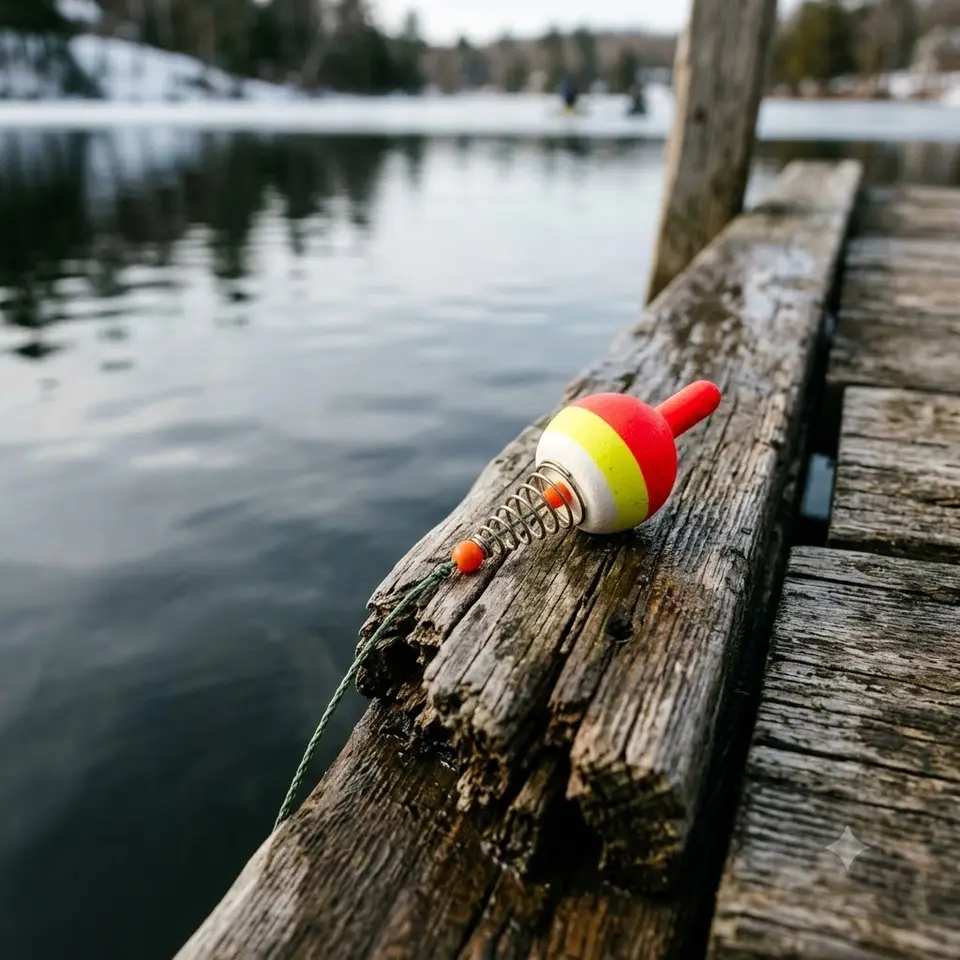
Under the ice, panfish bites are a rumour: a half-millimetre tremble or a weightless 'up-bite' where the fish lifts the jig and the line goes slack. Ordinary floats can't show it. The spring bobber (a fine coiled wire on the rod tip) and the small in-hole ice float exist precisely to reveal these ghost bites, bending or rising at a touch a hand could never feel.
What it is
Winter-specific indicators: a spring-steel wire attachment on the ice rod tip, and small foam/balsa in-hole floats set to ride just at the waterline for the softest bite detection.
When to use it
Ice fishing for panfish and finicky winter fish, where bites are minute and often 'up' (slack-line) rather than pulling; any hard-water finesse jigging where feel alone misses fish.
How to set it up
Spring bobber: thread the line through the wire tip so the coil bends to the jig's weight; a bite loads or unloads it. In-hole float: shot it so the tiny tip sits flush at the surface, hovering the jig at the fish's depth. Ice safety comes first - know your ice thickness before any of this.
Reading the bite
Watch for the spring wire to lift/bend or the float to rise or sink even a fraction - the classic winter 'up-bite' shows as the indicator rising as the fish takes the jig's weight off. Set on ANY change.
Sizing & shotting
Everything tiny and light: match the spring/float to the micro-jig so the smallest bite registers; heavier setups mask winter bites entirely.
Mistakes with this float
Too stiff a spring or too buoyant a float (masks the bite), missing the up-bite (a rise, not a dip), and - the real one - forgetting that ice fishing's rule number one is ice safety, not tackle.
Float-fishing kit
As an Amazon Associate we may earn from qualifying purchases - at no extra cost to you. We link gear types, not sponsors' picks: you choose the exact product.