Wire Leaders
Pike, musky, barracuda and mackerel shear ordinary line like thread - wire leaders (single-strand, seven-strand or knottable titanium) are the non-negotiable insurance.
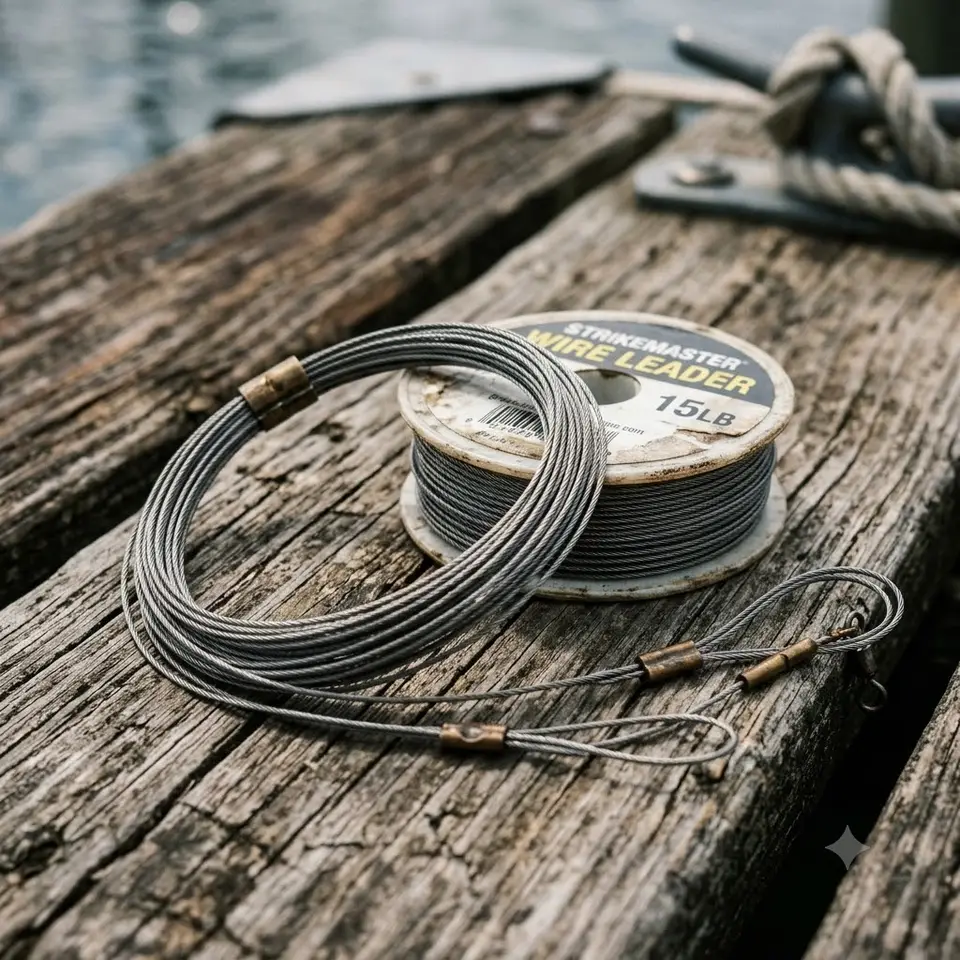
A pike's mouth is several hundred backward-facing scissors, and no fluorocarbon bravado survives a head-shake across them - losing a lure is the cheap outcome; leaving it in the fish is the cruel one. Wire leaders exist for exactly this: a short length of steel or titanium between line and lure wherever toothy predators live. The modern options knot or crimp easily enough that 'wire is clumsy' stopped being true years ago.
What it is
Bite-proof leader material in three schools: single-strand steel (thinnest, kinks), 7-strand/49-strand cable (supple, crimped or Albright-tied), and knottable titanium (kink-resistant, ties like thick mono, costs like it too).
Strengths
Absolute tooth immunity for pike, musky, 'cuda, wahoo, mackerel and friends; conservation insurance (no lures left in jaws); titanium and multi-strand versions barely affect lure action at sensible lengths.
Weaknesses
More visible than fluoro (matters for line-shy species sharing the water); single-strand kinks into retirement after fish or two; crimping cable needs the right sleeves and tool; titanium's price stings.
Where it wins
ALL dedicated pike/musky work (rule, not option), casting spoons into mackerel/bluefish blitzes, wire-adjacent bottom rigs where dogfish and eels chew, and any waters where 'something keeps biting me off' has already happened twice.
Knots & handling
Titanium: ties with a simple figure-8 or clinch variants. Cable: crimp with matched sleeves, or Albright thinner cables. Single-strand: haywire twist (learn it properly - a bad haywire is a pigtail waiting to open). 20-30 cm covers casting; longer for trolling.
Where line choice goes wrong
'Just this once' fluoro in pike water (the bite-off always picks the best fish), reusing kinked single-strand, pliers-crimping wrong-size sleeves, and meter-long wire that kills a jerkbait's action when 25 cm was plenty.
Line locker
As an Amazon Associate we may earn from qualifying purchases - at no extra cost to you. We link gear types, not sponsors' picks: you choose the exact product.