Monofilament Line
Nylon mono is fishing's forgiving default - cheap, easy-knotting, shock-absorbing stretch, and still the right answer for floats, trolling and beginners' spools.
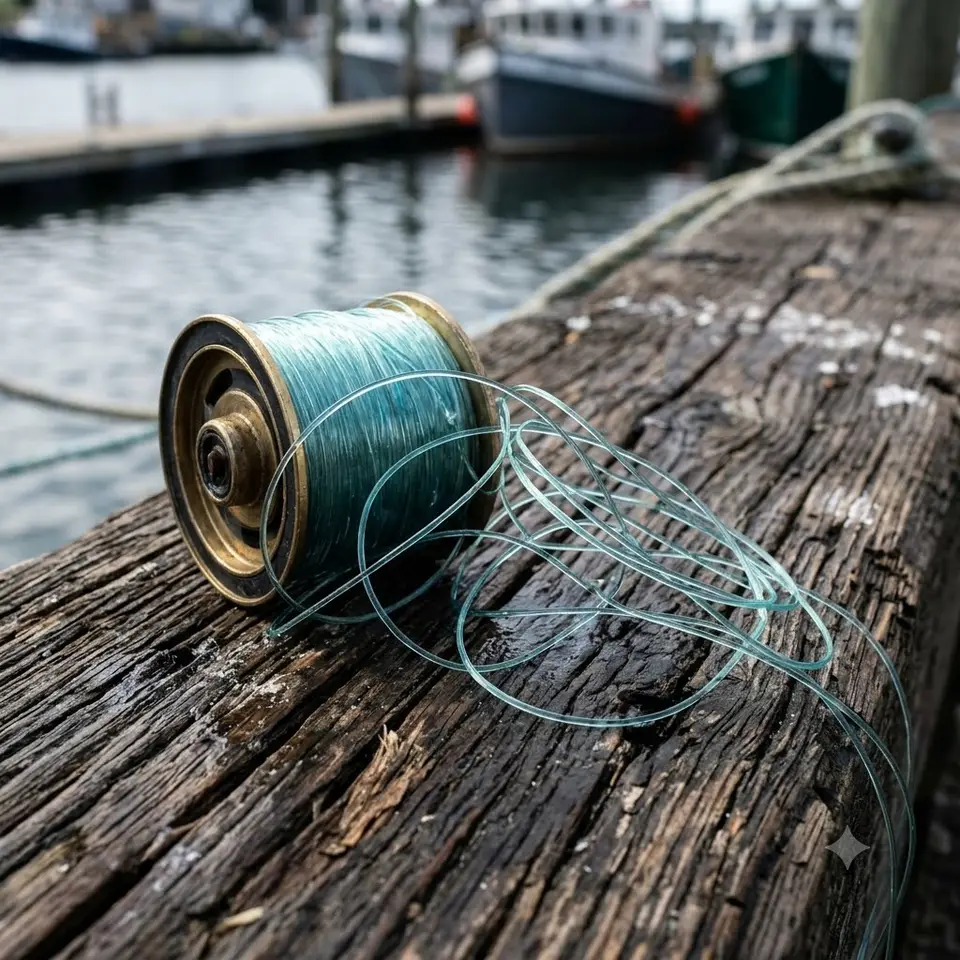
Monofilament - a single extruded nylon strand - spooled the entire 20th century of fishing and still belongs on plenty of reels. It stretches noticeably under load (a built-in shock absorber), ties every knot happily, floats well enough for topwater and float work, and costs so little you can respool monthly like you're supposed to. Mono is a tool with a spec sheet.
What it is
Single-strand extruded nylon, sold by breaking strain and diameter. Moderate density (slow-sinking to neutral), high stretch, moderate abrasion resistance, and some UV/water aging - hence regular respooling.
Strengths
Stretch cushions hook-pulls on trebles and surging fish; knots seat easily and hold; it's supple for casting; near-invisible enough in most water; floats for topwater/float control; cheapest per spool by far.
Weaknesses
Stretch = mush at range and slower hooksets in deep water; thicker per strength than braid (less capacity, more water drag); develops memory coils; ages with UV and absorbs water - a season is a fair lifespan.
Where it wins
Trolling (stretch is a feature), crankbaits and trebled lures, float fishing, beginner spools, surf shock leaders, and any reel that sits unused enough that pricier line would age out anyway.
Knots & handling
Ties everything: improved clinch, Palomar, uni. Wet knots before seating. Manage memory by respooling regularly and closing bails by hand; a moment's stretch under load 'resets' coiling on the water.
Mistakes with this line
Running years-old mono ('it looks fine' - it isn't), choosing it for deep-water single-hook fishing where stretch loses fish, and overfilling spools so coils leap off.
Line locker
As an Amazon Associate we may earn from qualifying purchases - at no extra cost to you. We link gear types, not sponsors' picks: you choose the exact product.