Fly Lines, Explained
In fly fishing the LINE is the casting weight - taper, weight number and density define everything. Decode WF-5-F and the floating/sinking system in one sitting.
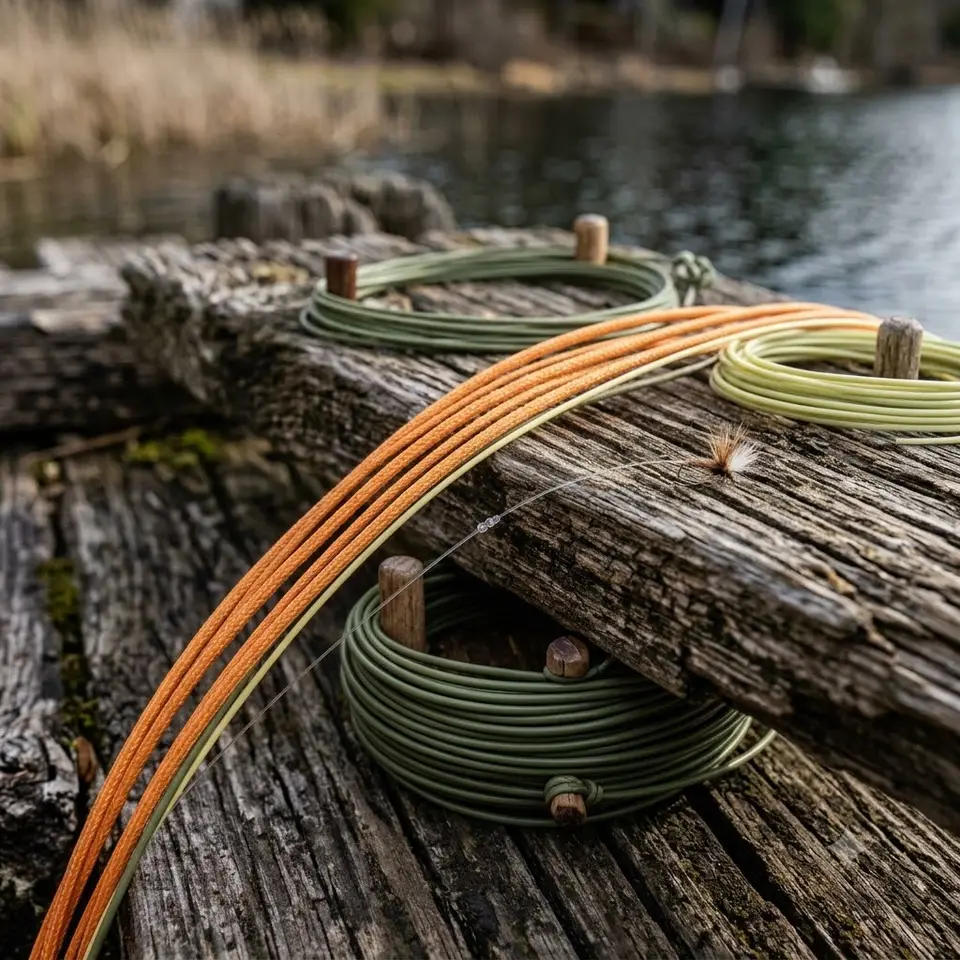
Every other line in this catalog just connects angler to lure - a fly line IS the lure delivery system, its own mass carrying a weightless fly outward. That's why fly lines are engineered like javelins: weighed in standardized numbers (3wt to 12wt+), shaped in tapers (weight-forward, double-taper), and built in densities from full-floating to fast-sinking tips. Decode the box code - 'WF-5-F' - and the entire wall of options collapses into sense.
What it is
A ~27 m tapered PVC- or polymer-coated line whose FIRST 9 meters carry a standardized weight matching rod numbers. Box code = taper-weight-density: WF-5-F is Weight-Forward taper, 5-weight, Floating. Backing behind it, leader and tippet ahead.
Strengths
Casts the uncastable (a size-20 dry fly at 18 m); tapers put energy where you want it - WF for distance and ease, DT for delicacy and roll casts; density options present flies from surface film to 6 m down (sink-tips, full sinkers).
Weaknesses
Costs more than every other line type; wrong-weight pairing ruins a rod's feel entirely; coatings crack with neglect (clean and dress them); one line = one job, so specialization multiplies spools.
Where it wins
This is fly fishing's entire delivery system - the question isn't where it wins but WHICH one: floating WF for 90% of trout work, sink-tips for streamers, heavier weights as wind and fly size grow, specialized heads for spey and salt.
Knots & handling
Modern lines come with welded loops - loop-to-loop the leader on. Backing attaches via arbor + Albright (or loop). Stretch a coiled line gently before fishing, and clean floaters with mild soap when they start sinking at the tip: that's dirt, not death.
What costs you fish
Mismatching line and rod weight (the #1 'this rod casts terribly' cause), buying bargain line for a good rod (backwards - the line does the work), and letting a cracked, sinking 'floating' line ruin seasons a simple cleaning would have saved.
Line locker
As an Amazon Associate we may earn from qualifying purchases - at no extra cost to you. We link gear types, not sponsors' picks: you choose the exact product.