Fluorocarbon Line
Fluorocarbon's refractive index nearly matches water - the closest thing to invisible line - plus fast sinking and abrasion armor. The clear-water and leader standard.
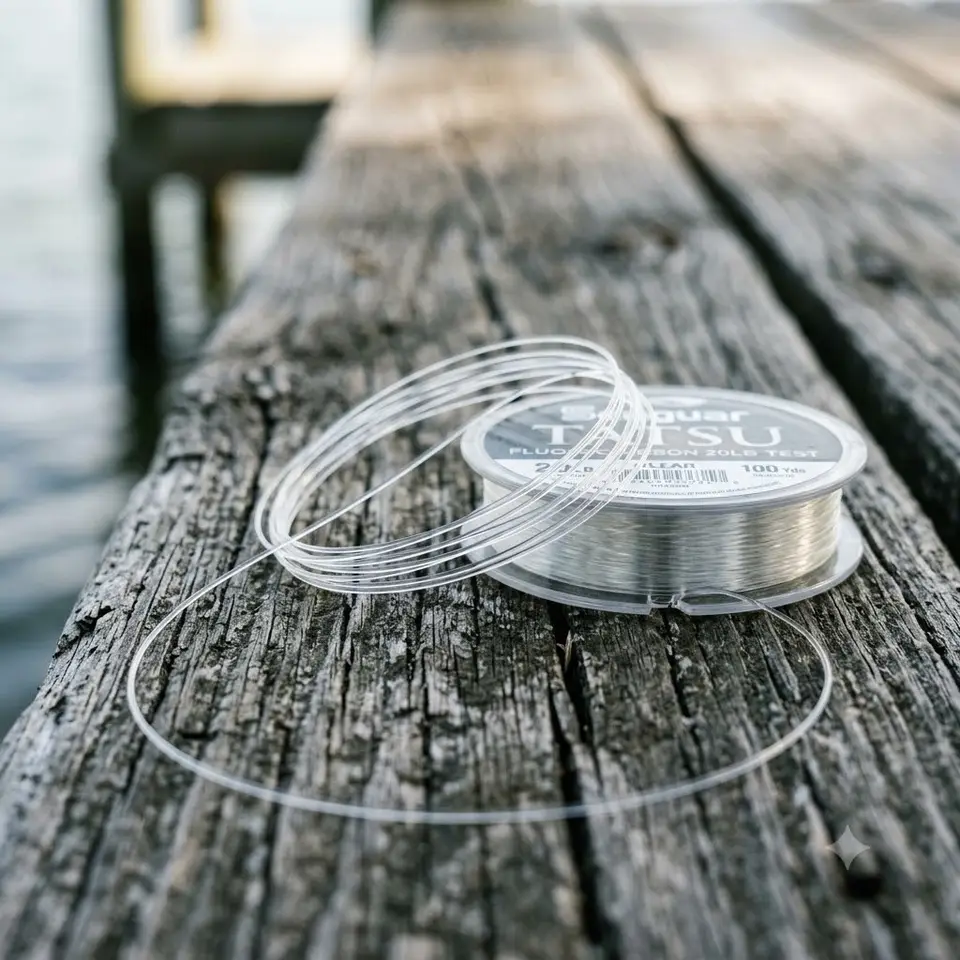
Fluorocarbon bends light almost exactly the way water does, which makes it the closest fishing has come to invisible line - and pressured, clear-water fish vote on that difference daily. Add density (it sinks, keeping lures down and lines taut), superior abrasion resistance and low stretch, and you have both the finesse angler's main line and everyone's leader material of choice.
What it is
Extruded polyvinylidene fluoride (PVDF): denser than water and nylon, with a refractive index lower than nylon's, which makes the line less discernible to fish, low water absorption, stiff-ish hand. Sold as main line and as leader spools.
Strengths
Near-invisibility in clear water; sinks (bottom contact, taut lines, diving cranks run deeper); high abrasion resistance around rock and shells; lower stretch than mono = better feel; doesn't age like nylon.
Weaknesses
Stiffness and memory (especially cheap spools and heavy tests) hurt casting; knots need care - improperly wetted fluoro knots burn and fail; it sinks under topwaters, killing action; costs several times mono.
Where it wins
Leader material on braid setups (the modern default), full spools for jigs/worms/cranks in clear water, drop shots, and anywhere fish inspect before eating.
Knots & handling
WET every knot generously - friction heat is fluoro's assassin. Palomar and uni knots for terminal; FG or double-uni for braid-to-fluoro connections. Buy quality; bargain fluoro combines every weakness with none of the strengths.
Mistakes with this line
Dry-seating knots (mystery break-offs), topwater on sinking line, heavy fluoro on spinning reels (coil chaos), and paying fluoro prices then keeping the same leader all season - nicks accumulate; re-tie.
Line locker
As an Amazon Associate we may earn from qualifying purchases - at no extra cost to you. We link gear types, not sponsors' picks: you choose the exact product.