Red Wigglers
Red wigglers are the small, hyperactive cousins of the nightcrawler - panfish-sized, absurdly lively on the hook, and farmable at home in a compost bin forever.
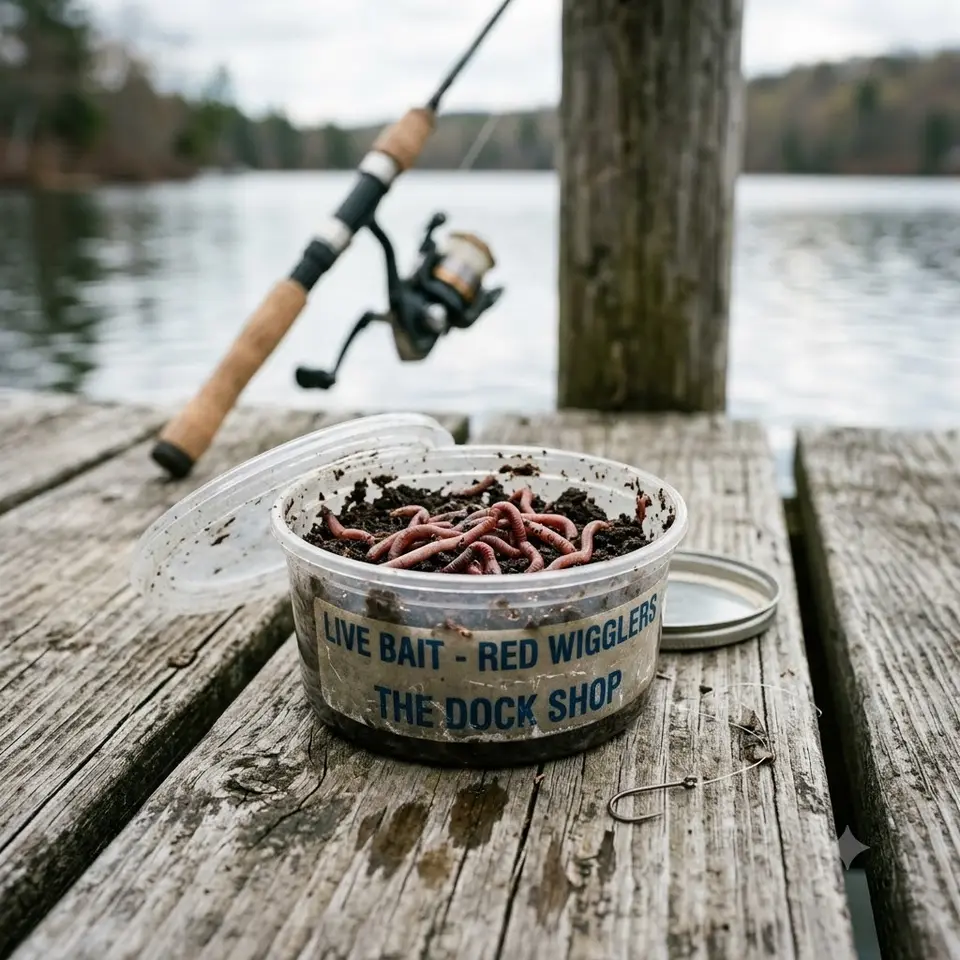
Where a nightcrawler is a meal, a red wiggler is a snack that won't sit still - a finger-length compost worm that thrashes on the hook like it's being paid. For bluegill, perch, crappie and stream trout, that frantic action out-fishes bigger, calmer worms - and a worm bin in the garage turns kitchen scraps into free bait.
What it catches
Panfish first (bluegill, perch, crappie), stream and stocked trout, bullheads, suckers - everything with a smaller mouth and a taste for motion.
Getting & keeping it
Bait shops sell them, but the real move is a home vermicompost bin: reds are THE composting worm, thriving on scraps and multiplying - bait plus garden gold from the same box.
How to rig it
Whole on a #8-#10 hook (they're small enough), threaded once - under a float for panfish, split-shot drifted for trout; two at once wiggle irresistibly for perch.
When it shines
Panfish season = always; ice fishing (lively in cold), kids' fishing (constant action), and finicky trout that inspect a still crawler but hit a wiggler.
Field tips
The wiggle is the asset - re-bait once a worm goes limp; keep the bin between 15-25°C and it out-produces your fishing schedule.
What wastes good bait
Big hooks that dwarf the worm, letting the bin sour with too many scraps, and buying crawlers for bluegill water where the smaller, livelier red suits the fish better. And never dump leftover worms outdoors: Maine's agriculture department warns that invasive jumping worms are sold for bait and composting under a variety of names, and its advice is to dispose of worms in the trash, not in the wild.
Bait-fishing kit
As an Amazon Associate we may earn from qualifying purchases - at no extra cost to you. We link gear types, not sponsors' picks: you choose the exact product.