Nightcrawlers
The nightcrawler is fishing's universal currency - every freshwater fish eats them, every shop sells them, and half of everyone's first fish took one.
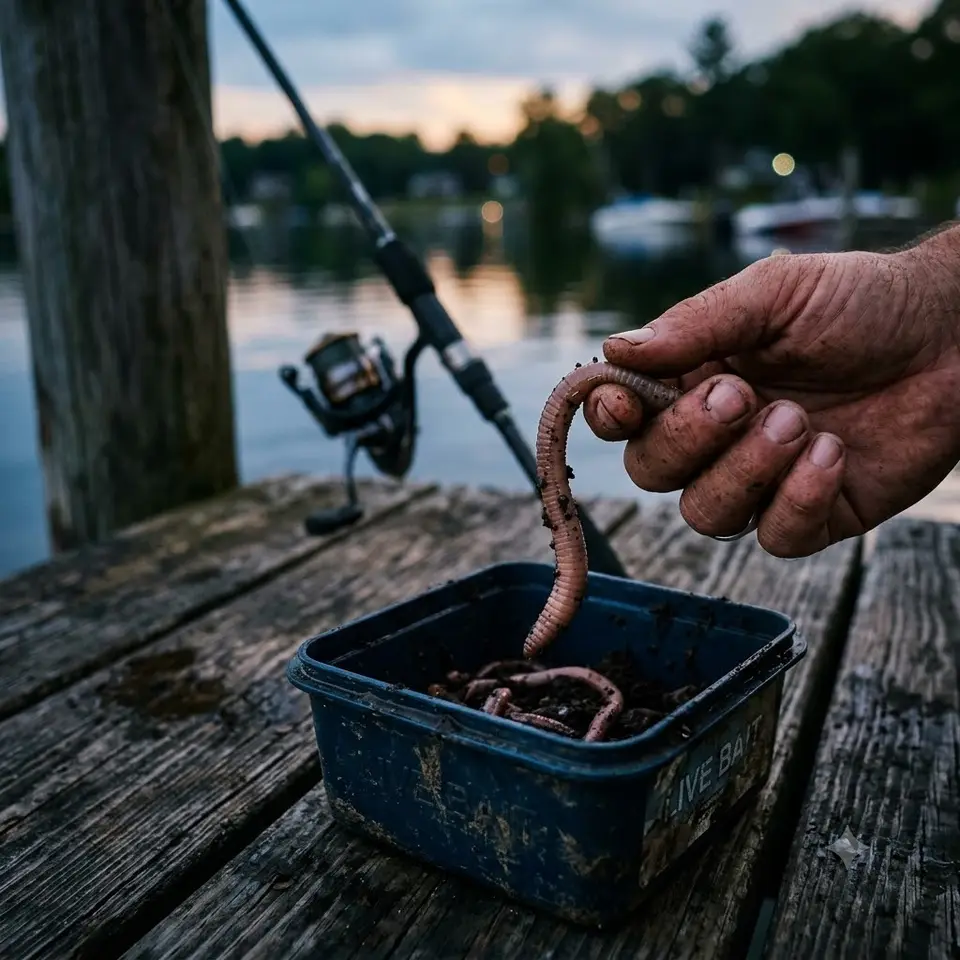
Few baits can have caught more freshwater fish than the nightcrawler. Bass, walleye, trout, catfish, panfish, carp, suckers - the entire river eats worms, no seasons, no exceptions. They're cheap at every gas station, free after every rainstorm with a flashlight, and they keep in the fridge for weeks. Bait fishing begins here and never really needs to leave.
What it catches
The full freshwater roster: panfish and trout on pieces, bass and walleye on halves and wholes, catfish and carp on gobs. If it swims fresh water, a crawler tempts it.
Getting & keeping it
Buy by the dozen anywhere - or harvest free: after dark on a rain-soaked lawn with a dim flashlight, grab fast and low (they anchor a tail in the burrow). Keep refrigerated in their bedding, moist not wet, for weeks; a worm box of shredded paper and coffee grounds keeps a summer supply. Toss leftover worms in the trash, never release them outdoors: the National Park Service notes that non-native earthworms such as night crawlers and other bait worms have had a devastating effect on northern forests, and asks anglers to put unused worm bait in the trash.
How to rig it
Panfish: a PIECE on a small hook under a float (whole worms feed fish without hooking them). Walleye: half a crawler on a jig or harness. Bass/cats: whole, hooked once or twice, weight as needed. Trout streams: a piece drifted naturally, tiny hook, no float.
When it shines
Always - but especially after rain (washed-in worms are expected food), in stained water, spring's cold water, and any 'nothing else is working' hour.
Field tips
Thread the hook point INTO the worm rather than lassoing it (stays on, looks natural); keep the tub in shade - hot cars cook crawlers in an hour; pinch a worm gently and it toughens on the hook.
What wastes good bait
Whole worms for small-mouthed panfish (they strip the tails endlessly - use pieces), sun-cooked bait tubs, and burying the hook point so deep in worm that hooksets fail.
Bait-fishing kit
As an Amazon Associate we may earn from qualifying purchases - at no extra cost to you. We link gear types, not sponsors' picks: you choose the exact product.