Live Shad
The primary forage in countless waters, a live shad is nature's own bait - fragile and demanding to keep, but nearly unbeatable for stripers, catfish, bass and more.
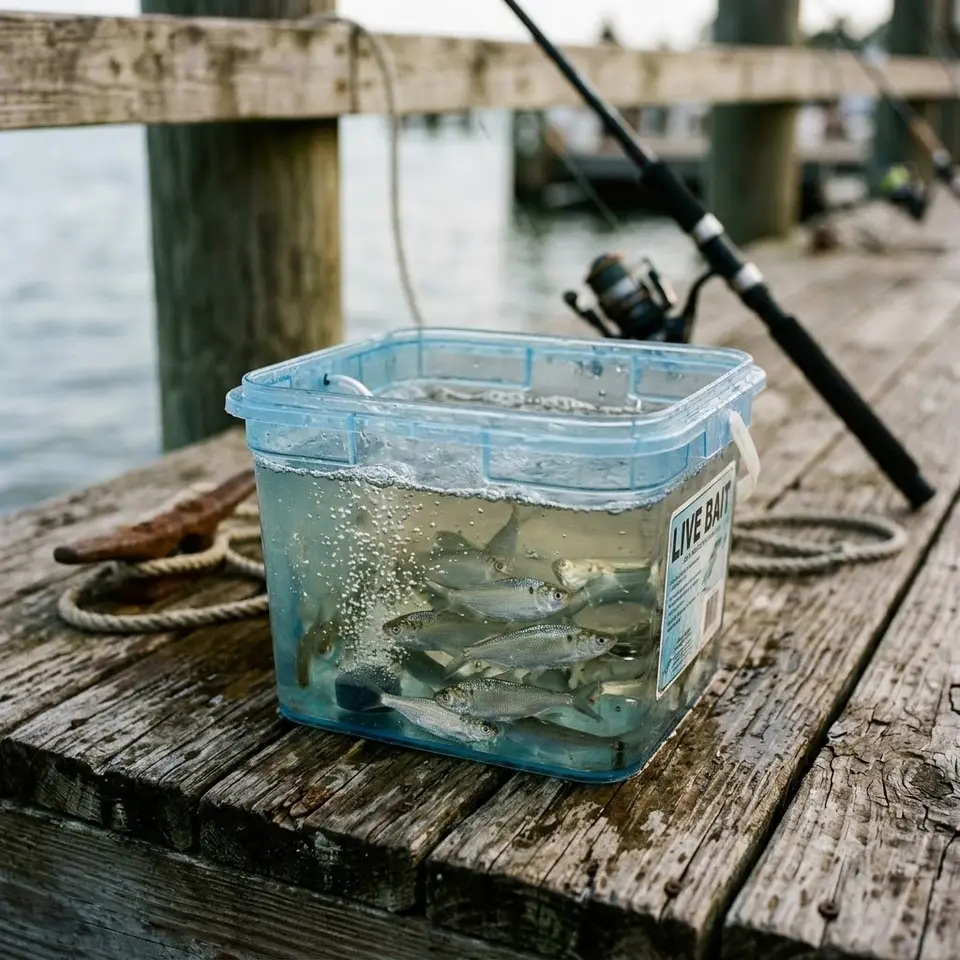
In lake after lake and river after river, shad are what the predators actually eat. A live shad on a hook is therefore about as close to a sure thing as bait fishing offers - stripers, hybrids, catfish, largemouth and more are hardwired to eat them. The catch is that shad are notoriously delicate: they must be caught fresh (usually by cast net), handled gently, and kept in a proper tank, or they die fast. Master keeping them alive, though, and you're fishing the one bait that matches the local menu exactly.
What it catches
Striped bass and hybrids, blue and channel catfish, largemouth bass, white bass, and virtually any predator that feeds on shad - which, in most reservoirs and many rivers, is most of them. Threadfin and gizzard shad are the main forage across huge swaths of fishable water, making a live one a top bait almost everywhere they occur.
Getting & keeping it
Catch them with a cast net around bait schools, marinas and warm-water areas (they're rarely sold, since they die too easily) - but check local bait regulations first, since cast-netting and the use or transport of live shad are restricted in some states. Keep them in a round, aerated bait tank with plenty of cool, clean water and space - shad are fragile and crash fast in a cramped or warm container. Add a little salt to the tank as some anglers do to toughen them, keep the water moving, and don't overcrowd.
How to rig it
Hook a live shad through the nose, just behind the dorsal, or through the back near the tail, on a stout circle or bait hook so it swims naturally. Fish it free-lined, under a float, on a Carolina-style rig, or on a downline over structure for stripers. For catfish, both live and freshly-cut shad excel. Handle it as little as possible to keep it lively.
When it shines
Whenever and wherever shad are the forage - striper fishing on reservoirs, catfishing rivers and lakes, and bass around bait schools. It shines in the cooler months when predators gorge on shad, and any time you locate baitfish schools and the gamefish feeding on them. Matching the local forage exactly is its whole advantage.
Field tips
Keep the tank cool, aerated and uncrowded, since a dead shad loses most of its value (though fresh-cut shad still works for catfish). Net only what you'll use and refresh often. Hook them gently and quickly. When live shad tire, switch them to cut bait for bottom feeders rather than wasting them.
Mistakes with this bait
Crowding or warming the tank so the shad die, rough handling that stresses fragile fish, using a hook too big or heavy that kills the bait's swim, and failing to keep water quality up over a long day, which turns a tank of prime bait into a tank of dead shad.
Bait-fishing kit
As an Amazon Associate we may earn from qualifying purchases - at no extra cost to you. We link gear types, not sponsors' picks: you choose the exact product.