Live Minnows
A live minnow is what predators actually eat - crappie, walleye, bass and pike logic at its purest - wrapped in the one bait category with serious legal strings: check local baitfish rules first.
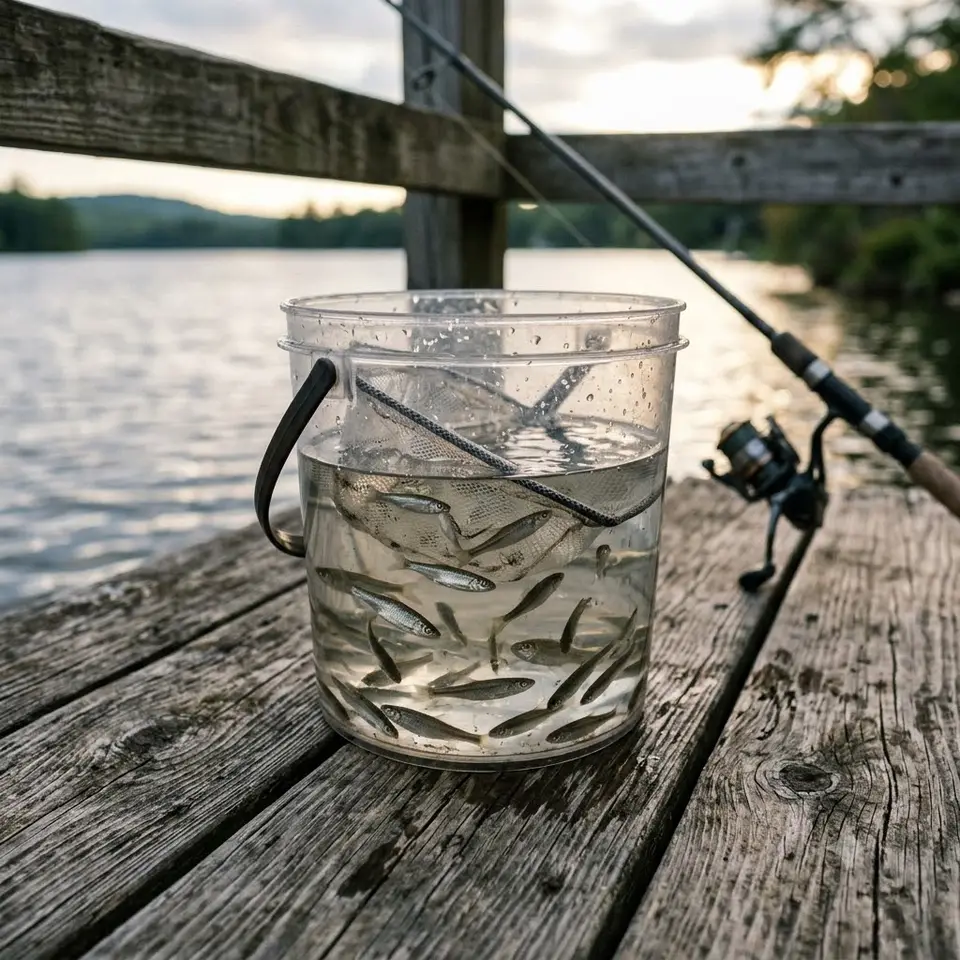
Nothing convinces a predator like the real thing swimming scared - which makes live minnows the standard for crappie, walleye and pike wherever they're legal. That 'wherever' matters more every year: transporting live baitfish between waters spreads invasives and disease, and many states now restrict or ban it entirely. Learn your local rules first; then learn the bucket craft that keeps bait lively enough to matter.
What it catches
Crappie (minnow-under-float is THE technique), walleye (jig-and-minnow), bass, pike and pickerel on larger shiners and suckers, big trout, stripers on shad-family baits.
Getting & keeping it
RULES FIRST: many jurisdictions ban moving live baitfish between waters, ban certain species, or ban them entirely - buy certified local bait, never release leftovers, drain buckets. Then: aerated bucket, cool water, no crowding - dead minnows are expensive worms.
How to rig it
Through the lips (casting/trolling - swims naturally), behind the dorsal (float fishing - swims down and struggles), through the tail (send it diving under docks). Sizes: crappie minnows #4 hook; pike shiners on quick-strike rigs.
When it shines
Cold water above all - late fall through ice-out, when sluggish predators still can't refuse a real swimmer; crappie season eternally; clear-water finesse days.
Field tips
Liveliness is everything: change water often, add ice cubes in summer (slowly), and hook lightly so the bait works FOR you; the float twitching sideways is the whole show.
Mistakes with this bait
Skipping the regulations (fines + real ecological harm - never dump bait!), overcrowded warm buckets of dying bait, and hooks through the spine that kill the swim.
Bait-fishing kit
As an Amazon Associate we may earn from qualifying purchases - at no extra cost to you. We link gear types, not sponsors' picks: you choose the exact product.