Leaf Worms (Garden Worms)
The small red worms from your own garden soil and leaf piles - free, wriggly and irresistible to panfish, trout and any fish that ever ate a worm, which is nearly all of them.
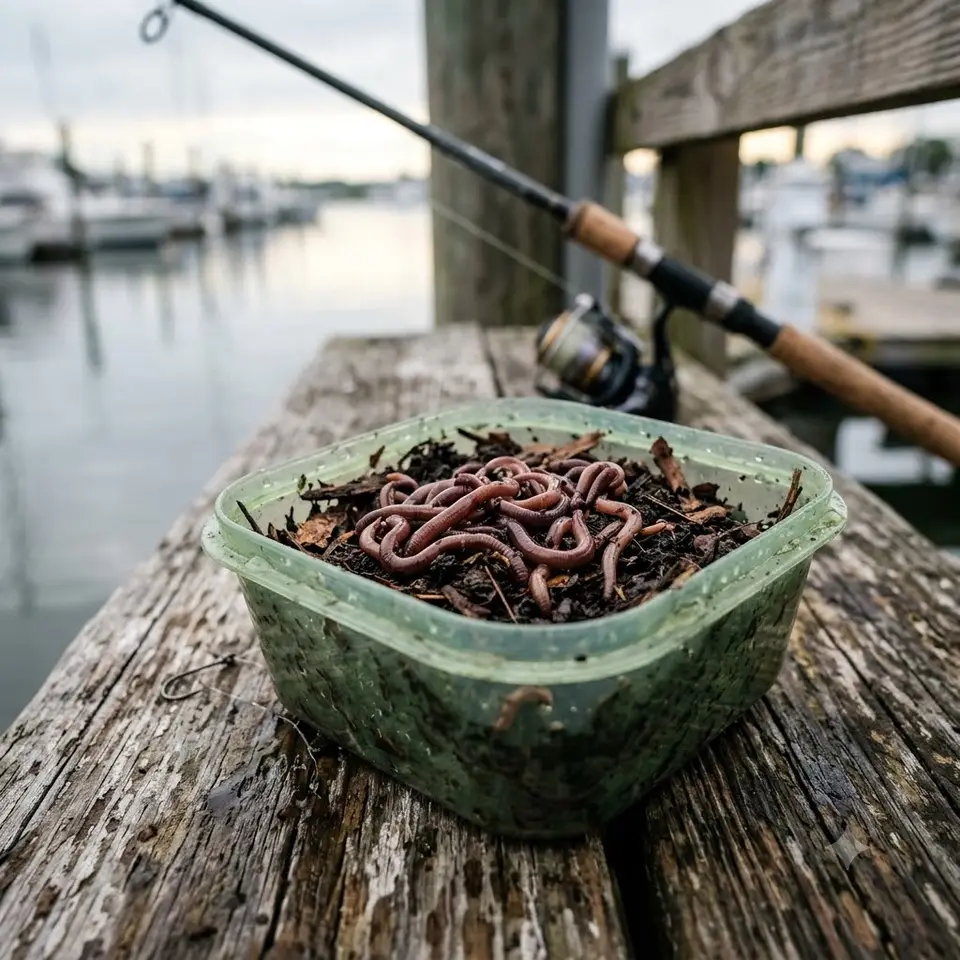
Leaf worms, also called garden worms or red wigglers, are the humble backyard bait that catches everything. Smaller and softer than a nightcrawler, they come from garden soil, compost and damp leaf litter, wriggle enticingly, and are exactly the size a panfish or a stream trout wants to eat. Free for the digging and effective everywhere, they're the bait many anglers started with and plenty never stop using. For small-water panfish and trout, few things beat a lively garden worm.
What it catches
Bluegill, sunfish, crappie and other panfish, stream and stocked trout, small catfish, perch, and just about any freshwater fish that eats invertebrates. Their small size makes them ideal for panfish and trout that a big nightcrawler would overwhelm, and they're a top choice for kids' fishing and small-water outings.
Getting & keeping it
Dig them from garden soil, compost piles or under damp leaves and boards, or buy them as red wigglers. Keep them cool and moist in a container of the bedding they came from - damp soil, compost or commercial worm bedding - out of the sun and heat. They'll last well for days to weeks kept cool; a small vented container in a cooler or fridge works fine. Leftovers go in the trash, not on the ground: the National Park Service asks anglers to dispose of unused worm bait in the trash and not dump it in the forest.
How to rig it
Thread one or more onto a small hook, leaving some wriggling ends free, or hook once through the collar for maximum movement. Fish them under a bobber for panfish, on a split-shot rig for trout, or on a small bottom rig. Match the hook to the worm's small size, and use just enough weight to hold or drift naturally.
When it shines
Warm-weather panfish action around docks, brush and weed edges, trout in streams and stocked ponds, and any time you want a small, natural, lively bait. It shines for numbers of panfish, for introducing new anglers, and on pressured trout that want a smaller offering than a full crawler.
Field tips
Keep a few worms handy in a belt container and the rest cool in the shade. Freshen the hook with a lively worm often, since a still, dead worm draws far fewer bites. Break or use a partial worm for tiny-mouthed panfish so they get the hook, not just a free meal. Collect them cheaply after rain when they surface.
What wastes good bait
Letting them cook in a hot, dry container until they die, using a hook too big for the small worm and the panfish's mouth, fishing a limp dead worm instead of a lively one, and threading so much worm that fish steal the ends without taking the hook.
Bait-fishing kit
As an Amazon Associate we may earn from qualifying purchases - at no extra cost to you. We link gear types, not sponsors' picks: you choose the exact product.