Hellgrammites
The fierce, pinching larvae of the dobsonfly - one of the deadliest live baits for smallmouth bass and trout in moving water, if you can catch and handle them.
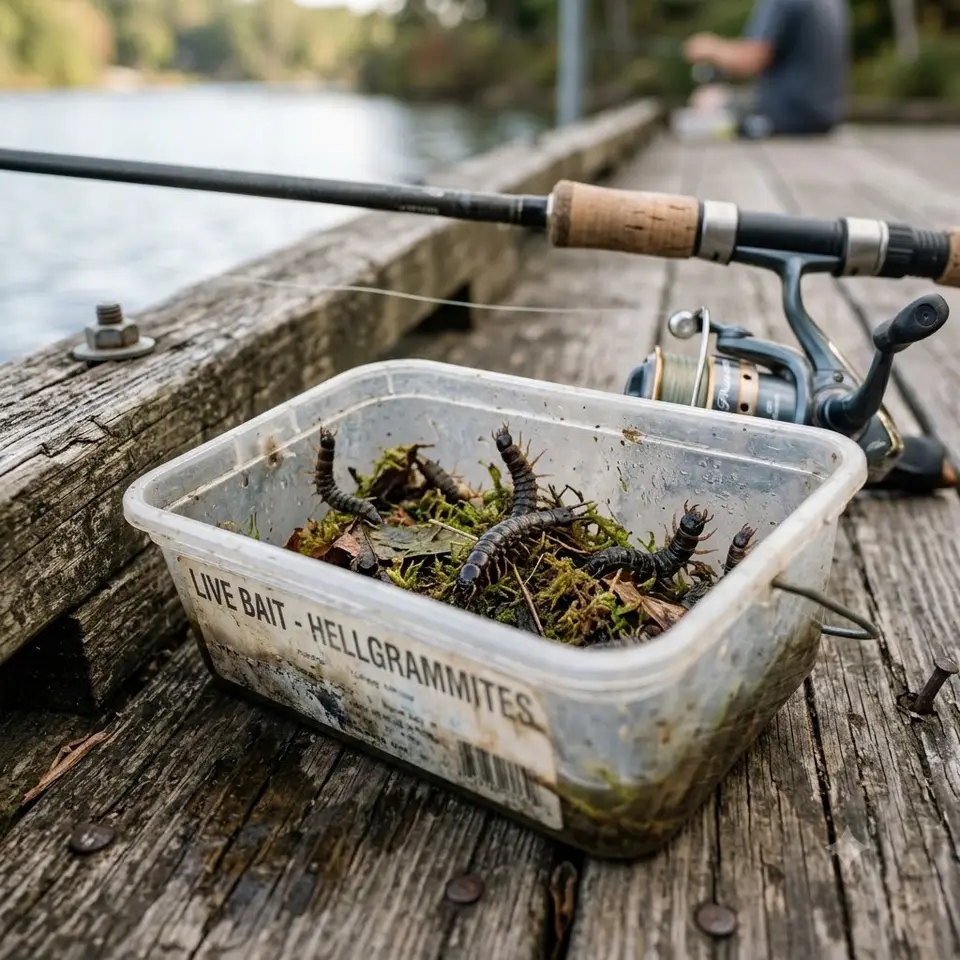
Hellgrammites are the aquatic larvae of the dobsonfly, and they look every bit as fearsome as they are effective: dark, segmented, up to three inches long, with strong pincers that can nip a careless finger. They live under rocks in clean, flowing streams and rivers, and to the smallmouth bass and trout that share that water, they're a premium meal. Anglers who know their value will spend an afternoon flipping rocks to gather a dozen, because in a river, few baits out-fish a lively hellgrammite.
What it catches
Smallmouth bass above all - river smallmouth eat them with abandon - along with trout, rock bass, and other stream fish. Larger panfish and catfish take them too. In moving water, a hellgrammite drifted naturally is one of the single most effective baits for stream smallmouth and trout.
Getting & keeping it
Catch them by turning over rocks in riffles and holding a net or screen downstream to catch the dislodged larvae as they wash back (a classic two-person "seine the riffle" method). Handle them by the back to avoid the pincers. Keep them cool and damp in a container with wet moss, leaves or a little stream water and gravel; kept cool (a vented container in the fridge works), they can survive a week or more, though fresh, lively ones fish best. Check local rules on collecting bait.
How to rig it
Hook a live hellgrammite lightly under the collar just behind the head, or through a segment, so it stays lively and can't pinch the hook free - light wire hooks work best. Fish it on a light split-shot rig, drifted naturally through riffles, runs and pools, or under a small float. The key is a natural drift with the current, so the bait tumbles like a dislodged larva.
When it shines
Warm-weather stream and river fishing for smallmouth and trout, especially in clear, flowing water where the fish are keyed on stream invertebrates. It shines drifted through current seams and pockets, and it's a top choice any time you're wading a smallmouth river and want the deadliest natural bait available.
Field tips
Handle them from behind to avoid the pinch, and keep them cool and damp so they stay lively. Drift them drag-free through likely holding water, mending line to keep the bait tumbling naturally. Gather a good supply - kept cool and damp they hold up well - since the fishing can be fast. Confirm local bait-collection regulations before seining a stream.
Where bait fishing goes wrong
Fishing them with drag so they don't drift naturally, using a heavy hook that kills the larva's liveliness, letting them overheat and die before you fish, and grabbing them carelessly and getting pinched, which makes handling the rest of the batch a chore.
Bait-fishing kit
As an Amazon Associate we may earn from qualifying purchases - at no extra cost to you. We link gear types, not sponsors' picks: you choose the exact product.