Fiddler Crabs (as bait)
Fiddler crabs are the sheepshead key - the little marsh crabs the convict-striped bait-stealer actually eats, fished tight to pilings where its teeth do the crime.
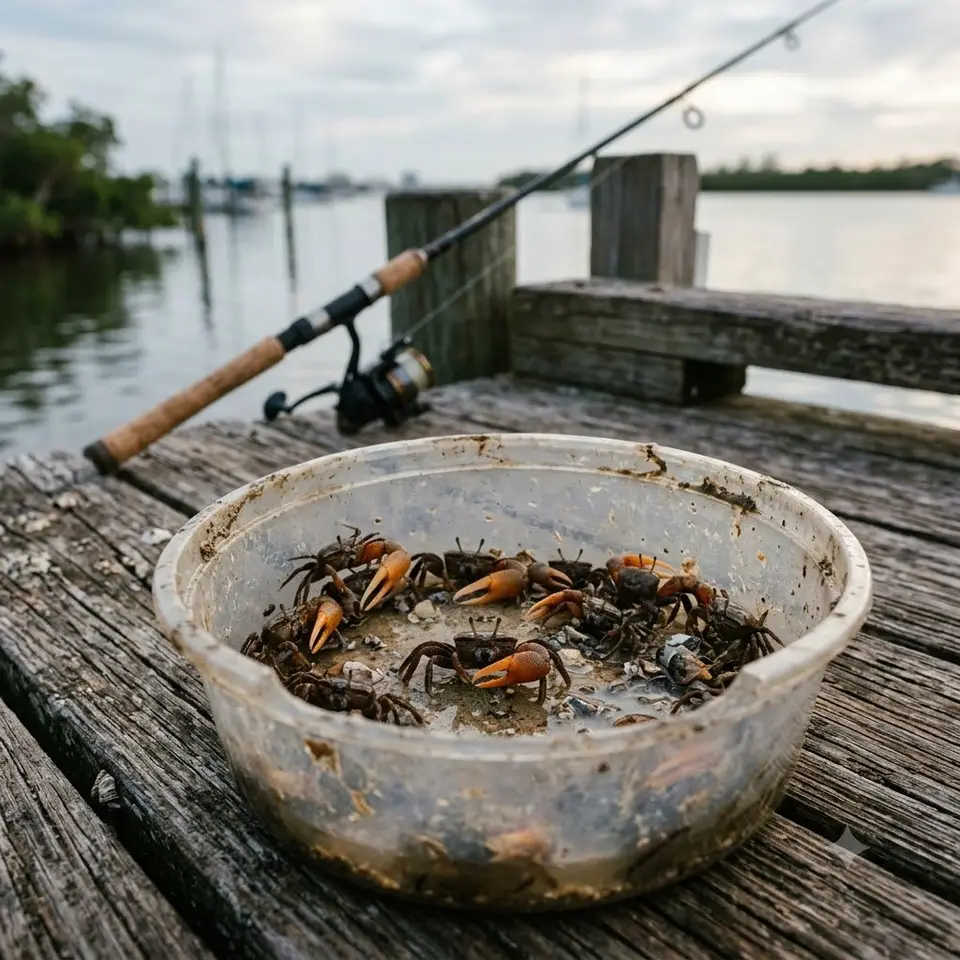
Sheepshead - the striped, human-toothed dock bandit - laughs at most baits, crushing crustaceans against pilings all day. The fiddler crab is its actual diet, and a fiddler hooked through the corner of the shell, dropped vertically against a barnacled piling, is the specialist's answer. Catch them free on any mud flat at low tide, where armies of them wave their one big claw.
What it catches
Sheepshead (the whole point), black drum, redfish, the occasional tautog-adjacent surprise up north.
Getting & keeping it
Chase them down on marsh flats and sandbars at low tide (a bucket ambush works - they funnel predictably), or buy by the dozen at coastal shops. Days of life in a damp, shaded, sand-floored bucket.
How to rig it
Small STRONG hook (#1-#2, they have crushing teeth) through the shell's back corner, minimal weight, dropped vertically tight to structure - inches from the piling, not feet.
When it shines
Sheepshead seasons around dock, bridge and reef structure - cooler months especially, when specialists earn their reputation.
Field tips
The bite is a subtle 'crunch-lift' - set on ANY tick (their reputation as bait-stealers is really anglers striking late); scrape a piling's barnacles to start a chum bloom (only where that is allowed); break the big claw off? No - fish it whole; sheepshead crush it all.
Where bait fishing goes wrong
Fishing feet from structure that fish work by the inch, soft hooks crushed by molars, and waiting for a 'real' bite that already happened twice.
Bait-fishing kit
As an Amazon Associate we may earn from qualifying purchases - at no extra cost to you. We link gear types, not sponsors' picks: you choose the exact product.