Crickets & Grasshoppers
Crickets and hoppers are summer's live topwater - kicking insects that bluegill smack off the surface and trout ambush against grassy banks.
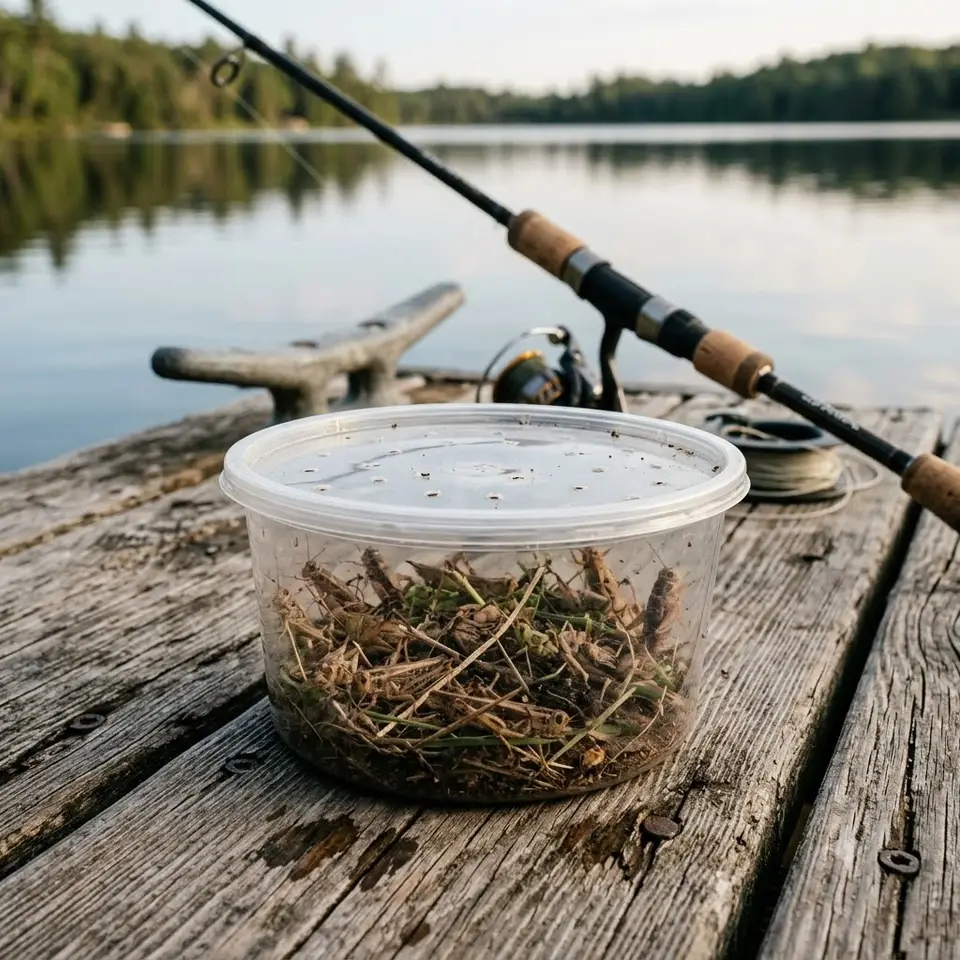
Every summer pond kid discovers it independently: a kicking cricket on a light hook is bluegill kryptonite. Southern anglers institutionalized it (cricket tubes are standard kit below the Mason-Dixon), and meadow-stream trout anglers have drifted hoppers along cutbanks since fishing began. It's live-bait fishing at its most visual - the bait kicks, the surface dimples, gone.
What it catches
Bluegill and shellcracker famously (the southern cricket culture), summer trout on hoppers, smallmouth, rock bass, big roadside bullheads.
Getting & keeping it
Buy crickets cheap at bait/pet shops (a wire cricket tube dispenses them one at a time); catch hoppers free in morning-cool grass. Days of shelf life with a potato slice for moisture.
How to rig it
Light wire hook (#8-#10) under the collar (thorax shell) so it stays alive and kicking; fish it shallow under a small float, or free-line a hopper along a grassy bank with just a split shot.
When it shines
June-September, banks with overhanging grass (hoppers are EXPECTED there in wind), late-day bluegill beds, and meadow trout streams on breezy afternoons.
Field tips
Wind is your ally - it blows the real thing in, priming fish; the kick is the trigger, so re-bait dead ones; toss a couple of freebies to start competitive feeding (where legal - check chum rules).
What wastes good bait
Heavy hooks that drown the bug's action, deep rigs in what is a surface-film game, and grabbing hoppers midday when they're too fast - collect at dawn.
Bait-fishing kit
As an Amazon Associate we may earn from qualifying purchases - at no extra cost to you. We link gear types, not sponsors' picks: you choose the exact product.