Keeping Rummy-Nose Tetras: The Tight-Schooling Water Gauge
A guide to keeping rummy-nose tetras - striking tetras with red noses and striped tails that school tighter than almost any fish, and whose fading nose color signals slipping water quality.
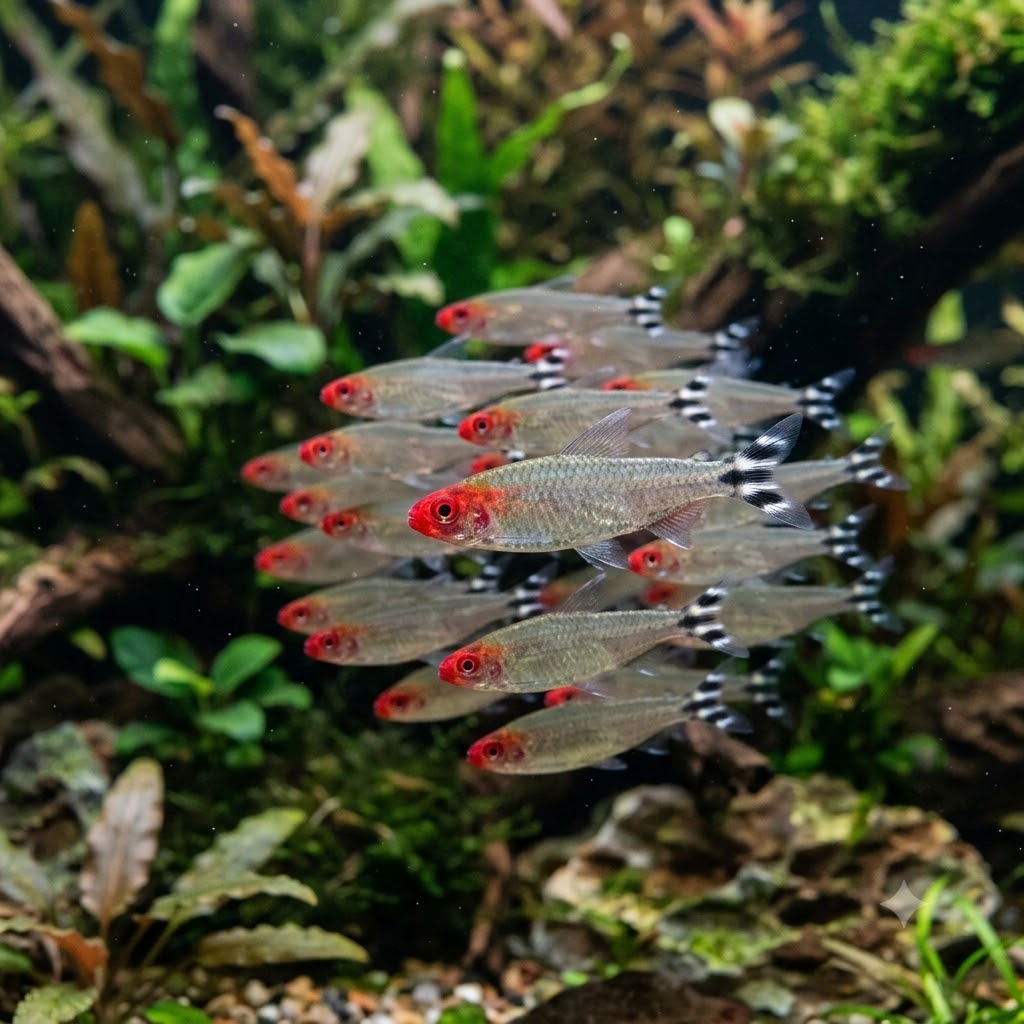
Rummy-nose tetras are the drill team of the aquarium - a tetra that schools tighter and more precisely than almost any other fish, a shimmering group turning as one. Their bright red noses are more than beautiful: the color fades when water quality declines, so a shoal of rummy-noses doubles as a living water-quality gauge for a well-kept planted tank.
Is it right for you?
Rummy-nose tetras suit a keeper with a mature, stable planted tank who wants spectacular schooling and a built-in health gauge. They are a little sensitive, rewarding good water-keeping.
System & Space
A warm, well-planted, mature community tank suits them; they need room for a tight-schooling shoal and stable, established conditions to show their best.
Water & Temperature
They like warm, soft, slightly acidic water and stability; they are more sensitive to water quality than hardier tetras, which is exactly what makes their nose a useful gauge.
Stocking & Feeding
Keep a school of six or more (more is better) and feed small flakes and micro-foods; a larger shoal schools more impressively. Good water keeps their noses bright red.
Health & Care
They need clean, stable, mature water; a fading red nose is the early warning of declining quality. Add them only to a well-cycled tank and avoid swings.
Harvest & Enjoying Them
Ornamental - the reward is the tightest, most mesmerizing schooling in the hobby, plus a built-in signal of tank health.
Getting Started
Add a school of six or more to a mature, cycled, warm soft-water planted tank, and watch both their schooling and their nose color.
Common Mistakes
Adding them to a new un-cycled tank, ignoring a fading nose (a water-quality warning), and too small a school are the usual mistakes.
FAQ
Why is their nose fading? It signals declining water quality - check and correct your parameters.
Best schooling fish? Among the very tightest schoolers in the hobby.