How to Keep Columbian Ramshorn Snail at Home
A large apple-snail relative (Marisa cornuarietis) with a flat coiled shell and big appetite for algae and soft plants. Effective cleaner - but a known invasive; never release, and expect it to eat tender plants.
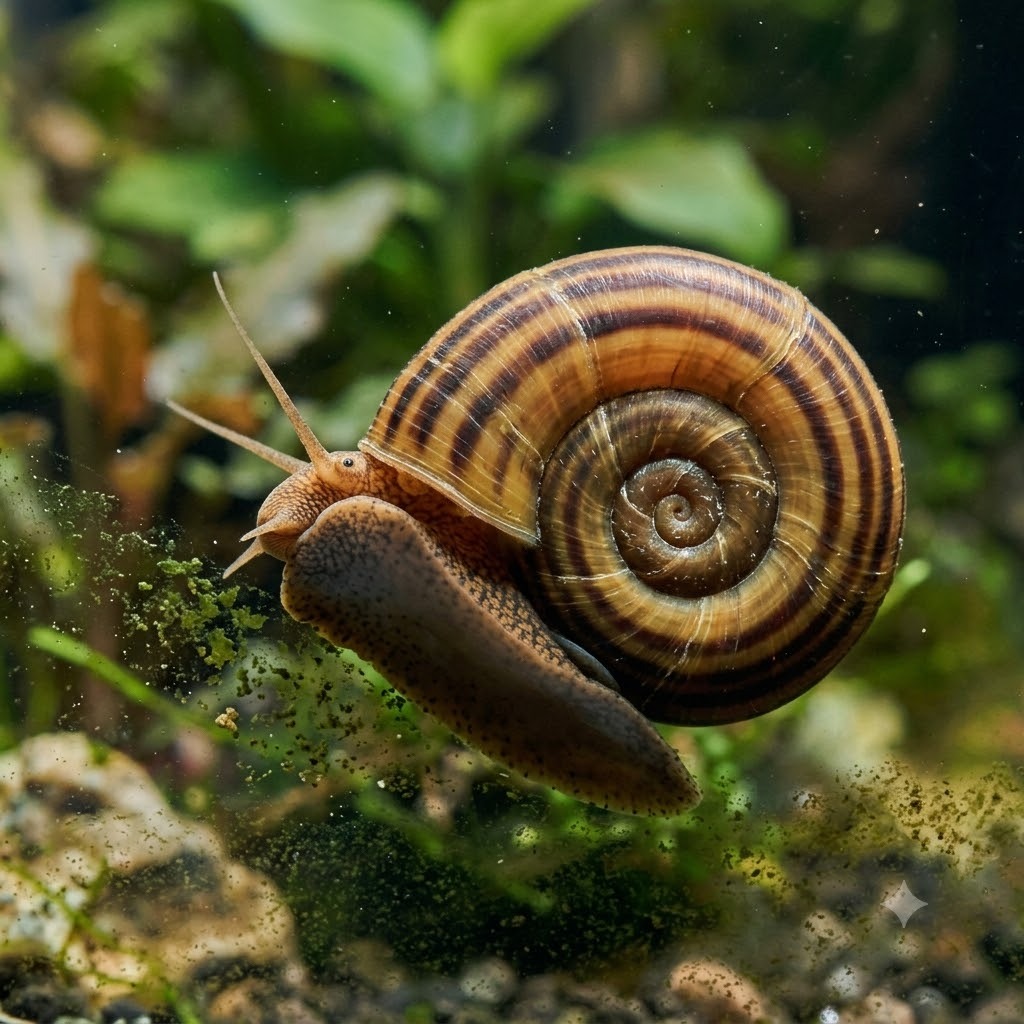
The Columbian ramshorn (Marisa cornuarietis) is a large, flat-coiled apple-snail relative - not to be confused with the little red ramshorns that hitchhike on plants. Golf-ball sized and striped, it is a powerful algae and detritus grazer, useful in ponds and tough-plant tanks. Two honest cautions come with it: it will devour soft aquarium plants, and it is a documented invasive in warm regions - so it must never be released, and local rules should be checked before keeping it.
Why raise Columbian ramshorn snails
For serious algae and clean-up muscle at pond or large-tank scale.
- A heavyweight grazer - clears algae, detritus and decaying matter fast.
- Large and visible, with an attractive striped shell.
- Easy to keep and undemanding.
⚠️ Invasive caution: Marisa cornuarietis is a listed invasive in several warm regions and can devastate aquatic vegetation. Never release it or its water to the wild, and check your local regulations before keeping it - we don't give legal advice, so confirm with your regional authority.
The tank and setup
- A plant-free or tough-plant tank, or a contained pond. They eat soft plants, so pair them with hardy Anubias/Java fern or none at all.
- A secure lid - like many big snails they can climb out.
- Room to graze - a mature tank or pond with algae and biofilm suits them.
Water and stability
Warm, stable, cycled water; copper is lethal as with all inverts. They appreciate enough hardness (calcium) to build shell - soft-water tanks may need a mineral supplement or cuttlebone.
Feeding and daily care
Mostly self-feeding on algae, biofilm and detritus; supplement with blanched vegetables and sinking foods if algae runs short, or the shell erodes and they turn on live plants harder.
Breeding and raising the young
They lay gelatinous egg masses (below the waterline, unlike apple snails) and can multiply quickly in warm water - part of why they're invasive. In a contained tank that's a feature; anywhere near natural water it's a serious risk. Manage numbers by removing egg masses, and again: never release surplus.
Common mistakes
- Adding them to a planted show-tank - they'll strip it.
- Releasing surplus or water outdoors - illegal and ecologically damaging in many areas.
- Confusing them with tiny red ramshorns - very different scale and appetite.
- Soft water with no calcium - shell erosion.
Is Columbian ramshorn snail right for you
Good for an algae-heavy pond or a deliberately plant-free clean-up tank, if you keep them strictly contained. A poor choice for a planted aquascape, and off the table entirely if you can't guarantee they'll never reach the wild.
🎣 Kit for a home aquarium
As an Amazon Associate we may earn from qualifying purchases - at no extra cost to you. We link gear types, not sponsors' picks: you choose the exact product.