How to Keep Blue Dream Shrimp at Home
A fixed deep-blue line of Neocaridina - the same bulletproof, self-breeding shrimp as cherries, just electric blue. Breeds true, multiplies fast, and sells well.
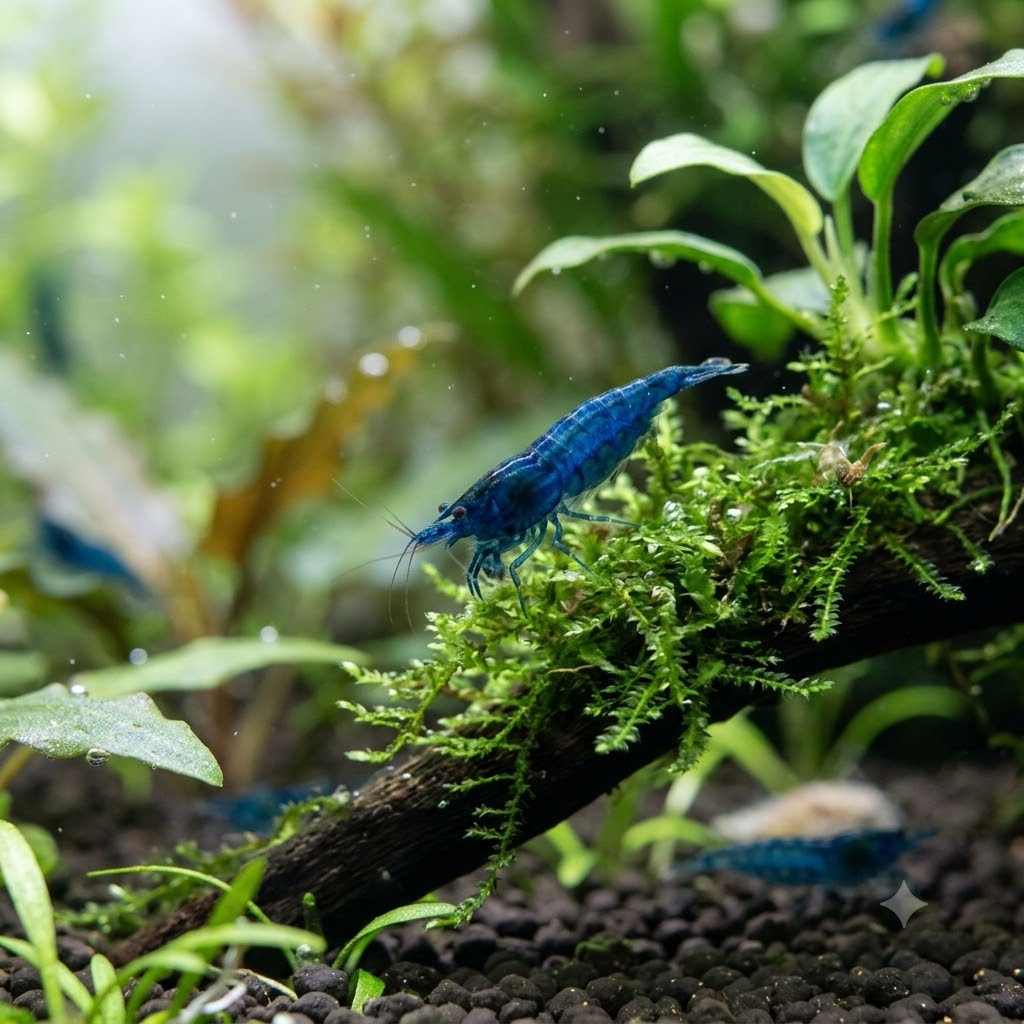
Blue Dream shrimp are one of the easiest ways into the shrimp-breeding hobby: a stable deep-blue line of Neocaridina davidi, the same near-indestructible species as cherry shrimp, bred to a rich cobalt instead of red. They tolerate a wide range of water, breed on their own in a mature planted tank, and their colour holds true generation after generation - which is exactly what makes a small colony worth selling or trading.
Why raise Blue Dream shrimp
They are the same forgiving Neocaridina as cherries, so beginners succeed with them, and the striking blue commands a better price than the common red at the trade table.
- They breed themselves. A mature, stable planted tank plus a mixed group of ten is all it takes - the colony renews without intervention.
- The colour breeds true. Unlike hybrids, a pure Blue Dream line produces blue babies, so a colony stays saleable.
- Hardy and forgiving. They tolerate a broad range of temperature and hardness, making them a genuine beginner's breeding project.
The tank and setup
- A mature planted tank with moss and biofilm is ideal - shrimplets graze the microfilm and hide in the moss.
- Sponge filter. Essential, so newborn shrimp are not sucked in.
- Stable, established biology. Add them only to a cycled tank that has been running for weeks.
Water and stability
Stability beats chasing numbers. Two non-negotiables apply to every shrimp: copper is lethal (it hides in fish meds, some ferts and old plumbing - keep it out entirely), and the tank must be fully cycled before shrimp go in. Small, temperature-matched water changes keep parameters steady.
Feeding and daily care
A mature tank feeds them most of the time. Supplement two or three times a week with a little shrimp food, blanched vegetable or biofilm powder, removing leftovers to protect water quality. Do not overfeed - the commonest cause of colony crashes.
Breeding and raising the young
This is the easy part. Keep a stable tank, feed lightly, and berried females (carrying eggs under the tail) appear within weeks; the eggs hatch as miniature adults - no larval stage, no saltwater, nothing to do. Colour discipline is the one rule: never house them with other Neocaridina colours, or the line reverts to wild-brown in a few generations. Cull off-colour individuals to keep the line sharp.
Common mistakes
- Mixing Neocaridina colours - the fastest way to lose a valuable blue line.
- Overfeeding - fouls the water and crashes the colony.
- Adding to an immature tank - no biofilm, unstable water, dead shrimp.
- Ignoring copper in medications and fertilisers.
Is Blue Dream shrimp right for you
If you want a self-sustaining, good-looking, genuinely saleable first breeding project, this is one of the best picks in the hobby. If you want them purely as tankmates and don't care about the line, that's fine too - just keep them single-colour and they'll thrive.
🎣 Kit for a home aquarium
As an Amazon Associate we may earn from qualifying purchases - at no extra cost to you. We link gear types, not sponsors' picks: you choose the exact product.