How to Keep Blue Bolt Shrimp at Home
A prized Taiwan Bee (Caridina) grade - white heads fading into deep blue tails. Beautiful and valuable, but demanding: they need soft, acidic, actively-buffered water and stable conditions.
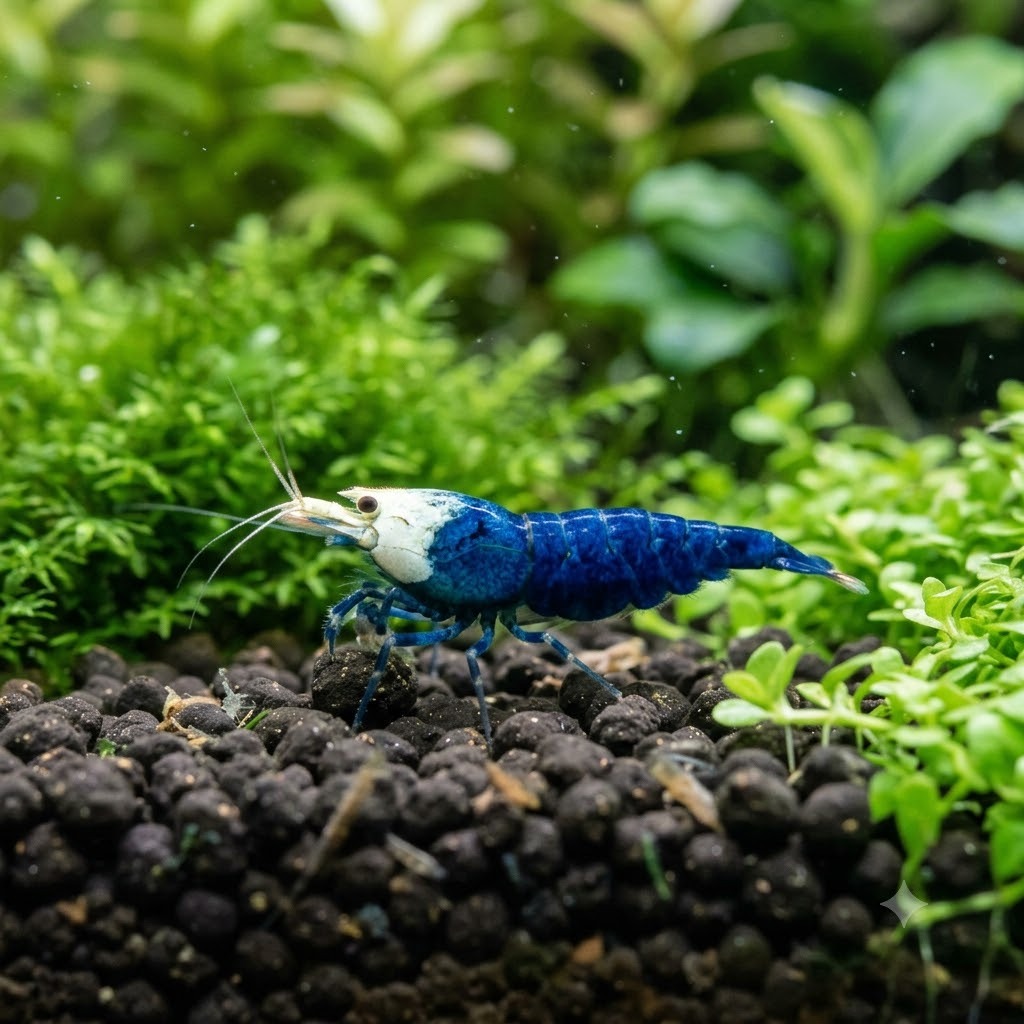
Blue Bolt shrimp sit near the top of the Caridina (Taiwan Bee) breeding world - a striking grade shading from a white head into a deep gradient-blue tail, and priced accordingly. They are genuinely more demanding than Neocaridina: they want soft, slightly acidic water actively buffered by an active-soil substrate, careful use of remineralised RO water, and the kind of stability that only experience delivers. Rewarding, valuable, and honestly not a first shrimp.
Why raise Blue Bolt shrimp
For the challenge and the value. A well-kept Blue Bolt colony is beautiful and commands high prices, but they demand more than any beginner shrimp.
- High value. Good grades sell for many times the price of cherries.
- Stunning gradient colour unlike anything in the Neocaridina world.
- A genuine hobbyist project for someone ready to graduate from easy shrimp.
The tank and setup
- Active soil substrate. Blue Bolts need an aquasoil that buffers the water soft and acidic - this is the core requirement, not optional decor.
- RO water, remineralised. Tap water is usually too hard; most keepers use reverse-osmosis water rebuilt with a Caridina-specific mineral.
- Sponge filter and a mature, heavily planted tank with moss for the young.
Water and stability
Softer and more acidic than Neocaridina, and far less forgiving of swings. Copper is lethal as always, and the tank must be fully cycled and stable - but Caridina add the demand for consistently soft, low-pH, remineralised water. A TDS meter is standard equipment. Big or careless water changes kill them.
Feeding and daily care
Feed sparingly - specialised shrimp foods, biofilm supplements and the occasional blanched vegetable, always removing leftovers. Caridina are more sensitive to fouled water than Neocaridina, so restraint matters even more.
Breeding and raising the young
Like all Caridina cantonensis, they breed in freshwater with no larval stage - berried females carry eggs that hatch as tiny shrimp. The difficulty is keeping conditions perfect enough for the young to survive and the colour to hold. Grades vary in offspring, so selective culling maintains the line. Success here is a stability achievement, not a technique.
Common mistakes
- Starting with these as a first shrimp - the classic expensive lesson.
- Using hard tap water instead of remineralised RO.
- Skipping the active soil that buffers the water.
- Large water changes that swing parameters and wipe the colony.
Is Blue Bolt shrimp right for you
Only if you already keep easier shrimp successfully and want to level up into Caridina. Master Blue Dreams or cherries first; then Blue Bolts become a rewarding, valuable step. For a first colony, they are a heartbreak waiting to happen.
🎣 Kit for a home aquarium
As an Amazon Associate we may earn from qualifying purchases - at no extra cost to you. We link gear types, not sponsors' picks: you choose the exact product.