White Crappie
The white crappie is the black crappie's murky-water cousin, an abundant and beloved panfish that fills stringers across the central and eastern US.
🗓️ Last reviewed: October 2026
Overview
The white crappie is the black crappie's murky-water cousin, an abundant and beloved panfish that fills stringers across the central and eastern US. Its species name, annularis, means "having rings" and refers to the faint vertical bars on its sides. Tolerant of muddy reservoirs and rivers, it offers fast schooling action and superb table quality.
Identification
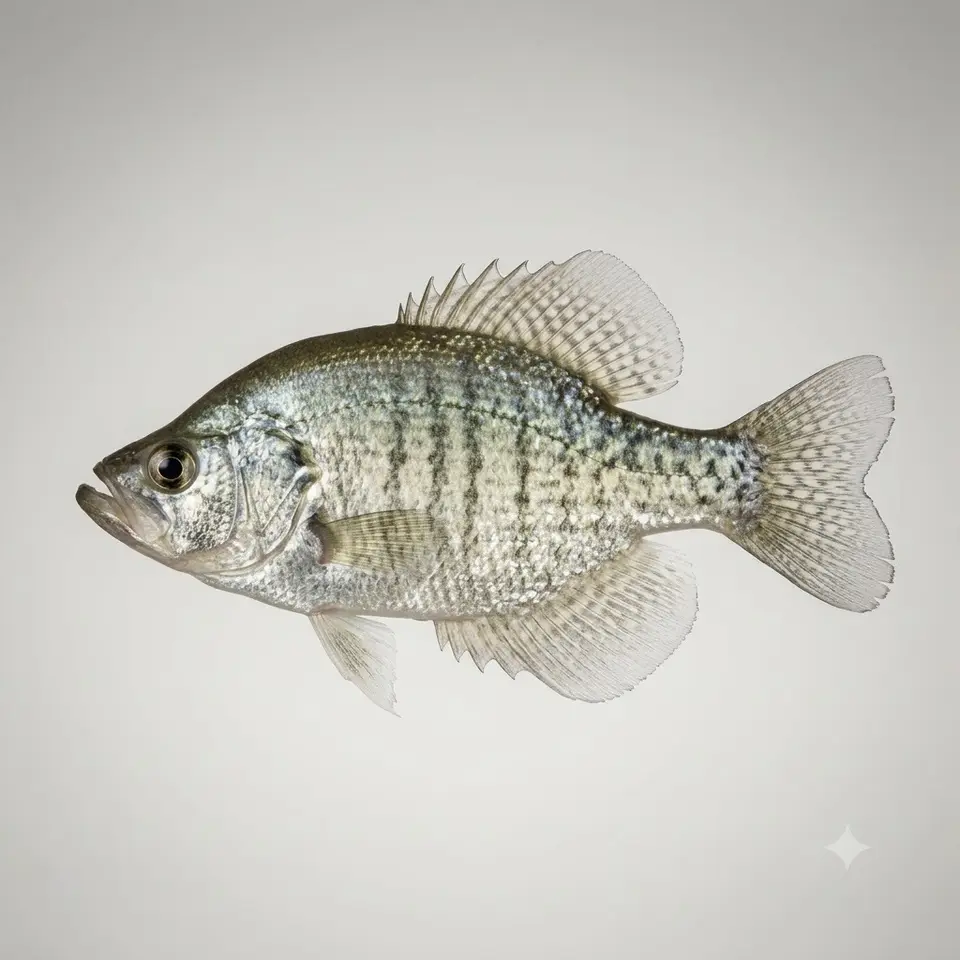
White crappie are silvery, shading to green or brown on the back, with a white belly and five to ten dark vertical bars along the sides where a black crappie has scattered speckles. The dorsal fin has six spines, against the black crappie's seven or eight, and starts farther back on the body; the fish is also slightly more elongated. The bars and the spine count are the keys.
Range & Habitat
White crappie are native to the Great Lakes, Hudson Bay and Mississippi River basins, from New York and southern Ontario west to South Dakota and south to Texas (Wikipedia, "White crappie"). They live in large rivers, reservoirs and lakes, tolerate turbid water better than black crappie and usually outnumber them where the water is murky or rooted vegetation is scarce. They hold around brush, timber and structure.
Behavior & Diet
White crappie school around cover and suspend over structure, feeding on minnows, other small fish and invertebrates, most actively at dawn, dusk and after dark. A typical adult runs about 9 to 10 inches by Wikipedia's account, and a fish over two pounds is unusual.
Best Seasons
Spring is prime as they move shallow to spawn around cover, with strong action over brush the rest of the year and good ice fishing in the north.
How to Catch Them
Small jigs and minnows around brush and docks, spider-rigging and slip-bobbers over structure, and vertical jigging suspended schools.
Tackle & Rigs
Light spinning gear, 4-6 lb line, small jigs and minnow rigs under floats; long light rods reach into cover.
Landing, Handling & Release
Handle their soft papermouths gently; ice keepers promptly for the best fillets.
Table Quality
White crappie are excellent - sweet, flaky white fillets among the best of the panfish.
Common Mistakes
Setting the hook too hard on soft mouths and leaving a productive brush pile too soon.
Regulations & Conservation
Managed as panfish with size and creel limits that vary by water. Always confirm the current state and lake regulations before keeping fish. We do not give legal advice.
FAQ
White or black crappie? White crappie have vertical bars and six dorsal spines; black crappie have scattered speckles and more spines.
Muddy water ok? Yes - whites tolerate more turbid water than blacks.
Sources
- Wikipedia, "White crappie" (read 12 October 2026): name, identification, native range, habitat and size.
🎣 Tackle for white crappie
As an Amazon Associate we may earn from qualifying purchases - at no extra cost to you. We link gear types, not sponsors' picks: you choose the exact product.