How to Gather Ribbed Mussels
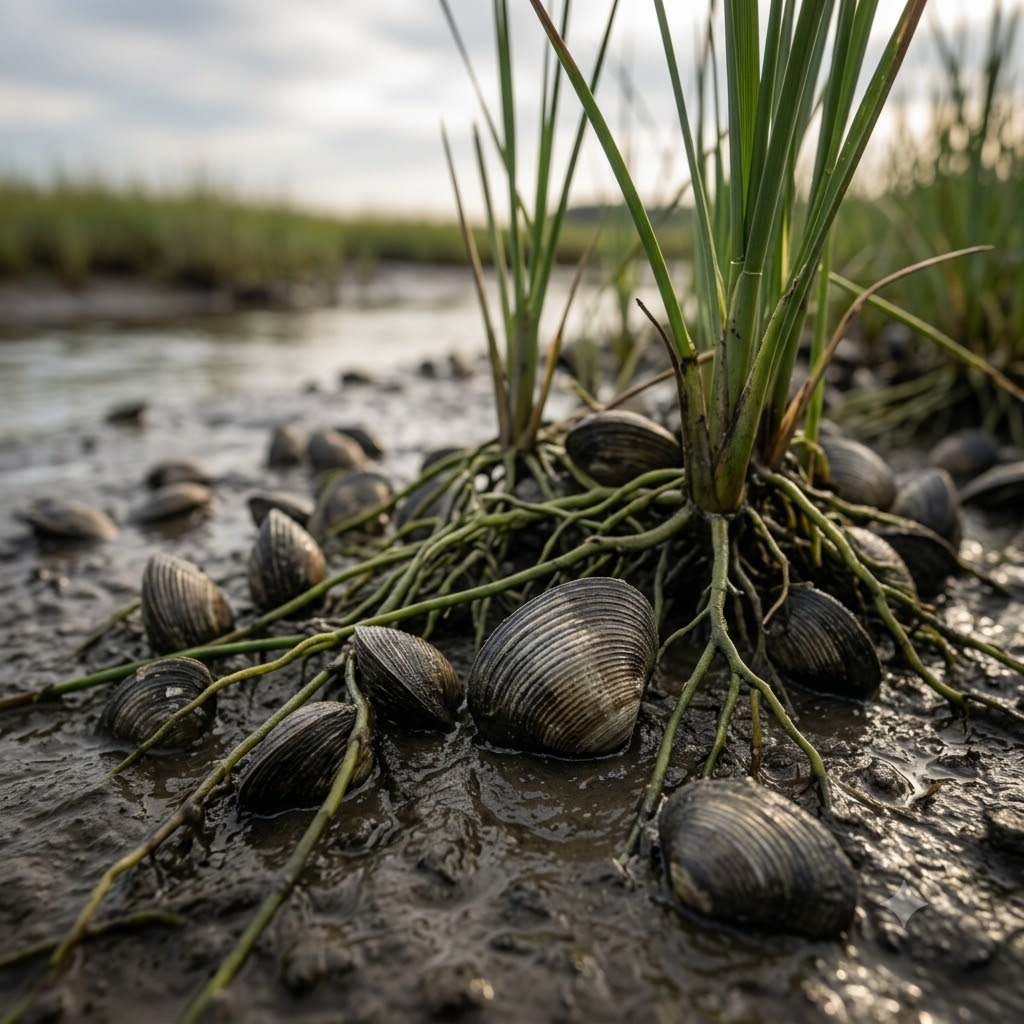
Ribbed mussels are tough salt-marsh mussels that half-bury among cordgrass roots along creek banks, easy to hand-gather and edible from clean water, though stronger-flavoured than blue mussels.
Marsh waters are often near pollution sources - only gather ribbed mussels from clean, certified-open water, never from suspect creeks. Heed biotoxin closures. Cook thoroughly; shellfish is a serious allergen.
The ribbed mussel is the humble mussel of the salt marsh - ribbed, brownish and half-buried among the cordgrass roots that line tidal creeks. It is stronger-tasting and tougher than the blue mussel most people prefer, so it is often passed over, but from clean water it is perfectly good eating and very easy to gather. Many foragers also respect it for the quiet, vital work it does binding the marsh mud together.
Why go for them
They are abundant, easy to reach and free, clustered right along accessible creek banks at low tide. While not as prized as blue mussels, the smaller, cleaner ones make good stock, chowder and fritters, and gathering them is a simple, low-effort way to bring home shellfish from the marsh when the water is clean.
Where and when to find them
Ribbed mussels live along salt-marsh banks and tidal creek edges, half-buried in the mud among the roots of cordgrass, exposed at low tide. Gather them in the cooler months when biotoxin risk is lower, and only where the water is clean - marshes near towns and outfalls are best avoided.
How to catch them
Simply pick them by hand at low tide, pulling the mussels free of the mud and grass, wearing gloves against sharp shells and marsh debris. Take the smaller, cleaner mussels, keep to what you will use, and step carefully on soft, root-bound mud so you do not damage the marsh or get stuck.
Handling, cleaning and cooking
Scrub and de-beard them well and purge them in clean seawater, discarding any that are cracked or stay open. Because they can be tough and strong, blanch or steam them and use the meat and liquor in stock, chowder or fritters rather than as a whole-mussel dish. Cook thoroughly and discard any that will not open.
Safety and the law
Cleanliness of the water is the key concern - marshes often sit near runoff and pollution, so gather ribbed mussels only from clean, certified-open water and never from suspect creeks. Heed biotoxin and pollution closures, get any required licence, cook thoroughly, and remember shellfish is a serious allergen. See our shellfish safety guide.