How to Dig Purple Varnish Clams
Purple varnish clams are an abundant introduced Pacific Northwest clam with a glossy purple shell, living shallow and high on the beach - easy to dig by the bucketful, fine steamers, with a generous limit in many areas.
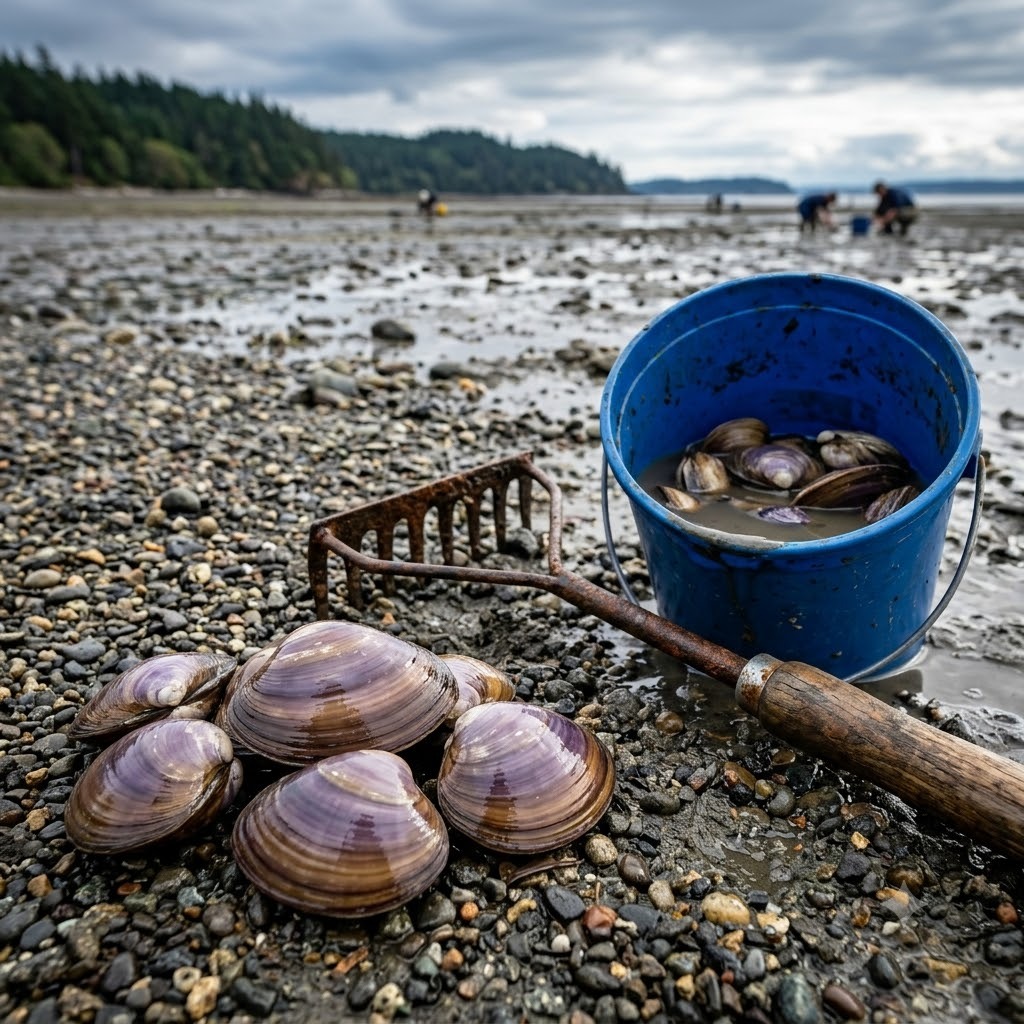
Get a shellfish licence where required, dig only on beaches open and certified safe (biotoxin closures common in the PNW), check size and daily limits, and purge sand well. Shellfish is a serious allergen; cook thoroughly.
Purple varnish clams are the easy digger's friend on the Pacific Northwest coast - glossy, purple-tinged clams that arrived with shipping ballast and now blanket the high beach in huge numbers. Best of all, they live only a few inches down, high up the flat, so you barely have to dig, and their abundance means generous limits in many spots. They make fine steamers, as long as you purge the sand out well.
Why go for them
They are abundant, shallow and easy, with often-generous limits because they are introduced - a rewarding, low-effort dig that fills a bucket fast, high on the beach where you stay dry. The clams steam up well for chowder, pasta and a simple bowl of butter and garlic, once purged of their sand.
Where and when to find them
Purple varnish clams live high on gravelly and muddy tidal flats of the Pacific Northwest, only a few inches beneath the surface, often above the zone where other clams sit. Work a low tide - many areas allow them much of the year - and look for their shallow siphon holes high up the beach.
How to catch them
Because they sit so shallow and high, you scratch rather than dig: rake or trowel the top few inches of a productive flat and pick out the clams, or work it with gloved fingers. They come fast and in numbers. Measure any near the limit, keep only legal clams, and refill your holes.
Handling, cleaning and cooking
These clams can hold a lot of sand, so purge them longer than most - a few hours in cool seawater, changing it once - before cooking. Steam them open in a splash of wine or broth, discarding any that stay shut, and use them in chowder, pasta and steamer dishes. Cook thoroughly.
Safety and the law
Clam digging needs a licence in most places and is only safe on beaches that are open and certified free of biotoxins - red-tide closures are common in the Pacific Northwest, so always check your local shellfish hotline before digging. Observe size and daily limits, purge well, cook thoroughly, and note shellfish is a serious allergen. See our shellfish safety guide.