How to Dig Pismo Clams
Pismo clams are large, prized clams of Pacific surf beaches, once wildly abundant and now closely regulated - dug from the surf zone at low tide, one of the great eating clams of the West Coast where legal.
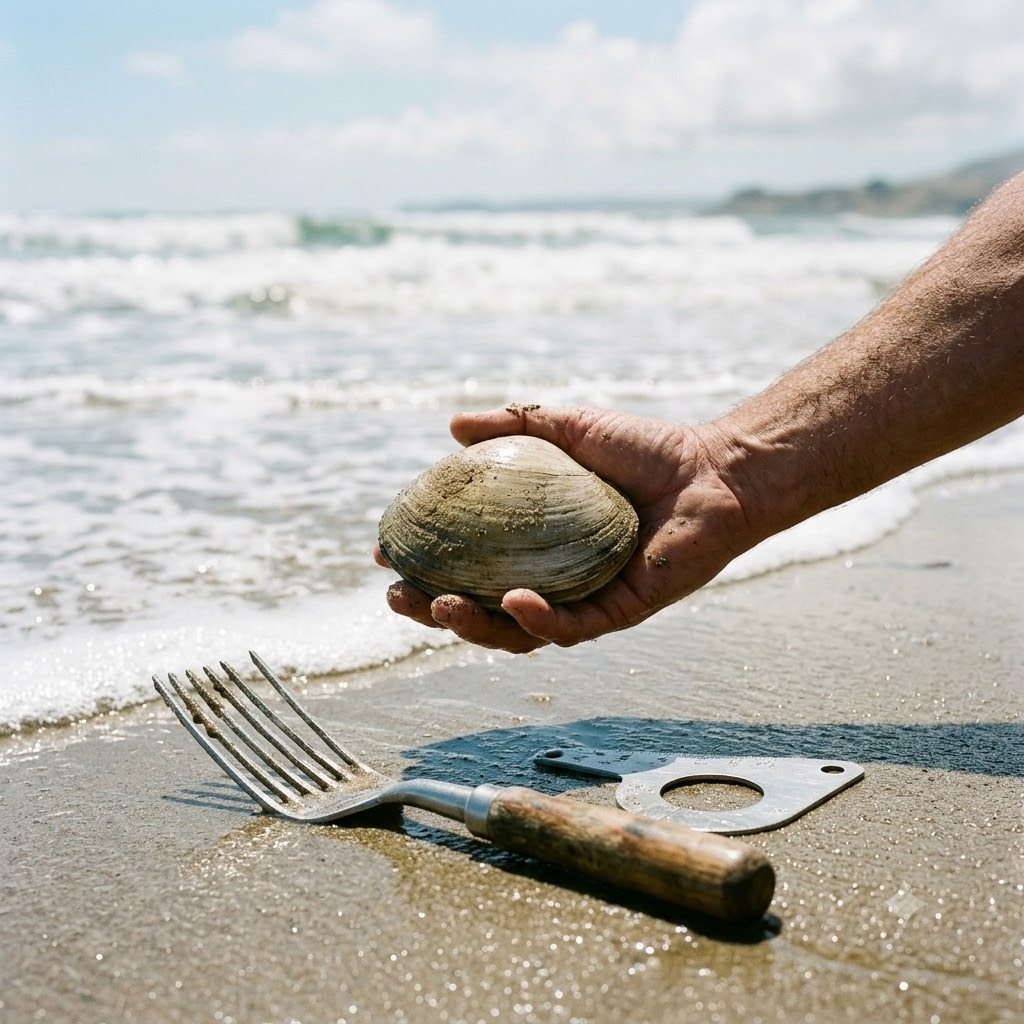
Pismo clams are strictly regulated and slow to recover - size limits and closures are enforced with fines, so check current rules, carry a gauge, and keep only legal clams. Heed biotoxin closures; shellfish is a serious allergen.
The Pismo clam is a piece of California history - a big, round, delicious surf clam once so plentiful it was pitchforked up by the wagonload. Overharvest and sea otters thinned them, so today they are closely regulated and, in places, slowly recovering. Where you can legally dig them, they remain one of the great eating clams of the Pacific, felt out with your feet in the surf and forked from the sand on a low tide.
Why go for them
They are large, meaty and superb eating - prized for chowder, steaks and frying - and there is real heritage and challenge in pursuing a clam that once defined California beach life. Digging a limit of legal Pismos on a good low tide is a classic, hard-won West Coast experience.
Where and when to find them
Pismo clams live buried in the sand of open Pacific surf beaches, in and just seaward of the breaking waves. Work them on the lowest tides, ideally with calm surf, wading into the shallow wash where you can feel for them underfoot. Local knowledge of which beaches hold legal-sized clams is a big help.
How to catch them
The traditional method is to wade the shallow surf and feel for the hard clams with your bare feet, then dig them out with a clam fork. Keep a gauge in hand and measure every clam on the spot, returning undersized ones unharmed to the sand. Mind the surf and the tide throughout.
Handling, cleaning and cooking
Purge the clams in cool seawater, then shuck them. Pismo clam meat is excellent minced for chowder and fritters, or the larger muscle pounded into clam steaks and quickly fried. Cook thoroughly, do not overcook the tender parts, and discard any clam that will not close before cooking.
Safety and the law
Pismo clams are among the most strictly regulated clams on the coast - minimum sizes, seasons, closures and daily limits are enforced with real fines to protect a recovering species, so check current rules, carry a gauge, and keep only legal clams. Heed biotoxin and pollution closures, and mind the surf. Cook thoroughly; shellfish is a serious allergen. Read our shellfish safety guide.