How to Catch Mantis Shrimp
Mantis shrimp are striking, powerful crustaceans of shallow flats, a delicacy with sweet lobster-like tail meat, caught by baiting their burrows or small traps - rewarding but handled with real care.
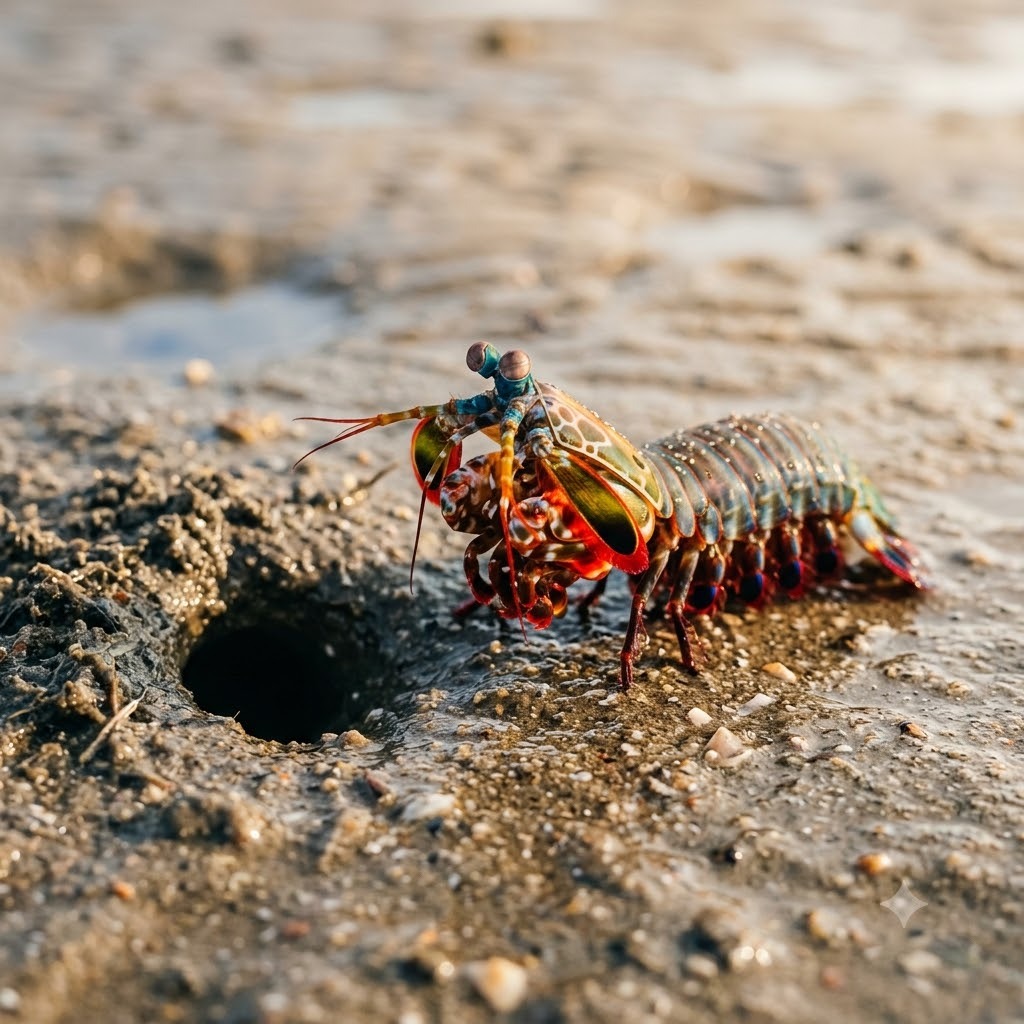
Mantis shrimp can strike or slash and cause real injury - use thick gloves and never handle carelessly. Check local rules, as they are regulated in some areas. Shellfish is a serious allergen; cook thoroughly and harvest only from safe waters.
Mantis shrimp is one of the ocean's most extraordinary animals and, in many coastal cuisines, a genuine delicacy. Living in burrows on shallow flats, armed with a lightning-fast strike that can crack glass, it is not a casual grab-by-hand catch - but its sweet tail meat, somewhere between shrimp and lobster, makes it a prized and unusual quarry for the adventurous forager who handles it with respect.
Why go for them
The meat is the reward - sweet, firm and lobster-like, treasured in Mediterranean, Asian and Latin kitchens. Beyond the plate, there is the sheer novelty of catching such a spectacular, powerful creature, and the skill of coaxing one from its burrow makes it a memorable, offbeat addition to a day on the flats.
Where and when to find them
Mantis shrimp live in burrows dug into sandy and muddy flats, seagrass edges and shallow inshore bottoms, often revealed at low tide by their keyhole-shaped burrow openings. They are most catchable in the warmer months on a low tide, when their burrows are exposed and reachable in shallow water.
How to catch them
The classic methods are baiting a burrow with a small piece of fish on a line and easing the shrimp out, dropping a small baited trap over a burrow, or pumping a burrow like you would for ghost shrimp. Whatever you do, wear thick gloves - the strike is fast and forceful - and never grab one bare-handed.
Handling, cleaning and cooking
Keep them cold and handle only with gloves. Boil, steam or grill them whole, then split the shell lengthwise to free the sweet tail meat - excellent grilled with garlic, in a spicy stir-fry, or simply steamed. The meat is delicate, so cook briefly and do not overdo it.
Safety and the law
The real hazard is the animal itself: its strike and sharp shell can injure you, so use thick gloves and caution. They are regulated or protected in some places, so check your local authority first. Harvest only from waters certified safe, avoid closed or polluted flats, cook thoroughly, and remember shellfish is a serious allergen. Read our shellfish safety guide.