How to Dig Manila Clams
Manila clams are abundant, shallow-living Pacific clams that are among the easiest to dig, small and sweet and quick to cook - the classic steamer clam and a perfect first shellfish for a family dig.
Get a shellfish licence where required, dig only on beaches open and certified safe (biotoxin closures are common), check minimum size and daily limits, and rinse well. Shellfish is a serious allergen; cook thoroughly unless the area is approved for raw.
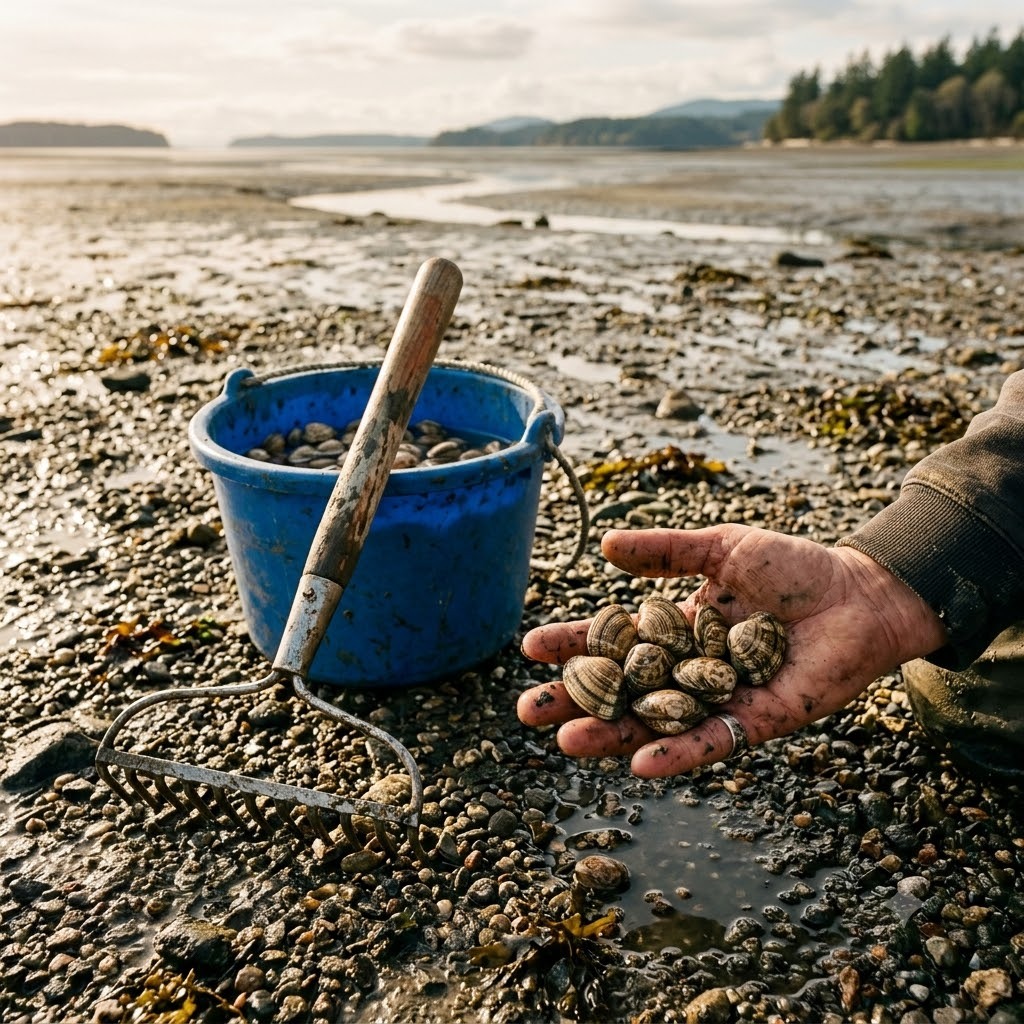
Manila clams are the easy win of the clam flats. Introduced to the Pacific coast long ago and now thriving, they live just an inch or two beneath gravelly sand, so you barely have to dig - a rake, a bucket and a good low tide are all it takes. Small, sweet and fast to cook, they are the classic steamer and pasta clam, and about the most family-friendly shellfish you can gather.
Why go for them
They are abundant, shallow and genuinely easy - a rewarding first clam for children and beginners that fills a bucket fast on the right flat. And the eating is excellent: sweet, tender little clams that steam open in minutes for chowder, pasta alle vongole, or a simple bowl of butter and garlic.
Where and when to find them
Manila clams live in gravelly sand and mud flats, mixed shell and pea gravel, usually high on the beach and only shallowly buried. Work them on a good low tide - many areas allow them year-round - and look for pairs of small siphon holes where a clam is breathing just below the surface.
How to catch them
Because they sit so shallow, you scratch rather than dig: rake or fork the top few inches of a productive flat, or simply work it with gloved fingers, and pick out the clams. A garden or clam rake speeds it up. Measure any near the limit, keep only legal clams, and refill your holes.
Handling, cleaning and cooking
Rinse clams and let them purge in cool seawater for an hour or two to spit out grit, discarding any that stay open when tapped. Steam them in a splash of wine or broth until they open - just a few minutes - and toss with garlic, butter and herbs, or into pasta and chowder. Discard any that refuse to open.
Safety and the law
Clam digging needs a licence in most places and is only safe on beaches that are open and certified free of biotoxins - red-tide and pollution closures are common and can be dangerous, so always check your local shellfish hotline or authority before digging. Observe size and daily limits, harvest only from approved water, and cook thoroughly. Shellfish is a serious allergen. See our shellfish safety guide.